
Neustadt an der Waldnaab
Felixallee 32, 92660 Neustadt an der Waldnaab, Deutschland
Monastery St. Felix | History & Service Times
Monastery St. Felix in Neustadt an der Waldnaab is much more than a prominent address in the Upper Palatinate: The place combines pilgrimage history, baroque church art, a vibrant religious community, and an astonishingly diverse life of services and events. Anyone visiting the monastery immediately senses that this is not a museum monument, but a spiritual place that has been visited, supported, and continually revitalized by people for centuries. The official monastery website describes St. Felix as a place of faith, spirituality, and community; it also points to the baroque church, the impressive ceiling paintings, and the life of the Franciscan brothers according to the principles of Saint Francis. Since the year 2000, Franciscan Minorites from the Krakow province have been present here, after German Minorites had shaped pastoral care for many decades. This makes St. Felix a house with deep historical continuity and a clear present: Services, confession, weddings, baptisms, anointing of the sick, meetings of church groups, concerts, and aid projects are still naturally part of it today. This connection of tradition and lived everyday life explains why the search for Monastery St. Felix often revolves around terms like history, service times, photos, events, and reviews. The place is a pilgrimage church, a monastery, a meeting point for believers, and an attraction for visitors seeking baroque art and a spiritual atmosphere. Its location on Felixallee makes it easy to find, while the official website with current service schedules, announcements, and a photo gallery prepares visitors well. Thus, St. Felix is a destination for quiet reflection as well as festive occasions and regional faith culture. ([st-felix-neustadt.de](https://st-felix-neustadt.de/kloster-st-felix/geschichte/))
Service Times and Regular Services at Monastery St. Felix
For many visitors, the question of service times is the most important entry point, and here St. Felix shows its vibrant side. The official page is regularly updated with the times; the basic schedule lists a mass on weekdays at 7:00 AM, the Saturday evening mass at 6:00 PM with rosary starting at 5:30 PM, and Sunday masses at 8:00 AM and 10:00 AM. This is complemented by a sung Sunday vespers at 6:00 PM. Those specifically seeking special forms of piety will find further fixed points throughout the year: The Fatima Day is celebrated on the 13th of each month with rosary at 6:30 PM and a festive service at 7:00 PM, during Lent there is the Stations of the Cross every Friday at 6:00 PM, daily Marian devotions from Monday to Friday at 6:00 PM in May, and the rosary is prayed at the same time in October. Additionally, the monastery invites silent adoration before the Blessed Sacrament every Tuesday from 1:15 PM to 3:00 PM. On the Heart of Jesus Friday, adoration directly follows the early mass and ends at 8:00 AM with the Eucharistic blessing. The confession times are also clearly regulated: Tuesday to Saturday mornings from 8:00 AM to 11:30 AM and afternoons from 3:00 PM to 5:30 PM, on Sundays and holidays from 7:30 AM to 7:45 AM and by appointment. Additionally, pastoral offerings such as guided tours and pilgrimage services by arrangement, a Third Order or Franciscan circle on the fourth Tuesday of the month, Bible study groups on the first and third Wednesday, the St. Felix choir on Wednesday evenings, and other groups and catechesis are included. Thus, St. Felix is not a quiet background building, but a place with a precise rhythm that actively reflects the church year. Anyone planning a visit should therefore always check the current service schedule, as the website explicitly refers to ongoing updates and PDF overviews. This is practical for pilgrims, locals, tourists, and anyone wishing to experience confession, silent adoration, or a festive Sunday service. ([st-felix-neustadt.de](https://st-felix-neustadt.de/dienste-gottesdienste/regelmaessige-dienste/?utm_source=openai))
History of the Pilgrimage Church St. Felix and Its Baroque Expansion
The history of St. Felix begins with Saint Felix of Cantalice, a Capuchin brother from Umbria, who became known during his lifetime for his simplicity and his service at the alms office and was canonized in 1712. In Neustadt an der Waldnaab, his veneration was particularly enlivened by the Capuchins called by Prince Ferdinand of Lobkowitz in 1710. A central impulse for the pilgrimage was the vow of the city judge Christoph Ulrich von Weinzierl: After a severe feverish illness, he promised to establish a statue of Saint Felix if he recovered. When the prayer was answered, the statue was indeed created and became a visible sign of a growing local cult. To meet the needs of the first pilgrims, the construction of a wooden chapel began in 1729. By 1735, a stone chapel was consecrated; with it, the first Felix festival was celebrated. However, the influx of believers continued to grow, prompting the start of a larger church in 1738. The exterior construction was completed in 1746, and the interior was finished in 1765. These dates are important for understanding St. Felix, as they show that the present church did not arise from a single construction act, but grew in stages alongside the growing pilgrimage. Additionally, the furnishings: A fresco cycle created by Matthias Götz and Bartlmä Weidenhofer depicted scenes from the life of Saint Felix of Cantalice. This painting was partially overpainted during a later renovation and could be at least partially restored by Manfred Schmitt in 1946/47. Thus, St. Felix possesses not only architectural but also iconographic depth. The baroque church is therefore not only beautiful but directly related in its pictorial programs to the patron and the original pilgrimage. This connection of vow, Capuchin piety, building history, and pictorial art continues to shape the unique character of the place to this day. ([st-felix-neustadt.de](https://st-felix-neustadt.de/kloster-st-felix/geschichte/))
The further history of St. Felix shows how closely religious places are connected with political and social upheavals. After the completion of the church, the pilgrimage lost strength during the secularization; in 1803, the Capuchins were expelled from the mountain, and by 1834, the Eucharist could not even be celebrated there on Sundays. It was not until much later that a new bloom occurred. In 1925, the monastery was newly established, and on May 14, 1926, Franciscan Minorites from Würzburg moved into the convent building next to the church. Initially, German Minorites shaped the pastoral care until this religious province withdrew for personnel reasons after 75 years. Since 2000, brothers from the Krakow province have therefore been active in Neustadt an der Waldnaab. This continuity is crucial for the present, as it explains why St. Felix is perceived today not only as a historical pilgrimage church but also as an actively cared-for monastery. The site has thus grown historically: baroque church, later monastery, renewed frescoes, and a pastoral life that has been passed down through generations. Visitors hoping for pure monument preservation discover something different and perhaps even more interesting: a place where history is not completed but continues to be written. The official description therefore speaks of a remarkable example of faith and support from the population. This is precisely where the identity of St. Felix lies: a building that has grown from a personal story of gratitude, which has bundled pilgrimage for centuries, survived crises, and is still supported by a religious community today. This connection is central for search queries related to history, chronicle, or pilgrimage church, as it links mere dates with a living narrative. ([st-felix-neustadt.de](https://st-felix-neustadt.de/kloster-st-felix/geschichte/))
Pilgrimage Church, Baroque Space, and Special Furnishings
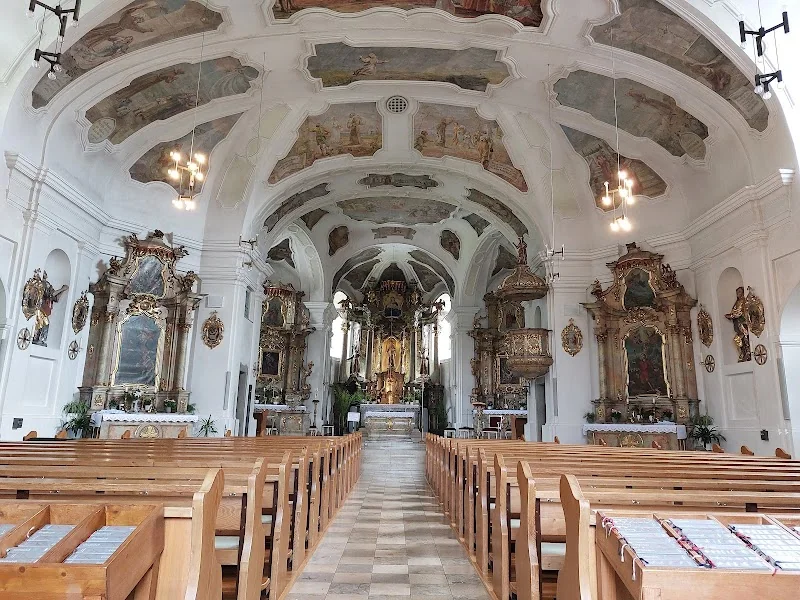
The monastery church St. Felix is not only a religious meeting point but also an independently significant baroque building. Art and monument sources describe it as a pilgrimage church high above the Waldnaab, visible from afar and originally developed as a free-standing group building. In its historical form, it connected a short nave with a recessed three-choir and a squat dome tower; later, the monastery wing was added to the south. This architectural development is interesting because it makes the transition from a smaller pilgrimage site to a permanently inhabited monastery comprehensible. Today, anyone coming up from Felixallee does not simply experience a church but an architecturally grown place whose shape directly emerged from the pilgrimage history. It is also important for visitors that the church's interior is designed for the special perception of pilgrims: Altars, choir, and nave are arranged so that one can grasp several liturgical focal points at a glance while passing by. This conveys, even without art historical expertise, the impression of a space created for movement, devotion, and sight axes. Additionally, the furnishings make the name of the patron visible. The high altar, the side altars, the figures in the wall niches, and the pictorial programs refer to Saint Felix of Cantalice and Franciscan piety. The baroque ceiling paintings and the fresco cycle depicting scenes from the life of the saint, which have been revised and partially restored multiple times, remain particularly important. The official monastery website explicitly highlights the impressive ceiling paintings, and both tourist and art historical sources add that the church has a varied interior history due to later overpainting and restorations. For the visitor, this means: St. Felix is not only beautiful but also readable. Architecture, imagery, and pilgrimage purpose interlock. Particularly for those searching for pilgrimage church, furnishings, or special features, a clear answer is provided here: The monastery is a historical space of faith with baroque identity, strong pictorial tradition, and a location that highlights the place both geographically and symbolically. ([de.dehio.org](https://de.dehio.org/ausstattungsobjekt/neustadt-der-waldnaab-wallfahrtskirche-st-felix-heiligenfiguren))
Events, Felix Festival, and Uganda Aid at Monastery St. Felix
Those looking for a current program will find an astonishingly broad spectrum at St. Felix. The official homepage refers to announcements, reports, service schedules, and a calendar with recurring offers. These include Bible study sessions, Fatima Days, Stations of the Cross, May devotions, Eucharistic adoration, spiritual discussion groups, and meetings of church groups. The monastery community also describes its service to the Catholic surrounding area very concretely: Services, confession, weddings, baptisms, anointing of the sick, meetings of church communities, Uganda aid, and concerts are explicitly part of the house's self-understanding. For visitors, this means: St. Felix is not only a place of remembrance but also a place where new occasions take place throughout the year. Precisely for this reason, in searches, terms like program, events, service times, and images appear alongside the name of the monastery. The website offers a well-filled reporting and image world, where older and newer events are documented chronologically. Therefore, anyone wanting to get an impression in advance can find both the upcoming dates and retrospectives of already celebrated festivals on the homepage. This makes the location interesting for pilgrim groups, community members, choir visitors, and day-trippers alike. Particularly important is the idea of community: St. Felix sees itself as a spiritual place where faith is lived not only liturgically but also socially. ([st-felix-neustadt.de](https://st-felix-neustadt.de/?p=36748))
Especially formative are the Felix Festival and the Uganda Festivals, which regularly appear in the official reporting. The Felix Festival 2026 was described as a touch of world church: Thanksgiving service, agape, a festive candlelight procession, festive service with two bishops from Bolivia, and a garden party in the monastery courtyard made it clear how strongly this place is also networked beyond the region. The reports also include references to benefit concerts, musical devotions, contributions by choirs and instrumental groups, and extraordinary program points such as ballet as part of a benefit event for Uganda aid. Such events show that St. Felix is also a cultural attraction. The church has already been the venue for concerts with great attendance, where the number of visitors created a full monastery church and an intense atmosphere. Pilgrimages, festive blessings, vehicle blessings, rosary devotions, and thematic lectures are also part of the regular repertoire of reports. The spectrum thus ranges from contemplative forms of piety to lively encounters with music, movement, and social engagement. Therefore, those searching for events at Monastery St. Felix will find not a rigid event hall but a spiritual house with its own annual rhythm. This is also important for search intentions: Users looking for programs, reviews, or photos usually want to know not only what the church looks like but also what actually happens there. St. Felix provides exactly that answer: The monastery is a place where pilgrimage, culture, and aid for the needy come together. ([st-felix-neustadt.de](https://st-felix-neustadt.de/berichte-zu-ankuendigungen-veranstaltungen/))
Photos, Image Gallery, and Special Impressions on Site
The search for photos at St. Felix is completely understandable, as the site thrives strongly on visual impressions. The official image gallery documents festivals and moments of faith throughout the church year, including Uganda festivals, Felix festivals, Easter and Palm Sunday images, Eucharistic adoration, Christmas celebrations, pilgrimages, and other events. This selection already shows how diverse the place is photographically experienced. Those who open the gallery receive not only individual shots but also an impression of how the monastery community shapes its annual cycle. The images refer to a church that functions in everyday life as well as in festive moments: People fill the space, music resonates, processions move through Felixallee, and the monastery courtyard becomes a place of togetherness. The official homepage complements this impression with references to the impressive ceiling paintings and the baroque church space. The history makes it clear that this furnishing is a central feature of the place: The fresco cycle depicting the life of Saint Felix of Cantalice was indeed overpainted later, but was partially restored after World War II. This is also exciting for visitors because St. Felix is interesting not only for its piety but also for its art history. The church is not a neutral hall but a space with liturgical, historical, and aesthetic significance. Therefore, those searching for the best photo motifs will especially appreciate the combination of baroque interior effect, monastic layout, pilgrimage character, and festive exterior views. The surroundings also contribute to the effect: The website speaks of picturesque landscapes, and the tourist presentation refers to Felixberg as a viewpoint. This creates an overall picture that works well in images: Tradition, light, procession, community, and architecture. This is exactly what makes the location attractive for photography enthusiasts, pilgrims, and local friends. ([st-felix-neustadt.de](https://st-felix-neustadt.de/bildergalerie))
Address, Directions, and Practical Information for the Visit
For concrete planning, the address is the most important point: The Minorite Monastery St. Felix is located at Felixallee 32, 92660 Neustadt an der Waldnaab. The official website includes a map and refers to the route planner for navigation, allowing visitors to easily find the place. Equally important for contact is the imprint, which provides the phone number and email. Therefore, anyone with a request for a tour, a mass celebration, a group inquiry, or a pastoral question can directly reach the community. From an SEO perspective, it is also interesting that the website regularly provides updated PDF schedules for services and events; this is particularly helpful since dates in the church year can change. However, the official website does not mention a separate designated parking area. This can cautiously be understood as a hint that one should primarily use the address and the embedded map for travel and inquire directly if needed. This is especially sensible for pilgrimage sites, as service times, feast days, and visitor numbers can fluctuate. Therefore, anyone planning a group visit should contact early and check the current service schedule. The site is also listed in tourist directories as accessible daily, but for religious events and tours, the specific schedule of the monastery naturally applies in practice. Overall, there is much to be said for visiting St. Felix relaxed, but not spontaneously aimlessly: The combination of liturgical times, festivals, and historical impressions is particularly worthwhile when one knows in advance what form of visit one is seeking. Whether quiet devotion, Sunday mass, festive service, or a tour with a view of the baroque furnishings - the address leads not only to a building but to a lived spiritual place. ([st-felix-neustadt.de](https://st-felix-neustadt.de/?p=36748))
Monastery St. Felix is therefore a strong search topic because many interests converge here: history, baroque, service times, photos, events, and community. The place has grown historically, is liturgically active, and culturally open. This mixture makes it significant for Neustadt an der Waldnaab and the entire Upper Palatinate. Those planning a visit will find the most important dates, impressions from the image gallery, and contact information on the official website. Thus, a search query becomes a concrete visit - and a short stop becomes a place where one experiences history and present simultaneously. ([st-felix-neustadt.de](https://st-felix-neustadt.de/?p=36748))
Sources:
Mehr anzeigenWeniger anzeigen
Monastery St. Felix | History & Service Times
Monastery St. Felix in Neustadt an der Waldnaab is much more than a prominent address in the Upper Palatinate: The place combines pilgrimage history, baroque church art, a vibrant religious community, and an astonishingly diverse life of services and events. Anyone visiting the monastery immediately senses that this is not a museum monument, but a spiritual place that has been visited, supported, and continually revitalized by people for centuries. The official monastery website describes St. Felix as a place of faith, spirituality, and community; it also points to the baroque church, the impressive ceiling paintings, and the life of the Franciscan brothers according to the principles of Saint Francis. Since the year 2000, Franciscan Minorites from the Krakow province have been present here, after German Minorites had shaped pastoral care for many decades. This makes St. Felix a house with deep historical continuity and a clear present: Services, confession, weddings, baptisms, anointing of the sick, meetings of church groups, concerts, and aid projects are still naturally part of it today. This connection of tradition and lived everyday life explains why the search for Monastery St. Felix often revolves around terms like history, service times, photos, events, and reviews. The place is a pilgrimage church, a monastery, a meeting point for believers, and an attraction for visitors seeking baroque art and a spiritual atmosphere. Its location on Felixallee makes it easy to find, while the official website with current service schedules, announcements, and a photo gallery prepares visitors well. Thus, St. Felix is a destination for quiet reflection as well as festive occasions and regional faith culture. ([st-felix-neustadt.de](https://st-felix-neustadt.de/kloster-st-felix/geschichte/))
Service Times and Regular Services at Monastery St. Felix
For many visitors, the question of service times is the most important entry point, and here St. Felix shows its vibrant side. The official page is regularly updated with the times; the basic schedule lists a mass on weekdays at 7:00 AM, the Saturday evening mass at 6:00 PM with rosary starting at 5:30 PM, and Sunday masses at 8:00 AM and 10:00 AM. This is complemented by a sung Sunday vespers at 6:00 PM. Those specifically seeking special forms of piety will find further fixed points throughout the year: The Fatima Day is celebrated on the 13th of each month with rosary at 6:30 PM and a festive service at 7:00 PM, during Lent there is the Stations of the Cross every Friday at 6:00 PM, daily Marian devotions from Monday to Friday at 6:00 PM in May, and the rosary is prayed at the same time in October. Additionally, the monastery invites silent adoration before the Blessed Sacrament every Tuesday from 1:15 PM to 3:00 PM. On the Heart of Jesus Friday, adoration directly follows the early mass and ends at 8:00 AM with the Eucharistic blessing. The confession times are also clearly regulated: Tuesday to Saturday mornings from 8:00 AM to 11:30 AM and afternoons from 3:00 PM to 5:30 PM, on Sundays and holidays from 7:30 AM to 7:45 AM and by appointment. Additionally, pastoral offerings such as guided tours and pilgrimage services by arrangement, a Third Order or Franciscan circle on the fourth Tuesday of the month, Bible study groups on the first and third Wednesday, the St. Felix choir on Wednesday evenings, and other groups and catechesis are included. Thus, St. Felix is not a quiet background building, but a place with a precise rhythm that actively reflects the church year. Anyone planning a visit should therefore always check the current service schedule, as the website explicitly refers to ongoing updates and PDF overviews. This is practical for pilgrims, locals, tourists, and anyone wishing to experience confession, silent adoration, or a festive Sunday service. ([st-felix-neustadt.de](https://st-felix-neustadt.de/dienste-gottesdienste/regelmaessige-dienste/?utm_source=openai))
History of the Pilgrimage Church St. Felix and Its Baroque Expansion
The history of St. Felix begins with Saint Felix of Cantalice, a Capuchin brother from Umbria, who became known during his lifetime for his simplicity and his service at the alms office and was canonized in 1712. In Neustadt an der Waldnaab, his veneration was particularly enlivened by the Capuchins called by Prince Ferdinand of Lobkowitz in 1710. A central impulse for the pilgrimage was the vow of the city judge Christoph Ulrich von Weinzierl: After a severe feverish illness, he promised to establish a statue of Saint Felix if he recovered. When the prayer was answered, the statue was indeed created and became a visible sign of a growing local cult. To meet the needs of the first pilgrims, the construction of a wooden chapel began in 1729. By 1735, a stone chapel was consecrated; with it, the first Felix festival was celebrated. However, the influx of believers continued to grow, prompting the start of a larger church in 1738. The exterior construction was completed in 1746, and the interior was finished in 1765. These dates are important for understanding St. Felix, as they show that the present church did not arise from a single construction act, but grew in stages alongside the growing pilgrimage. Additionally, the furnishings: A fresco cycle created by Matthias Götz and Bartlmä Weidenhofer depicted scenes from the life of Saint Felix of Cantalice. This painting was partially overpainted during a later renovation and could be at least partially restored by Manfred Schmitt in 1946/47. Thus, St. Felix possesses not only architectural but also iconographic depth. The baroque church is therefore not only beautiful but directly related in its pictorial programs to the patron and the original pilgrimage. This connection of vow, Capuchin piety, building history, and pictorial art continues to shape the unique character of the place to this day. ([st-felix-neustadt.de](https://st-felix-neustadt.de/kloster-st-felix/geschichte/))
The further history of St. Felix shows how closely religious places are connected with political and social upheavals. After the completion of the church, the pilgrimage lost strength during the secularization; in 1803, the Capuchins were expelled from the mountain, and by 1834, the Eucharist could not even be celebrated there on Sundays. It was not until much later that a new bloom occurred. In 1925, the monastery was newly established, and on May 14, 1926, Franciscan Minorites from Würzburg moved into the convent building next to the church. Initially, German Minorites shaped the pastoral care until this religious province withdrew for personnel reasons after 75 years. Since 2000, brothers from the Krakow province have therefore been active in Neustadt an der Waldnaab. This continuity is crucial for the present, as it explains why St. Felix is perceived today not only as a historical pilgrimage church but also as an actively cared-for monastery. The site has thus grown historically: baroque church, later monastery, renewed frescoes, and a pastoral life that has been passed down through generations. Visitors hoping for pure monument preservation discover something different and perhaps even more interesting: a place where history is not completed but continues to be written. The official description therefore speaks of a remarkable example of faith and support from the population. This is precisely where the identity of St. Felix lies: a building that has grown from a personal story of gratitude, which has bundled pilgrimage for centuries, survived crises, and is still supported by a religious community today. This connection is central for search queries related to history, chronicle, or pilgrimage church, as it links mere dates with a living narrative. ([st-felix-neustadt.de](https://st-felix-neustadt.de/kloster-st-felix/geschichte/))
Pilgrimage Church, Baroque Space, and Special Furnishings
The monastery church St. Felix is not only a religious meeting point but also an independently significant baroque building. Art and monument sources describe it as a pilgrimage church high above the Waldnaab, visible from afar and originally developed as a free-standing group building. In its historical form, it connected a short nave with a recessed three-choir and a squat dome tower; later, the monastery wing was added to the south. This architectural development is interesting because it makes the transition from a smaller pilgrimage site to a permanently inhabited monastery comprehensible. Today, anyone coming up from Felixallee does not simply experience a church but an architecturally grown place whose shape directly emerged from the pilgrimage history. It is also important for visitors that the church's interior is designed for the special perception of pilgrims: Altars, choir, and nave are arranged so that one can grasp several liturgical focal points at a glance while passing by. This conveys, even without art historical expertise, the impression of a space created for movement, devotion, and sight axes. Additionally, the furnishings make the name of the patron visible. The high altar, the side altars, the figures in the wall niches, and the pictorial programs refer to Saint Felix of Cantalice and Franciscan piety. The baroque ceiling paintings and the fresco cycle depicting scenes from the life of the saint, which have been revised and partially restored multiple times, remain particularly important. The official monastery website explicitly highlights the impressive ceiling paintings, and both tourist and art historical sources add that the church has a varied interior history due to later overpainting and restorations. For the visitor, this means: St. Felix is not only beautiful but also readable. Architecture, imagery, and pilgrimage purpose interlock. Particularly for those searching for pilgrimage church, furnishings, or special features, a clear answer is provided here: The monastery is a historical space of faith with baroque identity, strong pictorial tradition, and a location that highlights the place both geographically and symbolically. ([de.dehio.org](https://de.dehio.org/ausstattungsobjekt/neustadt-der-waldnaab-wallfahrtskirche-st-felix-heiligenfiguren))
Events, Felix Festival, and Uganda Aid at Monastery St. Felix
Those looking for a current program will find an astonishingly broad spectrum at St. Felix. The official homepage refers to announcements, reports, service schedules, and a calendar with recurring offers. These include Bible study sessions, Fatima Days, Stations of the Cross, May devotions, Eucharistic adoration, spiritual discussion groups, and meetings of church groups. The monastery community also describes its service to the Catholic surrounding area very concretely: Services, confession, weddings, baptisms, anointing of the sick, meetings of church communities, Uganda aid, and concerts are explicitly part of the house's self-understanding. For visitors, this means: St. Felix is not only a place of remembrance but also a place where new occasions take place throughout the year. Precisely for this reason, in searches, terms like program, events, service times, and images appear alongside the name of the monastery. The website offers a well-filled reporting and image world, where older and newer events are documented chronologically. Therefore, anyone wanting to get an impression in advance can find both the upcoming dates and retrospectives of already celebrated festivals on the homepage. This makes the location interesting for pilgrim groups, community members, choir visitors, and day-trippers alike. Particularly important is the idea of community: St. Felix sees itself as a spiritual place where faith is lived not only liturgically but also socially. ([st-felix-neustadt.de](https://st-felix-neustadt.de/?p=36748))
Especially formative are the Felix Festival and the Uganda Festivals, which regularly appear in the official reporting. The Felix Festival 2026 was described as a touch of world church: Thanksgiving service, agape, a festive candlelight procession, festive service with two bishops from Bolivia, and a garden party in the monastery courtyard made it clear how strongly this place is also networked beyond the region. The reports also include references to benefit concerts, musical devotions, contributions by choirs and instrumental groups, and extraordinary program points such as ballet as part of a benefit event for Uganda aid. Such events show that St. Felix is also a cultural attraction. The church has already been the venue for concerts with great attendance, where the number of visitors created a full monastery church and an intense atmosphere. Pilgrimages, festive blessings, vehicle blessings, rosary devotions, and thematic lectures are also part of the regular repertoire of reports. The spectrum thus ranges from contemplative forms of piety to lively encounters with music, movement, and social engagement. Therefore, those searching for events at Monastery St. Felix will find not a rigid event hall but a spiritual house with its own annual rhythm. This is also important for search intentions: Users looking for programs, reviews, or photos usually want to know not only what the church looks like but also what actually happens there. St. Felix provides exactly that answer: The monastery is a place where pilgrimage, culture, and aid for the needy come together. ([st-felix-neustadt.de](https://st-felix-neustadt.de/berichte-zu-ankuendigungen-veranstaltungen/))
Photos, Image Gallery, and Special Impressions on Site
The search for photos at St. Felix is completely understandable, as the site thrives strongly on visual impressions. The official image gallery documents festivals and moments of faith throughout the church year, including Uganda festivals, Felix festivals, Easter and Palm Sunday images, Eucharistic adoration, Christmas celebrations, pilgrimages, and other events. This selection already shows how diverse the place is photographically experienced. Those who open the gallery receive not only individual shots but also an impression of how the monastery community shapes its annual cycle. The images refer to a church that functions in everyday life as well as in festive moments: People fill the space, music resonates, processions move through Felixallee, and the monastery courtyard becomes a place of togetherness. The official homepage complements this impression with references to the impressive ceiling paintings and the baroque church space. The history makes it clear that this furnishing is a central feature of the place: The fresco cycle depicting the life of Saint Felix of Cantalice was indeed overpainted later, but was partially restored after World War II. This is also exciting for visitors because St. Felix is interesting not only for its piety but also for its art history. The church is not a neutral hall but a space with liturgical, historical, and aesthetic significance. Therefore, those searching for the best photo motifs will especially appreciate the combination of baroque interior effect, monastic layout, pilgrimage character, and festive exterior views. The surroundings also contribute to the effect: The website speaks of picturesque landscapes, and the tourist presentation refers to Felixberg as a viewpoint. This creates an overall picture that works well in images: Tradition, light, procession, community, and architecture. This is exactly what makes the location attractive for photography enthusiasts, pilgrims, and local friends. ([st-felix-neustadt.de](https://st-felix-neustadt.de/bildergalerie))
Address, Directions, and Practical Information for the Visit
For concrete planning, the address is the most important point: The Minorite Monastery St. Felix is located at Felixallee 32, 92660 Neustadt an der Waldnaab. The official website includes a map and refers to the route planner for navigation, allowing visitors to easily find the place. Equally important for contact is the imprint, which provides the phone number and email. Therefore, anyone with a request for a tour, a mass celebration, a group inquiry, or a pastoral question can directly reach the community. From an SEO perspective, it is also interesting that the website regularly provides updated PDF schedules for services and events; this is particularly helpful since dates in the church year can change. However, the official website does not mention a separate designated parking area. This can cautiously be understood as a hint that one should primarily use the address and the embedded map for travel and inquire directly if needed. This is especially sensible for pilgrimage sites, as service times, feast days, and visitor numbers can fluctuate. Therefore, anyone planning a group visit should contact early and check the current service schedule. The site is also listed in tourist directories as accessible daily, but for religious events and tours, the specific schedule of the monastery naturally applies in practice. Overall, there is much to be said for visiting St. Felix relaxed, but not spontaneously aimlessly: The combination of liturgical times, festivals, and historical impressions is particularly worthwhile when one knows in advance what form of visit one is seeking. Whether quiet devotion, Sunday mass, festive service, or a tour with a view of the baroque furnishings - the address leads not only to a building but to a lived spiritual place. ([st-felix-neustadt.de](https://st-felix-neustadt.de/?p=36748))
Monastery St. Felix is therefore a strong search topic because many interests converge here: history, baroque, service times, photos, events, and community. The place has grown historically, is liturgically active, and culturally open. This mixture makes it significant for Neustadt an der Waldnaab and the entire Upper Palatinate. Those planning a visit will find the most important dates, impressions from the image gallery, and contact information on the official website. Thus, a search query becomes a concrete visit - and a short stop becomes a place where one experiences history and present simultaneously. ([st-felix-neustadt.de](https://st-felix-neustadt.de/?p=36748))
Sources:

Frequently Asked Questions
Reviews
TheRossie58
23. June 2025
Old monastery, currently run by Polish monks. Beautiful church inside and just as lovely views of the surroundings. Definitely worth a visit.
Giovanni Perilli
15. March 2024
Very beautiful monastery church. A place of peace, reflection, and contemplation. The church has an incredibly relaxed atmosphere and invites you to linger. I really like it.
Zape Ute
23. June 2024
A very beautiful monastery church from the 18th century. It's richly decorated and painted inside. Just the drive through the avenue and the view from the parking lot over the Walbnaab valley is really nice. This is a place of peace and relaxation. The Capuchins, who were called to Neustadt in 1710, chose St. Felix of Cantalice as their patron saint, making him well-known in Neustadt and the surrounding area. In 1712, the city judge of Neustadt fell ill with a dangerous fever. After fervently calling upon St. Felix, he was healed and, out of deep gratitude, donated a statue of Felix. It was placed on a wooden pillar, and since then, there have been many answered prayers (325 between 1712 and 1734), documented in miracle books. Due to the significant increase in devotion to St. Felix among the people, the Capuchins initiated the construction of a wooden chapel in 1729. In 1735, alongside the inauguration of a larger stone chapel, the first Felix festival was celebrated. The influx of pilgrims grew stronger, leading to the start of construction on an even larger church in 1738. The exterior was completed in 1746 and the interior in 1765. Processions to the Felix church can be traced until 1830. During the secularization in 1803, the Capuchin monastery was dissolved. It wasn't until 1867 that litanies were again donated for various festivals to St. Felix. The pilgrimage only saw a revival from 1925 onwards, after the Franciscan Minorites founded the monastery and laid the cornerstone for the convent building. The high altar is from 1765, and the side altars were made by Vitus Wenda in 1757 and 1758. The altar paintings are by Friedrich Fiechtaler (1747). There are 46 ceiling paintings in various formats depicting the life of St. Felix. The original frescoes were painted by Matthias Götz and Bartlmä Weidenhofer (1763/64). In 1874, the frescoes were overpainted and severely damaged during a restoration. During the restoration in 1946/47, the artist Manfred A. Schmid was able to completely restore the frescoes, although based on still recognizable remnants. The original organ was heavily damaged, and Eduard Hirnschrodt built a new one in 1958.
Nina Maus
13. April 2024
Very beautiful monastery church and the parking lot invites you to relax. You have a wonderful view of the surroundings from there! I love being there to enjoy the peace and the view.
Artur Wydra
24. October 2018
Beautiful place, nice priests.