Christina Morina
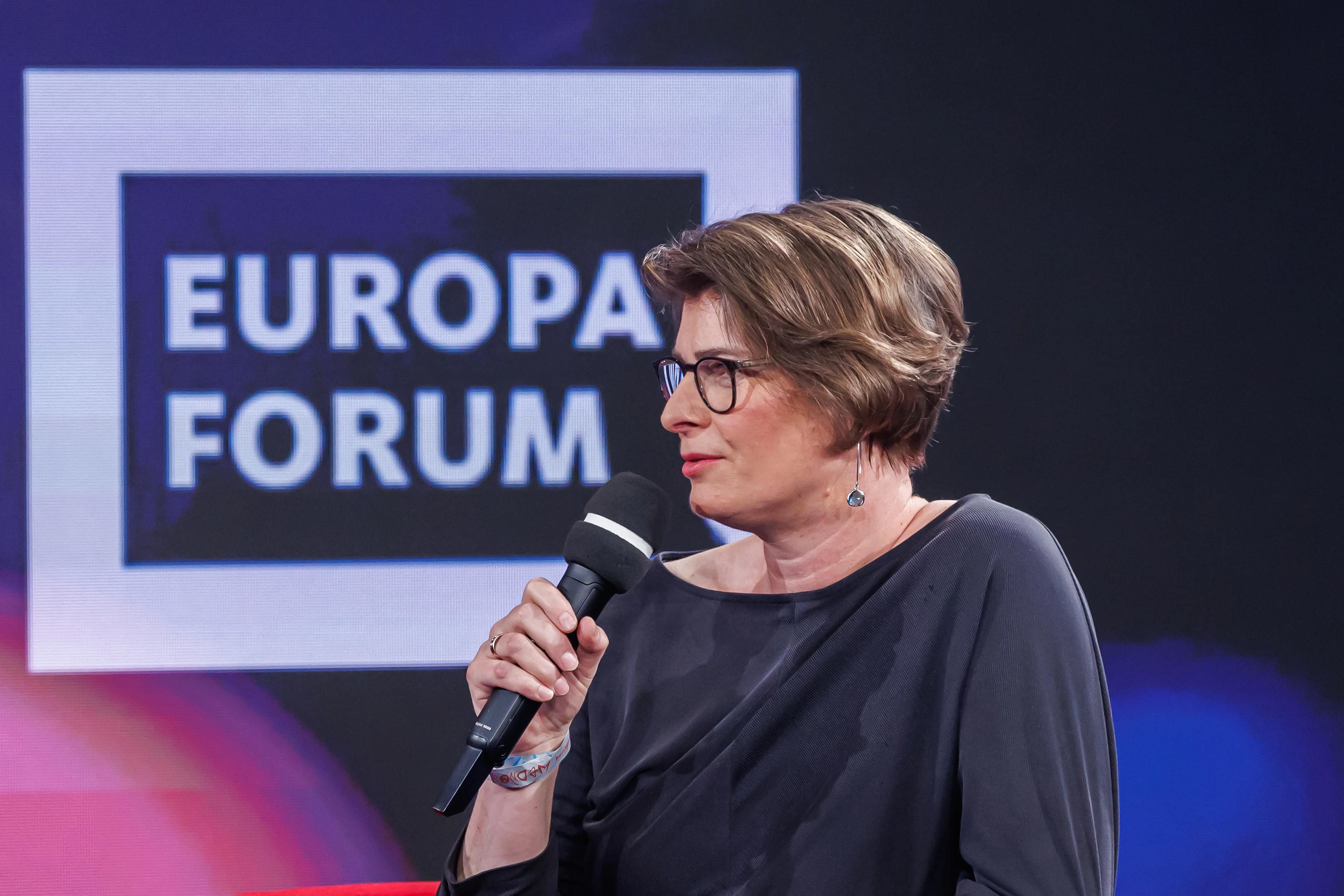
Image from Wikipedia
Image from Wikipedia
Christina Morina: A Formative Voice in German Historical Sciences
Historical Research with Social Explosiveness
Christina Morina, born on January 8, 1976, in Frankfurt (Oder), is one of the most prominent German historians of her generation. Since 2019, she has been a Professor of History at Bielefeld University, shaping debates around the history of democracy, culture of remembrance, and the political culture of both divided and united Germany. Her academic work combines scholarly precision with a clear focus on the present and public sphere. It is this connection that makes her an author whose research has an impact far beyond the academic world.
Morina's work represents a historiography that does not remain confined to archives but enables societal self-understanding. Her publications, lectures, and media contributions showcase a researcher who not only describes historical developments but also contextualizes them within larger political and cultural frameworks. She particularly focuses on experiences of democracy in East and West Germany, the handling of the Nazi past, and how historical knowledge can provide public orientation. Her career is also an example of scholarly authority in the tension between research, teaching, and public intervention.
Biographical Milestones and Academic Influences
Christina Morina studied history, political science, and journalism at Leipzig University, Ohio University, and the University of Maryland. At the University of Maryland, she earned her doctorate in 2007 with a study supervised by Jeffry Herf about the German-Soviet War in German-German memory culture. This international academic training shaped her view on historical narratives, memory politics, and the political exploitation of the past. Early on, she linked German contemporary history with transnational perspectives.
Her academic career developed in a field that demands high standards of source criticism and analytical sensitivity. Morina delved into the history of modern societies and specialized in memory studies, political cultural history, and the history of democracy. Since 2019, she has been a Professor of History at Bielefeld University, where she works in the Department of Contemporary History. There, she is one of the leading voices in a research field that conceptualizes historical analysis, public debate, and methodological reflection together.
Research Focuses on Memory, Democracy, and Public Sphere
Morina's research interests are concentrated on the social and memory history of National Socialism, the political cultural history of divided and united Germany, as well as the relationship between history and memory. This thematic breadth gives her work particular depth, as she does not treat historical processes in isolation but rather as part of long-term interpretative and conflict lines. Her works examine how democracies emerge, how they hold their ground, and how societies deal with historical ruptures.
This is particularly evident in her publications on the history of democracy. The study Thousand Breakthroughs: The Germans and Their Democracy Since the 1980s, published in 2023 and set to be released in a paperback edition in 2025, was awarded the German Non-Fiction Prize in 2024. The work explores the development of democratic ideas in East and West Germany with a broad historical horizon. It portrays Morina as a historian who understands the concept of democracy not as a rigid institution, but as a contested social practice.
Publications and Academic Visibility
The publication list at Bielefeld University documents a consistently productive research career. In addition to Thousand Breakthroughs, it includes The Future of NS Remembrance: History as Societal Self-Understanding, published in 2025. Further projects and editorships also include the Oxford Handbook of History & Memory, which she has co-edited with Wulf Kansteiner. These publications demonstrate a historian who is anchored in both German-language contemporary historical research and the international scholarly discourse.
Her works are regularly referenced in academic and journalistic contexts. Bielefeld University points to numerous media appearances where Morina comments on themes of democracy, memory politics, and current political developments. These include interviews in Der Spiegel, Frankfurter Allgemeine Sonntagszeitung, Deutschlandfunk, ZDF, and other formats. This presence makes it clear that her expertise is sought after as a historical contextualization aid in public debates. Morina thus acts as an authority whose scholarly perspective resonates outside of the university.
Media Presence and Public Role
Christina Morina does not present herself as a distant observer but as a nuanced commentator on historical contemporaneity. In interviews, she discusses the state of democracy, political representation, the rise of the AfD, and the role of memory in today's society. Her insights are frequently sought where complex developments need to be framed historically. This creates the image of a scientist who translates academic expertise into societal orientation.
Particularly notable is her interest in bridging East and West history. Morina examines not only the ruptures after 1989/90 but also the different experiences of democracy that have developed in both parts of Germany. Her perspective on the DDR, the Federal Republic, and the transition period remains free from simplifying narratives. Instead, she employs differentiation, contextualization, and a clear analytical language that makes her research accessible to a broad audience.
Scholarly Style and Methodological Strength
Morina’s strength lies in the connection between political cultural history, memory studies, and contemporary analysis. Her research works with a broad concept of democracy, placing societal negotiation processes at the center. This approach makes not only institutions visible but also mentalities, patterns of interpretation, and collective experiences. It gives her texts analytical sharpness and a high interpretive range.
Methodologically, Morina impresses with a historically precise yet never purely descriptive approach. She raises questions about the conditions of political public life, historical self-images, and the role of memories in democratic cultures. Particularly in debates surrounding National Socialism, the DDR past, and current polarization, the relevance of such research becomes apparent. Morina’s work makes clear that historical science is not only backward-looking but also crucial for diagnosing the present.
Cultural Influence and Academic Recognition
With the German Non-Fiction Prize 2024, Thousand Breakthroughs received an award that also culturally politicized Morina's work. The prize underscores that her historical analysis is not only acknowledged in academic circles but is also considered a significant contribution to public debate. Such awards enhance the authority of a researcher whose fields of interest address the central questions of German memory culture. At the same time, they show that scholarly clarity and societal relevance do not form opposites.
Morina's influence also lies in how she communicates history. Her texts and interviews open pathways to topics often dominated by buzzwords, creating space for nuanced reflection. This is particularly valuable in times of political sharpness. Christina Morina thus represents a historian who takes the claim of academia for public engagement seriously and brings historical expertise into lively debates.
Conclusion: Why Christina Morina Remains So Captivating
Christina Morina merges academic depth with public relevance, international training with clear German contemporary historical research, and methodological precision with societal engagement. Her topics touch on the significant conflict lines of the 20th and 21st centuries: democracy, memory, division, unification, and political public life. Those interested in the history of the Federal Republic, the DDR, and democratic culture in Germany will find in her work a source that is both insightful and stimulating. Her research deserves careful reading and shows how productively historical science can influence current debates.
Especially because Christina Morina does not reduce historical complexity but makes it visible, she remains an essential voice of the present. Her works encourage us to understand democracy as an open and vulnerable practice. This makes her engaging for academia, media, and a wide readership alike. Those who read her books or follow her appearances experience historiography as a vibrant intellectual force.
Official Channels of Christina Morina:
- Instagram: No official profile found
- Facebook: No official profile found
- YouTube: No official profile found
- Spotify: No official profile found
- TikTok: No official profile found
Sources:
Upcoming Events
Book Presentation Christina Morina: The American Tremor
Christina Morina reads in Bielefeld: The American Earthquake
The American Tremor