
Max Reger
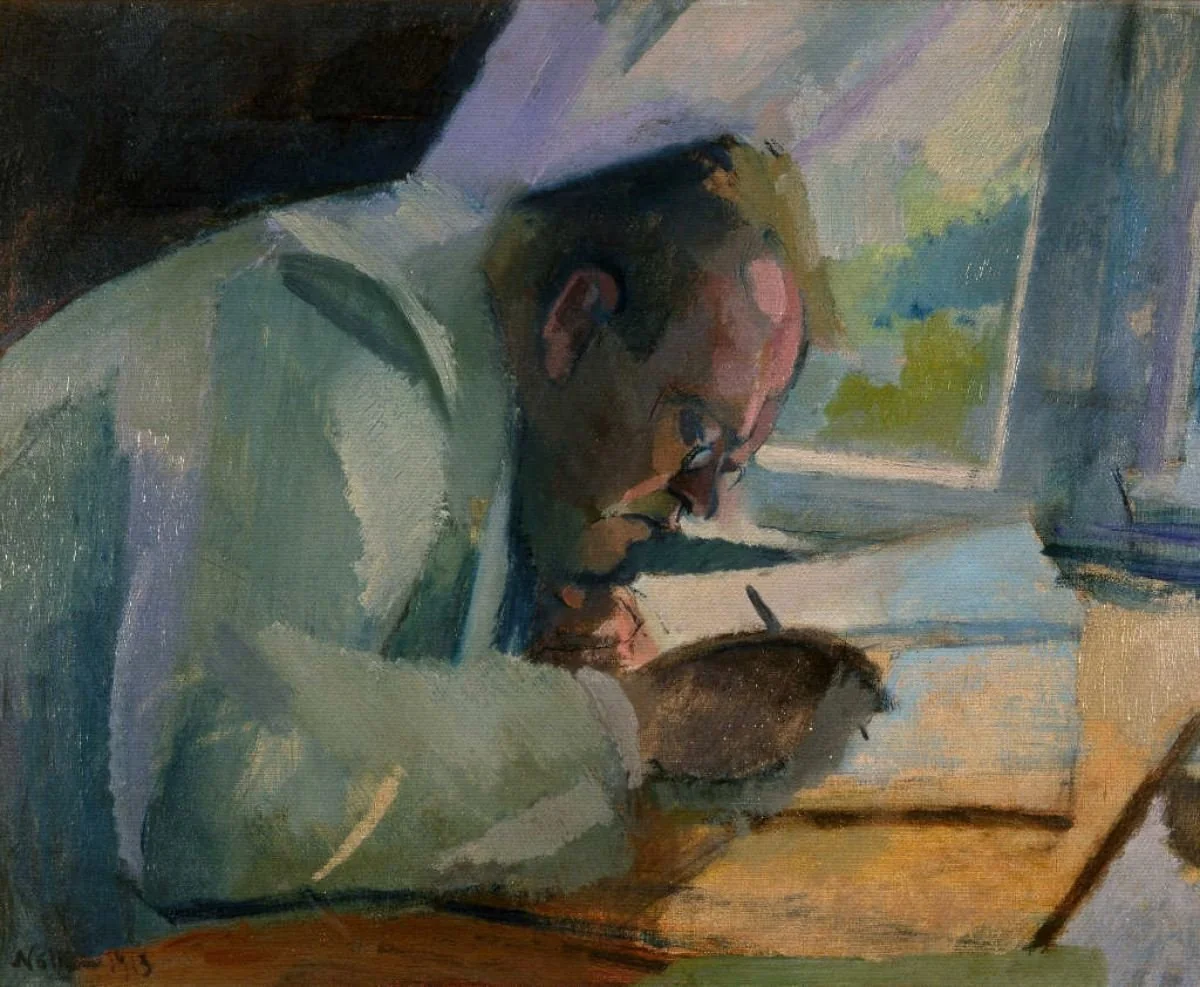
Image from Wikipedia
Image from Wikipedia
Max Reger – the Master of Dense Polyphony and Romantic Thresholds
A Composer Between Bach, Brahms, and Modernity
Max Reger, born on March 19, 1873, in Brand in the Upper Palatinate and died on May 11, 1916, in Leipzig, is one of the most distinctive and demanding figures in German music history. The composer, organist, pianist, and conductor combined late Romantic expressiveness with an uncompromising preference for counterpoint, formal rigor, and harmonic density. The Max Reger Institute describes him as one of the great composers around 1900, whose productivity surged dramatically after early crises, and who gained lasting fame primarily through his organ works. ([max-reger-institut.de](https://www.max-reger-institut.de/en/max-reger))
Reger composed music that is immediately recognizable for its density, formal ambition, and internal tension. Britannica classifies him as a late Romantic composer and emphasizes that he was among the last to infuse the musical traditions of the 19th century with renewed energy. His works challenge performers both technically and sonically, which is why they continue to have a strong appeal for organists, pianists, chamber musicians, and conductors to this day. ([britannica.com](https://www.britannica.com/biography/Max-Reger))
Early Years: Brand, Weiden, and the Influence of Theory and Practice
Reger grew up in Weiden and received musical training at an early age. After studying with music theorist Hugo Riemann, he experienced a psychological and material crisis following military service and professional setbacks, returned to his parents' home in 1898, and then began a phase of enormous creative density. The Institute emphasizes this biographical turning point from which an exceptionally productive phase of creation emerged. ([max-reger-institut.de](https://www.max-reger-institut.de/en/max-reger))
The early years reveal an artist who did not view theory as an academic sideline but as a foundation for his own musical language. Britannica reports that Reger heard Wagner in Bayreuth in 1888, although the Wagnerian influence was only temporary, and that he studied and taught piano, organ, and theory in Sondershausen and Wiesbaden from 1890 to 1893. During this period, he formed connections with Ferruccio Busoni and organist Straube, who popularized his organ music. ([britannica.com](https://www.britannica.com/biography/Max-Reger))
The Breakthrough in Munich: A Composer Overcomes Resistance
By around 1901, Reger had established himself in Munich as a composer, pianist, and teacher, although his traditional methods met with resistance. The Max Reger Institute describes him as exceptionally productive, both as a composer and as a performing pianist. This dual role infused his work with an immediate stage energy that remains interesting for concert programs and recordings to this day. ([max-reger-institut.de](https://www.max-reger-institut.de/en/max-reger))
In 1902 he married Elsa von Bercken, a divorced Protestant, which led to his excommunication; this personal decision exemplifies the friction between Reger and the conventions of his time. His life path intertwines artistic radicalism with an intense personal subtext, which is also felt in the urgency of many of his works. The combination of his Catholic background, social conflict, and unwavering artistic will constitutes one of the characteristic tension fields of his biography. ([max-reger-institut.de](https://www.max-reger-institut.de/en/max-reger))
Leipzig and Meiningen: Teaching, Leadership, and Tireless Productivity
In 1907, Reger assumed the professorship for composition at the conservatory in Leipzig and the position of musical director at the University of Leipzig; in 1911 he became court conductor in Meiningen. Both positions mark his rise from a controversial outsider to a recognized musician of significance. At the same time, he maintained his concert and composition activities with remarkable consistency. ([max-reger-institut.de](https://www.max-reger-institut.de/en/max-reger))
His career exemplifies the rare type of artist who was simultaneously a creator, performer, and educator. This gives his music a practical core: Reger wrote not only for the score but always also for the sound space, for rehearsals, for the organ, for the concert hall. His pedagogical work in Leipzig and his role as a conductor and pianist created a dense network of students and performance contexts. ([britannica.com](https://www.britannica.com/biography/Max-Reger))
The Œuvre: Organ, Chamber Music, Songs, and Orchestral Works
Reger left behind an extensive body of work that encompasses large organic forms, chamber music precision, and song-like miniatures. Britannica lists among his central orchestral works the Böcklin Suite, the Variations and Fugue on a Theme of Mozart, the Suite in Old Style, as well as variations on themes by Beethoven and Hiller; additionally, there are a piano concerto, violin sonatas, and several suites for solo viola. Particularly, his organ works such as the Fantasy on "Ein feste Burg," the Fantasy and Fugue on B-A-C-H, the Fantasy on the chorale "Wachet auf!" and the sonata in F-sharp minor significantly shaped his reputation. ([britannica.com](https://www.britannica.com/biography/Max-Reger))
The Reger Portal and the Institute's history also refer to ongoing editorial work on his oeuvre, including the Reger Complete Works edition and the Thematic Catalogue. That these editions are still being continued in the 21st century underscores the compositional significance of his catalog and the scholarly density of his legacy. Consequently, Reger is not only part of concert history but also the subject of active research and editorial practice. ([max-reger-institut.de](https://www.max-reger-institut.de/en/institute/the-institute))
Style and Sound Language: Presence in the Shadow of Bach
Reger is often described as a composer of density: contrapuntally complex, harmonically rich, formally strict, and simultaneously emotionally charged. Britannica summarizes his status as a late Romantic author and emphasizes the use of baroque forms in his organ works. Deutsche Grammophon succinctly states that in his music, Bach's counterpoint encounters harmonic worlds that lead to the threshold of modernity. ([britannica.com](https://www.britannica.com/biography/Max-Reger))
This connection between historical roots and sonic modernity creates the fascination of his music. Reger thinks in architectural sound blocks, in dense textures of voices, and in long arcs of tension that demand the highest concentration. In reception, he is therefore simultaneously regarded as conservative and visionary: rooted in tradition but with a harmony and texture that point toward the future. ([britannica.com](https://www.britannica.com/biography/Max-Reger))
Critical Reception and Cultural Influence
The reception of Reger has been characterized by admiration, overwhelm, and rediscovery. Britannica cites Arthur Honegger and Paul Hindemith as composers influenced by him, while The Guardian repeatedly describes his music as monumental, demanding, and underrepresented. Although his orchestral and chamber music appears less frequently in concert practice than his works for organ, it remains a central part of the late Romantic repertoire for connoisseurs. ([britannica.com](https://www.britannica.com/biography/Max-Reger))
The press often highlights the weight and difficulty of his works. A Guardian review referred to his Violin Concerto as a "monster," pointing to the enormous technical and structural challenges that Reger poses for his interpreters. Such formulations explain why his music was long considered difficult and why it is today being revived with special emphasis by specialized musicians. ([theguardian.com](https://www.theguardian.com/music/2012/jan/05/reger-violin-concerto-romances-review?utm_source=openai))
Current Projects, Reissues, and Reger in the 21st Century
Since Max Reger died in 1916, there are naturally no new projects or releases from the artist. Nevertheless, his work remains vibrant: The Max Reger Institute continuously reports new scholarly publications, including a 2025 edition of REGER STUDIES online, and refers to ongoing research and edition projects. This institutional work ensures that Reger's oeuvre does not remain static in the archive but is constantly being rediscovered. ([max-reger-institut.de](https://www.max-reger-institut.de/en/))
Recording practices also show ongoing activity. In 2025, Presto Music reported on a new release featuring two late works by Reger, and Gramophone presented a recording of Reger Variations within the context of a new album in 2025. Such releases demonstrate that Reger continues to be present in today's concert and recording market, especially in organ and piano literature. ([prestomusic.com](https://www.prestomusic.com/classical/articles/6658--new-release-round-up-new-release-round-up-1st-august-2025?utm_source=openai))
Discography, Editions, and Today's Listening
A complete discography would be overwhelming due to Reger's extensive production, but the key genres are clearly identifiable: organ works, choral works, songs, chamber music, and orchestral compositions. The ongoing Reger Complete Works edition documents this catalog scholarly and critically and makes the shape of the works accessible in several volumes. This is central to today's reception because Reger often only unfolds his full sonic power in reliable editions. ([de.wikipedia.org](https://de.wikipedia.org/wiki/Max_Reger?utm_source=openai))
For listeners who wish to approach his music systematically, the organ works provide an ideal entry point, followed by the orchestral and chamber works. The press regularly highlights how impressively his formal artistry unfolds in large-scale cycles of variations, passacaglias, and fantasies. Those who listen to Reger experience music as intellectual architecture: rigorously constructed, rich in detail, and challenging in the best sense. ([britannica.com](https://www.britannica.com/biography/Max-Reger))
Conclusion: A Composer for Adventure-Seeking Listeners
Max Reger fascinates because his music is never comfortable, and therein lies its greatness. He combines the discipline of counterpoint with the passion of late Romanticism, the tradition of Bach with a harmonic thinking on the threshold of modernity. Those who experience his works live not only hear a significant composer but a whole sound world between piety, intellect, and emotional density. ([britannica.com](https://www.britannica.com/biography/Max-Reger))
Especially in concert, Reger's organ, chamber, and orchestral works unleash their full force. His music demands concentration but rewards listeners with deep structural beauty and a distinctive tension. A live experience with Max Reger is always worthwhile wherever interpreters combine his architectural strength with sonic nobility. ([max-reger-institut.de](https://www.max-reger-institut.de/en/max-reger))
Official Channels of Max Reger:
- Instagram: no official profile found
- Facebook: no official profile found
- YouTube: no official profile found
- Spotify: no official profile found
- TikTok: no official profile found
Sources:
- Max Reger Institute – Max Reger
- Max Reger Institute – The Institute
- Max Reger Institute – News
- Encyclopaedia Britannica – Max Reger
- Deutsche Grammophon – Max Reger Biography
- The Guardian – Reger: Orchestral Works review
- The Guardian – Reger: Introduction, Variations and Fugue review
- The Guardian – Songs by Max Reger CD review
- Gramophone – Video of the Day: Ariel Lanyi performs Reger
- Presto Music – New Release Round-Up, 1st August 2025
- Wikipedia – Max Reger
Upcoming Events
Welte Concert: Reger and Granados
Max Reger Weekend
Max Reger Days 2026 – Traveling! With Max Reger in Prague and London
Max Reger Days 2026 in Weiden
Weiden Max Reger Days 2026