
Nina Simone
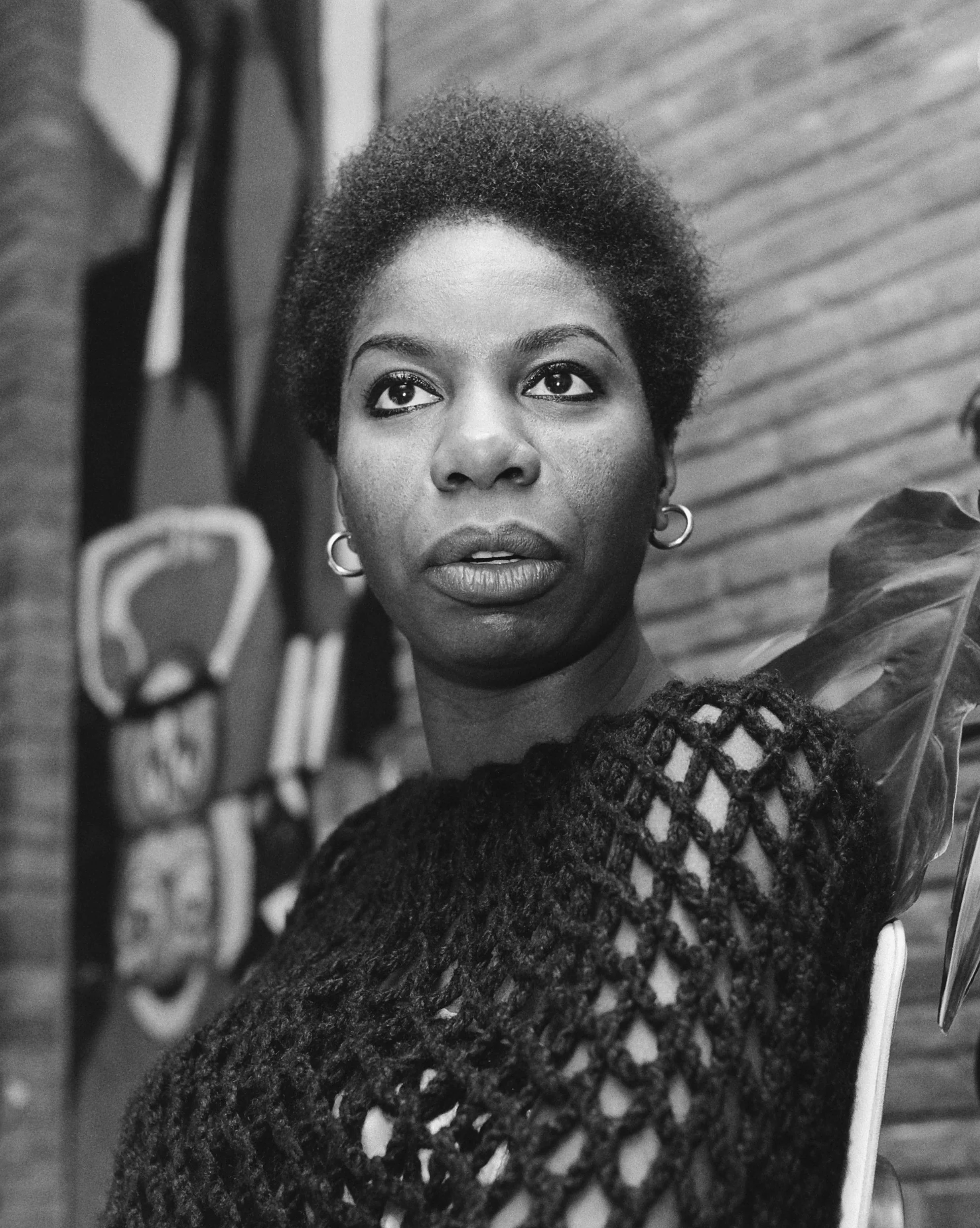
Image from Wikipedia
Image from Wikipedia
Nina Simone: The Distinctive Voice Between Jazz, Blues, Protest, and Classical Virtuosity
An Artist Who Made Music History
Nina Simone, born Eunice Kathleen Waymon on February 21, 1933, in Tryon, North Carolina, and passed away on April 21, 2003, in Carry-le-Rouet, France, is considered one of the defining voices of the 20th century. As a singer, pianist, songwriter, arranger, and civil rights activist, she possessed a rare artistic range that transcended genre boundaries. Her work merges emotional urgency, technical precision, and political stance into a distinctive musical language. ([britannica.com](https://www.britannica.com/biography/Nina-Simone?utm_source=openai))
From Prodigy to Uncompromising Artist
Simone displayed an extraordinary talent for the piano and organ from an early age. The official biography describes how she was shaped by classical discipline in her youth, later performing under her stage name Nina Simone to hide her club work from her family. This biographical split became the starting point of a career in which classical technique, jazz intuition, and blues-infused expressiveness converged. ([ninasimone.com](https://www.ninasimone.com/biography/?utm_source=openai))
A pivotal turning point was her breakthrough with "I Loves You, Porgy" in 1959, which brought her significant attention for the first time. The official website and biographical sources identify this moment as the beginning of her public recognition far beyond the club scene. From there, Simone evolved into a musician who not only interpreted songs but reshaped them with dramatic presence and narrative power. ([whoswho.de](https://whoswho.de/bio/nina-simone.html?utm_source=openai))
The Breakthrough and Early Recordings
On her early albums for Colpix, Simone began to craft her trademark sound: a fusion of intimate ballads, freely breathing jazz, gospel influences, and dense piano accompaniment. The official Nina Simone site particularly highlights her early recordings, including "The Amazing Nina Simone," "Nina Simone at Town Hall," "Nina at Newport," "Forbidden Fruit," and "Nina Simone at Carnegie Hall." These releases laid the foundation for her international reach and showcase an artist who mastered an exceptionally broad repertoire early on. ([ninasimone.com](https://www.ninasimone.com/))
Among the early songs that established her status are "Wild Is the Wind," "I Want a Little Sugar in My Bowl," "Sinner Man," and "Black Is the Color of My True Love’s Hair." The official biography emphasizes her ability to transform folk songs, torch songs, and gospel material into dramatic miniatures. This is where Simone's artistry lay: she didn't just sing; she molded atmosphere, tension, and character. ([ninasimone.com](https://www.ninasimone.com/))
Politics, Civil Rights Movement, and Artistic Radicalism
In the 1960s, Simone increasingly shifted towards political immediacy. Wikipedia and established biographical sources document that "Mississippi Goddam" was among her early civil rights songs, and her music thereafter openly responded to racial violence, resistance, and social injustice. She thereby became one of the most prominent musical voices of the U.S. civil rights movement. ([en.wikipedia.org](https://en.wikipedia.org/wiki/Nina_Simone?utm_source=openai))
This political intensification was not a peripheral aspect but a core part of her artistic identity. Simone fused the formal rigor of classical training with a raw, often eruptive expression, regularly described by the music press as intense, fearless, and radical. This blend of art and stance made her a reference figure for generations of listeners. ([britannica.com](https://www.britannica.com/biography/Nina-Simone?utm_source=openai))
The Discography: Masterpieces That Have Made a Deep Cultural Impact
Central albums in Simone's catalog include "Little Girl Blue," "The Amazing Nina Simone," "Nina Simone at Town Hall," "Nina at Newport," "I Put a Spell on You," "Pastel Blues," "Wild Is the Wind," "Baltimore," and "A Single Woman." The official website and discography pages illustrate the breadth of her work: from intimate jazz singing to orchestrated ballads, political songwriting, and elegant reinterpretations of others' compositions. ([ninasimone.com](https://www.ninasimone.com/))
"I Put a Spell on You" marks a high point in her mid-career. The official website refers to the album as a "towering achievement" and highlights how Simone combined blues, French chanson, soul, and jazz into a cohesive dramaturgy. Notably, "Feeling Good," "Ne Me Quitte Pas," and the title track showcase her ability to transform well-known songs into new emotional spaces. ([ninasimone.com](https://www.ninasimone.com/))
Hit Singles, Charts, and Public Response
Although Nina Simone was never conceived purely as a pop architect, some recordings achieved remarkable chart presence. "I Loves You, Porgy" became her first U.S. breakthrough, while "I Put a Spell on You" remained visible in the charts and cultural memory. Later reissues and the use of individual songs in advertising and film further enhanced her posthumous reputation. ([ninasimone.com](https://www.ninasimone.com/biography/?utm_source=openai))
The international resurgence in the late 1980s demonstrates how timeless her recordings felt. Biographical sources point out that "My Baby Just Cares for Me" gained massive attention through a Chanel campaign, allowing Simone to experience a late renaissance. This effect validated how strongly her voice, piano style, and song dramaturgy resonated even decades after their initial release. ([britannica.com](https://www.britannica.com/biography/Nina-Simone?utm_source=openai))
Later Years and the Final Studio Album
In her later years, Simone remained productive and artistically headstrong. The official website highlights "A Single Woman" as her final studio album and mentions the recently released Complete Elektra Edition with bonus materials, including previously unreleased material. This retrospective work demonstrates the enduring interest in her late aesthetics. ([ninasimone.com](https://www.ninasimone.com/))
The official catalog also emphasizes the significance of "The Montreux Years," which compiles her legendary performances from 1968, 1976, 1981, 1987, and 1990. These live recordings particularly document her extraordinary stage presence: improvisational, unpredictable, emotionally at the breaking point, yet technically controlled. ([ninasimone.com](https://www.ninasimone.com/))
Style, Voice, and Pianistic Signature
Simone's style is difficult to categorize into a single box. The official biography describes her spectrum as a fusion of classical, jazz, folk, R&B, gospel, and pop; she herself referred to her music as "Black Classical Music." This term aptly describes her work because Simone thought in forms, arcs of tension, and timbres, rather than rigid genre boundaries. ([ninasimone.com](https://www.ninasimone.com/))
Her voice was dark, distinctive, and possessed a dramatic directness, often described in music journalism as rough, intense, and emotional. Additionally, her piano playing was harmonically rich, rhythmically pointed, and often had an almost orchestral character. In total, this created an artistic profile that felt simultaneously vulnerable, authoritative, and highly individual. ([britannica.com](https://www.britannica.com/biography/Nina-Simone?utm_source=openai))
Interpretation as a Creative Act
Nina Simone was a master of transformation. She took songs by other authors and imbued them with new psychological depth, whether in "Feeling Good," "Ne Me Quitte Pas," or "I Put a Spell on You." This interpretative artistry made her one of the most significant singers of modernity because she didn’t just reproduce repertoire but reinterpreted it. ([ninasimone.com](https://www.ninasimone.com/))
Her arrangements often felt sparse yet maximally charged. It was precisely in their reduction that her strength lay: a single chord, a shifted emphasis, a delayed entrance of the voice could reveal an entire scene with Simone. From a music journalistic perspective, this is one of the reasons her work still serves as a reference for expression, tension, and authenticity today. ([britannica.com](https://www.britannica.com/biography/Nina-Simone?utm_source=openai))
Cultural Influence and Lasting Authority
Nina Simone not only shaped jazz and soul but also the political dimension of popular music. Her songs were heard, quoted, and remembered during the civil rights movement; simultaneously, her uncompromising style inspired later generations of artists across jazz, pop, R&B, and electronic music. The ongoing reissue of her catalogs demonstrates that her work remains present in both the cultural mainstream and the refined music canon. ([nprillinois.org](https://www.nprillinois.org/2013-07-09/experience-the-legacy-of-the-civil-rights-movement-in-song?utm_source=openai))
The current reception also speaks to her enduring impact. Official catalog maintenance, anniversary editions, and reviews of her most important albums confirm that Nina Simone continues to be regarded as an authority of musical self-assertion. She represents a music career where art, stance, and technical mastery cannot be separated. ([ninasimone.com](https://www.ninasimone.com/))
Conclusion: An Artist for Eternity
Nina Simone remains fascinating because she transformed contradictions into art: beauty and pain, discipline and upheaval, intimacy and protest. Her stage presence, musical evolution, and discography tell the story of an artist who never reduced herself to a single sound but always aimed for truth. Those who listen to her recordings encounter not just a great singer but a cultural force. ([ninasimone.com](https://www.ninasimone.com/))
Anyone who experienced Nina Simone live saw more than a concert: a musical self-assertion of rare intensity. It is precisely this energy that makes her work so exciting and vibrant to this day. Her music demands attention but rewards it with depth, elegance, and an unmistakable voice of freedom. ([ninasimone.com](https://www.ninasimone.com/))
Official Channels of Nina Simone:
- Instagram: https://www.instagram.com/ninasimone
- Facebook: https://www.facebook.com/ninasimone
- YouTube: https://www.youtube.com/user/NinaSimoneMusic/
- Spotify: https://open.spotify.com/artist/7G1GBhoKtEPnP86X2PvEYO
- TikTok: https://www.tiktok.com/@ninasimone