
Pierre Brice
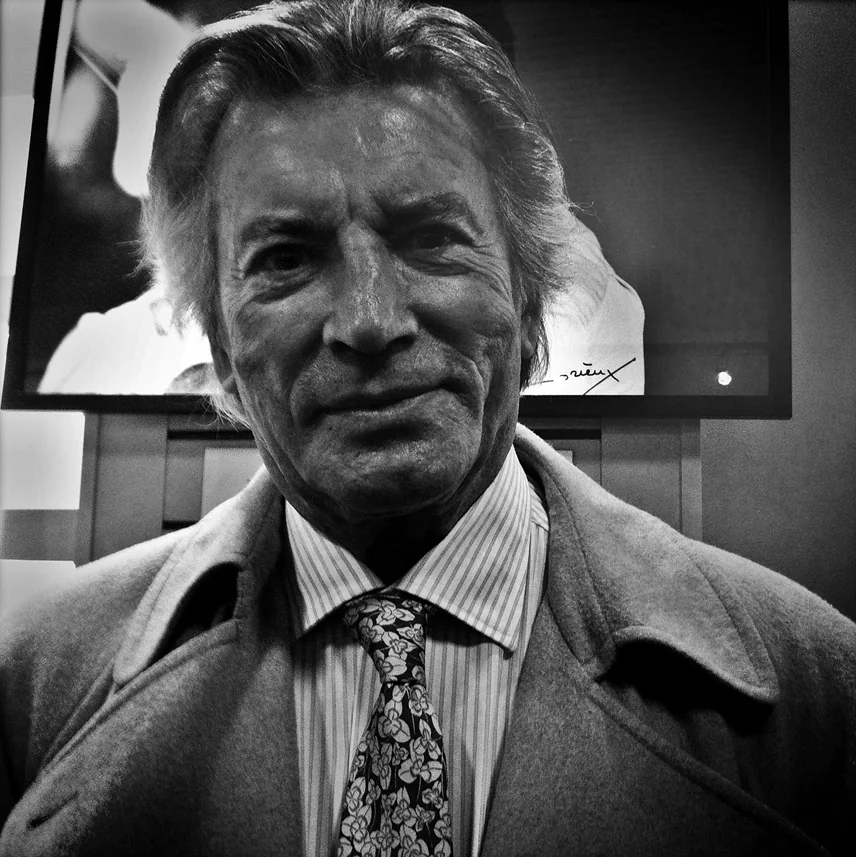
Image from Wikipedia
Image from Wikipedia
Pierre Brice: The French Winnetou and the Great Legend of German-speaking Adventure Cinema
An Actor Between Myth, Screen, and Cultural Memory
Pierre Brice, actually Pierre Louis Baron le Bris, was born on February 6, 1929, in Brest and died on June 6, 2015, near Paris. The French actor became a defining figure of European adventure films when he portrayed the Apache chief Winnetou in the Karl May adaptations during the 1960s. This role made him an icon of popular film culture, not only in Germany but far beyond. ([de.wikipedia.org](https://de.wikipedia.org/wiki/Pierre_Brice?utm_source=openai))
Brice's career exemplifies an artist whose public persona formed around a single, perfectly condensed character. For him, Winnetou was not just a role but a projection surface for romance, dignity, pathos, and cultural longing. It is precisely from this that the fascination with Pierre Brice derives to this day: he became the star of a character that represented more than cinema for entire generations. ([pierre-brice.de](https://www.pierre-brice.de/biografie/))
From Model to Film Actor: The Early Years
Before Pierre Brice became a screen figure, he worked in various jobs. He was a representative for typewriters, danced with the artist group "Trio Ganser," modeled, and did commercial shoots for clothing and razors. It wasn't until 1954 that he appeared in a small film role in "Ça va barder" under his stage name; in the latter half of the 1950s, he took acting lessons in Paris. ([deutsche-biographie.de](https://www.deutsche-biographie.de/gnd122544943.html))
His early roles took him across France to Italy and eventually into international co-productions of cloak-and-dagger and adventure films. In 1958, he received larger supporting roles, and in 1959 he moved to Rome, where he took on leading roles in genre-defining productions. Even in this phase, his sense for the elegant play with contour, posture, and aura became apparent, later becoming a trademark of his stage and film presence. ([deutsche-biographie.de](https://www.deutsche-biographie.de/gnd122544943.html))
The Breakthrough as Winnetou and the Birth of an Icon
In 1962, Horst Wendlandt cast him for the film adaptation of Karl May's "Der Schatz im Silbersee." From this decision arose one of the most famous characters in German film history: Winnetou. With the embodiment of the noble Apache chief, Brice became instantly famous, even though initially, other names were planned as the main attraction in the film. ([deutsche-biographie.de](https://www.deutsche-biographie.de/gnd122544943.html))
From 1962 to 1968, he played Winnetou eleven times on the big screen and became a favorite among audiences in West German films. The response was immense: the youth magazine "Bravo" made him a regular feature on its cover, awarded him multiple Bravo Otto awards, and honored him with several Bambis and the Golden Camera. The success was so strong that it permanently linked Brice's perception to the character. ([pierre-brice.de](https://www.pierre-brice.de/biografie/))
Cinematic Success, Sequels, and the Power of Repetition
The Winnetou cycle relied on recognition, rigid symbolism, and a distinct character portrayal. This was precisely the strength of the Karl May films: Brice embodied a mythically charged hero whose reticence, appearance, and moral integrity immediately reached the audience. The trilogy and its sequels became a pop culture phenomenon that significantly shaped the European adventure film of the 1960s. ([deutsche-biographie.de](https://www.deutsche-biographie.de/gnd122544943.html))
At the same time, the downside of fame emerged. After the end of the Karl May wave, Brice attempted to build on his success, but the audience still expected the legendary chief in a black wig and buckskin costume. This fixation on one role made him a hero of collective memory, but it complicated a sustainable re-evaluation of his other acting work. ([pierre-brice.de](https://www.pierre-brice.de/biografie/))
Open-Air Stage, Television, and the Return to the Stage
In the 1970s, Brice's work increasingly shifted to television and the stage. In 1976, he returned as Winnetou in Elspe and became the main attraction of the Karl May Festival for almost a decade. At its peak, his presence attracted over 400,000 spectators per season, making the open-air stage known nationwide. ([deutsche-biographie.de](https://www.deutsche-biographie.de/gnd122544943.html))
Between 1988 and 1991, he continued this career at the Karl May Games in Bad Segeberg. In 1997, he played an older Winnetou in the ZDF two-part series "Winnetous Rückkehr," and in 1999 he returned as a director to Bad Segeberg. Brice thus remained not only as a performer but also as a co-creator of a vibrant Karl May tradition that oscillated between theater, nostalgia, and a regional cultural event. ([pierre-brice.de](https://www.pierre-brice.de/biografie/))
Musical Side: Singer, Producer of His Own Legend
Less known but important for his artistic profile is Pierre Brice's work as a singer. From around 1965, he recorded various music titles; his first single "Ich steh’ allein" reached number 9 in Germany and number 8 in Austria. The early recordings were arranged and recorded by Martin Böttcher, accompanied by the musical style that had significantly shaped the sound of the Karl May films. ([de.wikipedia.org](https://de.wikipedia.org/wiki/Pierre_Brice))
His discography includes titles such as "Ich steh’ allein / Ribanna," "Keiner weiß den Tag / Wunderschön," "Du bist schön," "Lonely / Die Nacht beginnt," "Winnetou, du warst mein Freund / Meine roten Brüder," "Faire l’amour / Mehr als alles kann man nicht geben," "Manitou / Freundschaft," "Wir sind die Welt / Was war wird immer bleiben," and the album "Gefühle" from 1995. The recordings demonstrate how closely intertwined singing, character portrayal, and fan expectations were for Brice. ([de.wikipedia.org](https://de.wikipedia.org/wiki/Pierre_Brice))
Autobiography, Engagement, and Cultural Authority
As the distance from the cinema era increased, the focus of his public role shifted. In 2004, Pierre Brice published his autobiography "Winnetou und ich – Mein wahres Leben," went on a reading tour, and presented his memories to a broad audience. The response to the book led him to try his hand at writing and tell his life story more as part of pop history. ([pierre-brice.de](https://www.pierre-brice.de/biografie/))
Brice was also known for his charitable engagement. He worked as a UNICEF ambassador, led a relief convoy to Bosnia in 1995, and later got involved in animal protection projects in Romania. For his services, he received, among other honors, the Federal Cross of Merit First Class, the Knight of the Legion of Honor, several Bambi Awards, and other recognitions for social and artistic engagement. ([de.wikipedia.org](https://de.wikipedia.org/wiki/Pierre_Brice))
Style, Impact, and Cultural Resonance
Pierre Brice's artistic style was not based on excessive psychological differentiation but rather on presence, clarity, and iconic reduction. His acting lived from glances, posture, and a controlled pathos that created just the right mix of adventure, sentiment, and dignity in the Karl May films. It is precisely this condensation that made him a projection surface for an entire generation of moviegoers. ([deutsche-biographie.de](https://www.deutsche-biographie.de/gnd122544943.html))
His impact extends far beyond his filmography. Pierre Brice became a symbol of Franco-German friendship, a pop star of post-war German cinema, and the face of a Winnetou mythology that remains culturally charged to this day. That he often referred to fans as "friends" underscores how closely his public success, personal identification, and cultural memory were intertwined. ([pierre-brice.de](https://www.pierre-brice.de/biografie/))
Conclusion: Why Pierre Brice Fascinates to This Day
Pierre Brice remains captivating because he embodies one of the rare figures in European film where role and person merge almost inseparably. He was an actor, singer, autobiographer, and a symbol of an entire cinematic tradition. Whoever discovers his films, stage performances, and recordings today encounters not just a star, but a piece of Franco-German cultural history. ([pierre-brice.de](https://www.pierre-brice.de/biografie/))
Those who want to understand why Winnetou became a legend in Germany should not only read about Pierre Brice but experience him: in the films, in the songs, on stage, and in the documents of an extraordinary career. His presence has shaped generations, and that is why his name remains alive. ([pierre-brice.de](https://www.pierre-brice.de/biografie/))
Official Channels of Pierre Brice:
- Instagram: no official profile found
- Facebook: no official profile found
- YouTube: no official profile found
- Spotify: no official profile found
- TikTok: no official profile found