
Virginia Woolf
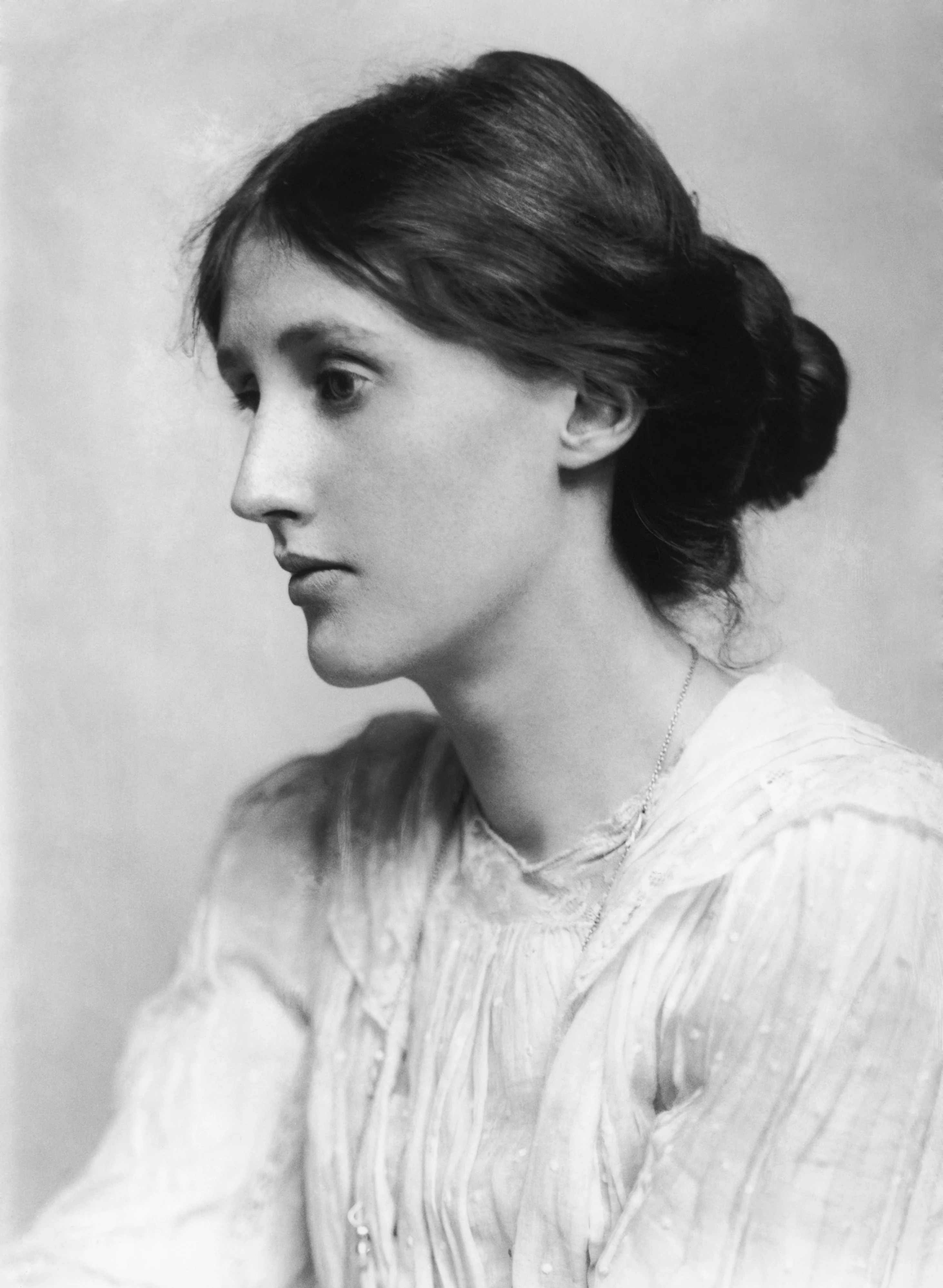
Image from Wikipedia
Image from Wikipedia
Virginia Woolf: The Radical Voice of Literary Modernism
An Author Who Reinvented Form
Virginia Woolf is one of the defining figures of classical modernism. Born as Adeline Virginia Stephen on January 25, 1882, in London and died in Sussex in 1941, she created a literature that fundamentally changed narrative forms, perception, and the inner life, shaped by her experience of an educated yet strictly Victorian world. Her novels and essays made her an internationally recognized voice early on, with an influence that extends far beyond English literature. ([britannica.com](https://www.britannica.com/biography/Virginia-Woolf?utm_source=openai))
Biography: Background, Education, and Early Influences
Woolf came from a wealthy, intellectually connected family. Her father, Leslie Stephen, was a significant literary figure and worked as the editor of the Dictionary of National Biography; her mother, Julia Jackson, brought artistic and social connections into the family milieu. In this environment, Virginia Woolf was introduced to books, debates, and cultural public life, but also faced the restrictions imposed on girls and women by the Victorian system. This tension between privilege and limitation became a central driver of her writing. ([britannica.com](https://www.britannica.com/biography/Virginia-Woolf?utm_source=openai))
From a young age, Woolf worked as a literary critic and essayist. The shift from private reading and observation to public work marked the beginning of a musical career? No— in her case, the emergence of a literary career that unfolded through criticism, essay, and novel. It was this early dual role as observer and creator that gave her an extraordinarily precise prose that combined psychological subtlety with formal boldness. ([britannica.com](https://www.britannica.com/biography/Virginia-Woolf?utm_source=openai))
The Breakthrough: From First Novel to Modern Narrative Voice
In 1915, her first novel, The Voyage Out, was published. This marked the beginning of an authorial career that peaked in the 1920s, making Woolf one of the most renowned writers of her time. Particularly, Mrs Dalloway from 1925 and To the Lighthouse from 1927 are considered key works as they dissolve linear narrative in favor of streams of consciousness, memory, temporal perception, and inner movement. Woolf did not simply write novels; she created a new model of storytelling. ([britannica.com](https://www.britannica.com/biography/Virginia-Woolf?utm_source=openai))
Her literary development was closely tied to the search for her own form. Instead of adhering to the conventions of realistic 19th-century literature, she opened the novel to fragmentation, shifts in perspective, and psychological depth. It is precisely here that her authority as a modernist lies: Woolf understood literature as a form of experimentation, as a composition of voice, rhythm, and structure that makes the inner sound of thought visible. ([britannica.com](https://www.britannica.com/biography/Virginia-Woolf?utm_source=openai))
Bloomsbury, Hogarth Press, and the Intellectual Stage
Woolf was a central figure of the Bloomsbury Group, a network of artists, writers, and intellectuals that profoundly shaped early 20th-century British culture. Together with her husband Leonard Woolf, she founded the Hogarth Press, which not only published her own works but also became an important forum for modern literature. This publishing work strengthened her independence and established her as an author who understood both artistic production and publishing practices. ([nypl.org](https://www.nypl.org/press/new-york-public-library-examines-virginia-woolfs-life-and-creative-process-new-exhibition?utm_source=openai))
The connection between writing and publishing illustrates Woolf's unique position in literary history. She was not merely a producer of texts but part of the infrastructure that made modern literature possible. In this sense, her career has a rare dual authority: aesthetically as a novelist and culturally as a co-creator of literary public life. ([bloomsbury.com](https://www.bloomsbury.com/us/modernist-lives-9781350043817/?utm_source=openai))
Essays and Feminist Theory: A Room of One's Own
With A Room of One’s Own from 1929, Woolf wrote one of the most consequential essays in women's and literary history. Based on lectures at Cambridge, she developed a concise analysis of how economic independence, personal space, and education determine the conditions of women's writing. The text became a central reference point for the women's movement and remains one of the most cited works in feminist literary criticism today. ([britishlibrary.cn](https://www.britishlibrary.cn/en/works/a-room-of-ones-own/?utm_source=openai))
The significance of this essay lies not only in its political content but also in its formal elegance. Woolf combines argumentation with imagery, historical reflection with literary imagination, and makes visible that theory can itself be a work of art. In this way, she gained authority: she did not conceive literature merely as a reflection of society but as a space in which social order can be reread and redesigned. ([britishlibrary.cn](https://www.britishlibrary.cn/en/works/a-room-of-ones-own/?utm_source=openai))
Discography of Works: The Major Books and Their Impact
Some of Woolf's most famous works include The Voyage Out (1915), Jacob’s Room (1922), Mrs Dalloway (1925), To the Lighthouse (1927), Orlando: A Biography (1928), A Room of One’s Own (1929), and Three Guineas (1938). In addition, there are short prose pieces, essays, and biographical works that round out her profile as a versatile author. Her productivity was considerable, but more critical than the sheer quantity is the stylistic consistency with which she made the novel a stage for consciousness. ([nypl.org](https://www.nypl.org/press/new-york-public-library-examines-virginia-woolfs-life-and-creative-process-new-exhibition?utm_source=openai))
Particularly, Mrs Dalloway and To the Lighthouse solidified her reputation as a master of modern prose. Both novels have frequently been read as milestones of literary modernity because they transform time, memory, and subjective perception into a new narrative architecture. Orlando, on the other hand, showcases Woolf's delight in playing with biography, gender, and historical fiction, and is one of her boldest texts. ([britannica.com](https://www.britannica.com/biography/Virginia-Woolf?utm_source=openai))
Style, Composition, and Literary Signature
Woolf's style is characterized by fluidity. Her sentences follow not just action, but thought processes; they register transitions, moods, layers of perception, and inner fractures. In this technique of consciousness representation lies her aesthetic radicality: external action recedes while memory, association, and subjective time take center stage. ([britannica.com](https://www.britannica.com/biography/Virginia-Woolf?utm_source=openai))
Additionally, the linguistic texture of her works is distinctive. Woolf composes prose with a fine rhythm, acoustic repetition, and subtle imagery; her chapters often feel like artfully assembled sentences made of light, movement, and inner tension. This is one reason why her novels still read as modern: they do not feel historically enclosed but open, breathing, and experimental. ([britannica.com](https://www.britannica.com/biography/Virginia-Woolf?utm_source=openai))
Critical Reception and Cultural Influence
Even during her lifetime, Virginia Woolf was an acknowledged, internationally discussed writer. After her death, her significance was further highlighted, especially through the rediscovery in the 1970s when A Room of One’s Own became a foundational text of the new women's movement. Since then, she has been regarded as a key figure of literary modernism and an indispensable reference for feminist theory, narrative research, and cultural criticism. ([britannica.com](https://www.britannica.com/biography/Virginia-Woolf?utm_source=openai))
Her influence extends into literature, theater, art, and academic debates. Exhibitions such as those at the National Portrait Gallery and the New York Public Library highlight that Woolf is read not only as an author but also as a cultural icon of modernity. Her themes—female education, intellectual freedom, social roles, inner conflict—maintain an unusual relevance, keeping her texts pertinent for new generations. ([npg.org.uk](https://www.npg.org.uk/whatson/exhibitions/2014/virginia-woolf?utm_source=openai))
Later Years and Tragic End
Woolf continued to write into the late 1930s and remained a productive voice in the intellectual scene. At the same time, her psychological burdens intensified, and in 1941, she took her own life in Sussex. This tragedy is part of her biography, but it does not solely define her work; equally important is the intellectual energy with which she rethought language, gender, and perception. ([britannica.com](https://www.britannica.com/biography/Virginia-Woolf?utm_source=openai))
Conclusion: Why Virginia Woolf Continues to Fascinate
Virginia Woolf captivates because she did not just write literature but reinvented it. Her novels and essays connect formal innovation, psychological depth, and cultural criticism at the highest level. Those who read her texts encounter an author who has forged a distinctive voice from personal experience, intellectual precision, and artistic daring. There is no live experience in a concert hall, but each new reading feels like an immediate encounter with modern literature in its purest form. ([britannica.com](https://www.britannica.com/biography/Virginia-Woolf?utm_source=openai))
Official Channels of Virginia Woolf:
- Instagram: no official profile found
- Facebook: no official profile found
- YouTube: no official profile found
- Spotify: no official profile found
- TikTok: no official profile found
Sources:
Upcoming Events
A Room of One's Own: Virginia Woolf in Duisburg
Virginia Woolf's essay becomes an intense theater evening full of spirit and presence in FOYER III. April 27, 2026, 7:30 PM, 12 euros. #Literature
A Room of One's Own
Virginia Woolf's classic as a powerful stage event in Duisburg: smart, intimate, and up-to-date. 04.05.2026, 12 €. Discover now! #VirginiaWoolf
A Room of One's Own
Virginia Woolf's classic at Theater Duisburg: concentrated, clever, and close to the present. On 11.05.2026 at 7:30 PM for 12 €. #Literature
Sundays at the Library! - Cultural Showcase on 20.09.
An afternoon for literature lovers: Virginia Woolf meets music, voice, and library tranquility in Potsdam. 20.09.2026, free admission. #Literature