
Am Amtsteich 15, Cottbus
Am Amtsteich 15, 03046 Cottbus, Germany
BLMK Power Plant | Tickets & Opening Hours
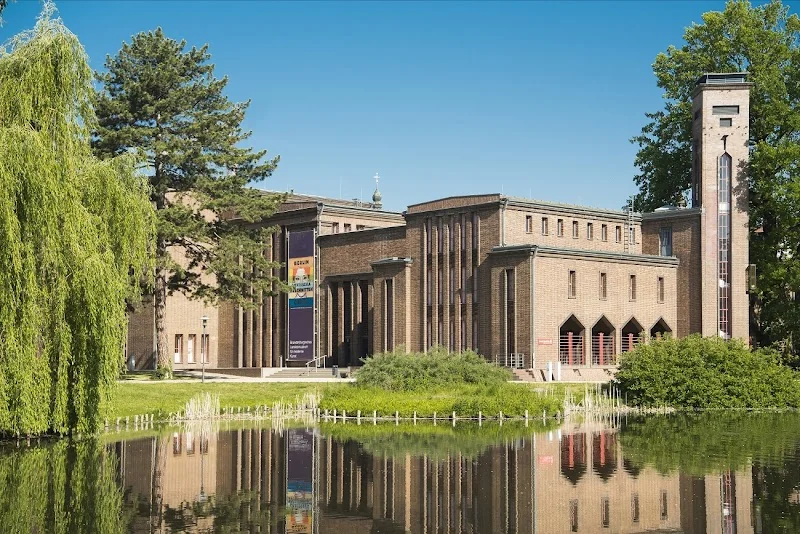
The Brandenburg State Museum for Modern Art in the Power Plant is one of the most distinctive cultural venues in Cottbus. The former power plant from 1927 no longer stands for energy from diesel engines, but for modern and contemporary art, changing exhibitions, and a very unique place in the urban landscape. The address Uferstraße/Am Amtsteich 15 is located directly at Goethepark and thus in an environment where historical parkland, water areas, and industrial architecture come together particularly closely. This mix makes the power plant so exciting for many visitors: The journey to the museum begins not only in the exhibition but already outside with a place that tells stories of urban history, renovation, and cultural repurposing. At the same time, the building is part of the Brandenburg State Museum for Modern Art, which has more than 45,000 works and a program that continually reinterprets the collection. Those looking for a museum in Cottbus that connects architecture, collection, exhibition, and event space will find one of the most interesting addresses in the city here. ([blmk.de](https://www.blmk.de/museum/))
Opening Hours, Tickets, and Admission Prices
For planning a visit, the official opening hours are the most important starting point. The power plant is open from Tuesday to Sunday from 11:00 AM to 7:00 PM; special hours apply on public holidays. This makes the location particularly suitable for weekend visits, afternoon rounds, and consciously planned cultural appointments. Those who want to combine their tour of Cottbus with a museum visit can therefore flexibly adjust their stay to half a day or a longer cultural walk. The times are clearly communicated and make the visit uncomplicated, especially for those traveling from the region or planning a day trip. The fact that the house is also open on several public holidays shows that the museum plays a fixed role in the cultural calendar of the city and is not just a classic weekday operation. For all those searching for the term opening hours, this is one of the first and most important pieces of information before booking tickets or tours. ([blmk.de](https://www.blmk.de/oeffnungszeiten-eintrittspreise/))
The admission prices also follow a well-understood model. The single ticket costs 4 euros, and the combo ticket for all exhibitions at one location costs 6 euros. On the first Thursday of the month, a reduced price of 3.50 euros applies, while those entitled to discounts receive the combo ticket for 3 euros. Children and young people up to 18 years have free admission, making the museum particularly attractive for families and young visitors. There are also clear rates for groups: From ten people, the group ticket costs 3.50 euros per person, and for trainees and students in the group, it costs 2 euros. This pricing structure is very sensible for a venue with changing programs because it supports both spontaneous visits and recurring cultural appointments. Therefore, those looking for tickets for the power plant will find no complicated pricing landscape, but a transparent system that covers regular visits, group visits, and regular museum routines equally. ([blmk.de](https://www.blmk.de/oeffnungszeiten-eintrittspreise/))
For content planning, it is also worthwhile to look at tours, annual passes, and special offers. Public tours cost an additional 1.50 euros on top of the single ticket, and the art circle 60+ is designed as a particularly low-threshold option. Annual passes are available for both Cottbus and in a combo version for both locations of the BLMK, allowing the visit to be seen not as a one-time event but as a recurring cultural practice. This fits well with a museum that works with up to 24 exhibitions per year and continually stages its collection anew. Therefore, those who understand tickets not just as admission but as access to an ongoing program benefit from a venue that rewards regular visits. For SEO and real visitors, this mix is important: short opening hours on weekends, fair admission prices, clear discounts, and a program that cannot be fully exhausted in a single visit. ([blmk.de](https://www.blmk.de/oeffnungszeiten-eintrittspreise/))
Photos, Images, and Photography in the Power Plant
The inquiries for photos and images at the power plant are particularly obvious because the place itself is extraordinarily photogenic. The architecture already provides strong motifs: an industrial building with brick character, clear lines, and a mix of machine house and switching house, along with the calm water and park landscape of Goethepark. When viewed from the outside, the museum does not present a generic museum facade, but a listed ensemble that has visibly outgrown its past as a power plant. This is exactly what makes the appeal of many images: The house appears both robust and elegant, historical and contemporary, technical and cultural. For visitors searching for images of the location, not only the exhibition is interesting, but the entire place with the Amtsteich, park, and urban proximity. Especially around the building, one can see why the power plant appears so prominently in photos: It is a place with a clear stance and high recognizability. ([blmk.de](https://www.blmk.de/museum/architektur/))
However, when using personal photos, the museum's official rule applies. Photography and filming in the exhibitions are only permitted for private purposes. Once images are published on the internet or in social networks, the museum explicitly points out possible copyright violations and assumes no liability for this. This is particularly important for visitors seeking images for social media or wanting to share pictures from the exhibition. In practice, this means: outdoor shots, architectural details, and private memory images are the safest and most appropriate choice, while images of the artworks inside should be treated respectfully and discreetly. The photography question is therefore not only a technical one but also a curatorial issue because the museum wants to protect its artworks while also providing a good visitor experience. Those who take the image function seriously should therefore make the special character of the house visible without violating museum rules. ([blmk.de](https://www.blmk.de/oeffnungszeiten-eintrittspreise/))
For this reason, it is always worthwhile to distinguish between motif and use when it comes to images. For pure orientation or travel planning, photos of the facade, the location by the park, and the architectural details are helpful. For personal memories, one can take discreet, private shots indoors. And for those who want to present the museum online, it is advisable to look at the external effect of the place: the former power plant, which now functions as a cultural house, is already a strong visual story in itself. The demand for images of the location is therefore not coincidental but follows the special role of the house as both an architectural landmark and an art museum. Especially in conjunction with Goethepark and Amtsteich, an image emerges that not only documents but also conveys atmosphere. Therefore, those who photograph the power plant also show a part of Cottbus' urban identity. ([blmk.de](https://www.blmk.de/museum/architektur/))
Reviews and Visitor Experience in the Museum
The reviews of the power plant paint a mixed but insightful picture. The architecture is often highlighted as the greatest plus point, as the place is not just a container for art but itself a significant part of the overall experience. At the same time, there are visitors who view the internal navigation or orientation in the exhibition levels more critically. This mix is not surprising for a house like the BLMK, as the museum works with changing exhibitions and is not a monothematic tour operation. Rather, the place thrives on contrasts: old industrial shell and modern art, sober spaces and often demanding exhibitions, calm facade and changing themes. Those who expect to enter a character-rich cultural venue rather than a smoothly staged experience space will perceive the positive aspects much more strongly. This is exactly why the search terms for reviews work so well: They reflect a genuine need to get a feel for the atmosphere and quality before the visit. ([blmk.de](https://www.blmk.de/museum/))
The visitor experience is additionally shaped by the nature of the program. According to the official description, the museum shows up to 24 exhibitions per year and accompanies these with tours, lectures, readings, performances, and educational offerings. Thus, the power plant is not a place where one simply walks through a collection, but a house that continually offers new perspectives. For some guests, this is precisely the appeal: One does not come just for a single highlight but for a lively program that changes and evolves. Critical reviews are not necessarily a contradiction but often an indication that the museum curates independently and does not rely on quick gratification. Therefore, those looking for a location with a strong identity will find exactly this identity in the power plant. The house sometimes appears deliberately concentrated, sometimes a bit demanding, but that is precisely why it remains memorable. ([blmk.de](https://www.blmk.de/museum/))
From an SEO perspective, the topic of reviews is important because it is not just about stars but about expectation management. Visitors want to know whether a museum is generous, modern, clearly labeled, and easy to navigate. The honest answer for the power plant is: It is a strong house with strong architecture, clear cultural relevance, and a demanding program that does not immediately appeal to everyone's taste. Therefore, those looking for a location with character will win here. Those expecting a completely linear, touristically smoothed exhibition should prepare for a somewhat idiosyncratic but thus interesting museum. The existing reviews therefore show less of a problem than a profile: The power plant tends to polarize but particularly convinces where architecture, collection, and place are thought together. This is exactly what makes the location remarkable for many visitors and attractive for repeat visits. ([blmk.de](https://www.blmk.de/museum/))
History and Architecture of the Power Plant
The history of the power plant begins in 1927 and is closely associated with the name Werner Issel, an architect whose works are considered particularly impressive. The building was originally a technical functional structure, thus the exact opposite of a museum. This makes the later repurposing so exciting: The house was in operation until the 1960s, was then rethought as an industrial monument, and reopened as a museum location in 2008 after a four-year renovation. This transformation is not just a renovation but a cultural perspective shift. The museum today stands in a building that does not hide its industrial origins but visibly carries them forward. Therefore, when walking through the place, one does not see a neutralized shell but a historical power plant that confidently lives out its second career as a cultural venue. This is exactly where the special strength of the location lies: It tells of technological history, urban development, and cultural reclamation at the same time. ([blmk.de](https://www.blmk.de/museum/architektur/))
Particularly valuable is the architectural differentiation of the two building parts. The machine house follows the New Objectivity with its segmented and sober appearance, while the switching house is more influenced by brick expressionism. This makes the ensemble not uniform in the usual sense but rich in tension and readability. For visitors, this is ideal because one perceives the building not just as a backdrop but as a historical document that makes its era visible in two different formal languages. The renovation by the architectural firm Anderhalten has not obscured this quality but translated it into a museum use. The term industrial monument fits very well here because it makes clear that the building is not simply old but culturally historically charged. The power plant is thus a good example of how industrial architecture can be gently and confidently transformed into a modern museum format. ([blmk.de](https://www.blmk.de/museum/architektur/))
For the perception of the house, it is also important that the architectural history does not function in isolation from the surroundings. The museum is located near the Amtsteich and in the context of Goethepark, thus in a landscape that has also grown historically. This creates an exciting dialogue between built industrial history and developed park landscape. The place does not appear isolated but embedded in an urban space that constantly moves between nature, recreation, and culture. This is exactly why a visit is worthwhile not only because of the exhibition but also because of the architecture itself. Those interested in brick, repurposing, and industrial history will find a location here that offers more than mere function. The power plant shows how energy infrastructure can become a cultural space without losing its own past. This mix of preservation and new use is one of the strongest reasons why the house remains so present to this day. ([blmk.de](https://www.blmk.de/museum/architektur/))
Collection, Exhibitions, and Program
The BLMK is particularly important because its collection is exceptionally large and art-historically significant. With over 45,000 works, the museum houses the world's most comprehensive museum collection of art from the GDR and the subsequent artistic traditions. This collection is not understood as a rigid archive but as an active resource used for new exhibitions, contexts, and discussions. The museum juxtaposes art from the GDR, East German traditions, and national as well as international positions to make historical lines, breaks, and connections visible. For visitors, this means: Those who visit the power plant do not just experience an exhibition but a curated view of art history and the present. The depth of content makes the house interesting for repeat visits because the collection unfolds its effect not all at once but in ever-new combinations. ([blmk.de](https://www.blmk.de/museum/))
The establishment of the BLMK in 2017 is also part of this story. The museum emerged from the merger of the dkw. Art Museum Power Plant Cottbus and the Museum Junge Kunst Frankfurt (Oder). This brought together two independent, complementary strands of collection and exhibition, which are now organized at two locations with a total of three exhibition houses. This structure explains why the museum can appear so flexible programmatically. At each location, several presentations run in parallel, and the annual program with up to 24 exhibitions shows how consistently the house focuses on variation and updating. For SEO search queries regarding exhibitions or programs, this is a central point: The power plant is not a place of a single highlight but a museum that continuously takes up new themes and transforms its own collection into changing narratives. ([blmk.de](https://www.blmk.de/museum/))
In addition, there is a wide range of educational and event offerings. The museum works with tours, expert lectures, readings, performances, and educational activities, thus not only showing art but also creating space for discussion. Catalogs and other publications further emphasize the scientific claim of the house. For visitors, this is especially relevant when they are looking for a place that offers more than mere exhibition culture. The power plant works best when one takes the time to grasp the thematic depth, the collection, and the context. Those who do so experience a place that does not rely on quick effects but on lasting impressions. This combination of collection, research, mediation, and changing programs makes the BLMK in the power plant one of the most important cultural addresses in Cottbus and a location that continually provides new reasons for art enthusiasts to come. ([blmk.de](https://www.blmk.de/museum/))
Directions, Parking, Accessibility, and Capacity
The practical arrival at the power plant is easy to remember: Uferstraße/Am Amtsteich 15, 03046 Cottbus. The location is in a central urban area at Goethepark and thus in an area that can be easily combined with a walk through the city center. Those planning from a tourist perspective can therefore easily combine the museum with other Cottbus destinations. Goethepark itself is a historical park that, according to the city of Cottbus, was established in 1895, and whose Amtsteich was created around 1600. This creates a historical urban space around the museum that makes the visit interesting even outside the exhibition. Regarding parking, it is especially important that Cottbus operates with designated parking zones and a parking guidance system. Therefore, checking the exact parking space before arrival is advisable to avoid wasting time. ([blmk.de](https://www.blmk.de/oeffnungszeiten-eintrittspreise/))
Accessibility is well addressed in the power plant. All exhibition rooms, the event hall, and the mukk. are accessible via elevators, and according to the rental page, there are three passenger elevators available. Additionally, there are cloakroom lockers, lockers, and accessible restrooms in the basement. The building is air-conditioned, which is a practical advantage during longer exhibition visits or events. For groups, it is also important that the house, due to its architecture and acoustics, sometimes only allows a limited number of visitors per area. The museum therefore recommends prior coordination for group visits. This organizational aspect is relevant not only for organizers but also for visitors who appreciate a pleasantly planable and well-accessible cultural venue. The power plant clearly shows that museum quality and functional practice belong together. ([blmk.de](https://www.blmk.de/oeffnungszeiten-eintrittspreise/))
The capacities as a location are also important for many search queries. The event space covers 200 square meters and is suitable for 120 seats in conference seating or 80 seats with tables. With the representative foyer and cafeteria, the total area can be expanded to up to 250 people, with all areas located on the ground floor. Events in the exhibition rooms on the first and second floors are not possible to protect the artworks. This makes the power plant a very well-defined place for conferences, receptions, cultural events, and special formats, but not a generic multifunctional hall. This clear separation of exhibition and event space is a plus because it protects the art while allowing for professional use. Those looking for a location with history, atmosphere, and robust spatial structure will find a convincing mix of museum and event space here. ([blmk.de](https://www.blmk.de/museum/vermietungen/))
Sources:
Show moreShow less
BLMK Power Plant | Tickets & Opening Hours
The Brandenburg State Museum for Modern Art in the Power Plant is one of the most distinctive cultural venues in Cottbus. The former power plant from 1927 no longer stands for energy from diesel engines, but for modern and contemporary art, changing exhibitions, and a very unique place in the urban landscape. The address Uferstraße/Am Amtsteich 15 is located directly at Goethepark and thus in an environment where historical parkland, water areas, and industrial architecture come together particularly closely. This mix makes the power plant so exciting for many visitors: The journey to the museum begins not only in the exhibition but already outside with a place that tells stories of urban history, renovation, and cultural repurposing. At the same time, the building is part of the Brandenburg State Museum for Modern Art, which has more than 45,000 works and a program that continually reinterprets the collection. Those looking for a museum in Cottbus that connects architecture, collection, exhibition, and event space will find one of the most interesting addresses in the city here. ([blmk.de](https://www.blmk.de/museum/))
Opening Hours, Tickets, and Admission Prices
For planning a visit, the official opening hours are the most important starting point. The power plant is open from Tuesday to Sunday from 11:00 AM to 7:00 PM; special hours apply on public holidays. This makes the location particularly suitable for weekend visits, afternoon rounds, and consciously planned cultural appointments. Those who want to combine their tour of Cottbus with a museum visit can therefore flexibly adjust their stay to half a day or a longer cultural walk. The times are clearly communicated and make the visit uncomplicated, especially for those traveling from the region or planning a day trip. The fact that the house is also open on several public holidays shows that the museum plays a fixed role in the cultural calendar of the city and is not just a classic weekday operation. For all those searching for the term opening hours, this is one of the first and most important pieces of information before booking tickets or tours. ([blmk.de](https://www.blmk.de/oeffnungszeiten-eintrittspreise/))
The admission prices also follow a well-understood model. The single ticket costs 4 euros, and the combo ticket for all exhibitions at one location costs 6 euros. On the first Thursday of the month, a reduced price of 3.50 euros applies, while those entitled to discounts receive the combo ticket for 3 euros. Children and young people up to 18 years have free admission, making the museum particularly attractive for families and young visitors. There are also clear rates for groups: From ten people, the group ticket costs 3.50 euros per person, and for trainees and students in the group, it costs 2 euros. This pricing structure is very sensible for a venue with changing programs because it supports both spontaneous visits and recurring cultural appointments. Therefore, those looking for tickets for the power plant will find no complicated pricing landscape, but a transparent system that covers regular visits, group visits, and regular museum routines equally. ([blmk.de](https://www.blmk.de/oeffnungszeiten-eintrittspreise/))
For content planning, it is also worthwhile to look at tours, annual passes, and special offers. Public tours cost an additional 1.50 euros on top of the single ticket, and the art circle 60+ is designed as a particularly low-threshold option. Annual passes are available for both Cottbus and in a combo version for both locations of the BLMK, allowing the visit to be seen not as a one-time event but as a recurring cultural practice. This fits well with a museum that works with up to 24 exhibitions per year and continually stages its collection anew. Therefore, those who understand tickets not just as admission but as access to an ongoing program benefit from a venue that rewards regular visits. For SEO and real visitors, this mix is important: short opening hours on weekends, fair admission prices, clear discounts, and a program that cannot be fully exhausted in a single visit. ([blmk.de](https://www.blmk.de/oeffnungszeiten-eintrittspreise/))
Photos, Images, and Photography in the Power Plant
The inquiries for photos and images at the power plant are particularly obvious because the place itself is extraordinarily photogenic. The architecture already provides strong motifs: an industrial building with brick character, clear lines, and a mix of machine house and switching house, along with the calm water and park landscape of Goethepark. When viewed from the outside, the museum does not present a generic museum facade, but a listed ensemble that has visibly outgrown its past as a power plant. This is exactly what makes the appeal of many images: The house appears both robust and elegant, historical and contemporary, technical and cultural. For visitors searching for images of the location, not only the exhibition is interesting, but the entire place with the Amtsteich, park, and urban proximity. Especially around the building, one can see why the power plant appears so prominently in photos: It is a place with a clear stance and high recognizability. ([blmk.de](https://www.blmk.de/museum/architektur/))
However, when using personal photos, the museum's official rule applies. Photography and filming in the exhibitions are only permitted for private purposes. Once images are published on the internet or in social networks, the museum explicitly points out possible copyright violations and assumes no liability for this. This is particularly important for visitors seeking images for social media or wanting to share pictures from the exhibition. In practice, this means: outdoor shots, architectural details, and private memory images are the safest and most appropriate choice, while images of the artworks inside should be treated respectfully and discreetly. The photography question is therefore not only a technical one but also a curatorial issue because the museum wants to protect its artworks while also providing a good visitor experience. Those who take the image function seriously should therefore make the special character of the house visible without violating museum rules. ([blmk.de](https://www.blmk.de/oeffnungszeiten-eintrittspreise/))
For this reason, it is always worthwhile to distinguish between motif and use when it comes to images. For pure orientation or travel planning, photos of the facade, the location by the park, and the architectural details are helpful. For personal memories, one can take discreet, private shots indoors. And for those who want to present the museum online, it is advisable to look at the external effect of the place: the former power plant, which now functions as a cultural house, is already a strong visual story in itself. The demand for images of the location is therefore not coincidental but follows the special role of the house as both an architectural landmark and an art museum. Especially in conjunction with Goethepark and Amtsteich, an image emerges that not only documents but also conveys atmosphere. Therefore, those who photograph the power plant also show a part of Cottbus' urban identity. ([blmk.de](https://www.blmk.de/museum/architektur/))
Reviews and Visitor Experience in the Museum
The reviews of the power plant paint a mixed but insightful picture. The architecture is often highlighted as the greatest plus point, as the place is not just a container for art but itself a significant part of the overall experience. At the same time, there are visitors who view the internal navigation or orientation in the exhibition levels more critically. This mix is not surprising for a house like the BLMK, as the museum works with changing exhibitions and is not a monothematic tour operation. Rather, the place thrives on contrasts: old industrial shell and modern art, sober spaces and often demanding exhibitions, calm facade and changing themes. Those who expect to enter a character-rich cultural venue rather than a smoothly staged experience space will perceive the positive aspects much more strongly. This is exactly why the search terms for reviews work so well: They reflect a genuine need to get a feel for the atmosphere and quality before the visit. ([blmk.de](https://www.blmk.de/museum/))
The visitor experience is additionally shaped by the nature of the program. According to the official description, the museum shows up to 24 exhibitions per year and accompanies these with tours, lectures, readings, performances, and educational offerings. Thus, the power plant is not a place where one simply walks through a collection, but a house that continually offers new perspectives. For some guests, this is precisely the appeal: One does not come just for a single highlight but for a lively program that changes and evolves. Critical reviews are not necessarily a contradiction but often an indication that the museum curates independently and does not rely on quick gratification. Therefore, those looking for a location with a strong identity will find exactly this identity in the power plant. The house sometimes appears deliberately concentrated, sometimes a bit demanding, but that is precisely why it remains memorable. ([blmk.de](https://www.blmk.de/museum/))
From an SEO perspective, the topic of reviews is important because it is not just about stars but about expectation management. Visitors want to know whether a museum is generous, modern, clearly labeled, and easy to navigate. The honest answer for the power plant is: It is a strong house with strong architecture, clear cultural relevance, and a demanding program that does not immediately appeal to everyone's taste. Therefore, those looking for a location with character will win here. Those expecting a completely linear, touristically smoothed exhibition should prepare for a somewhat idiosyncratic but thus interesting museum. The existing reviews therefore show less of a problem than a profile: The power plant tends to polarize but particularly convinces where architecture, collection, and place are thought together. This is exactly what makes the location remarkable for many visitors and attractive for repeat visits. ([blmk.de](https://www.blmk.de/museum/))
History and Architecture of the Power Plant
The history of the power plant begins in 1927 and is closely associated with the name Werner Issel, an architect whose works are considered particularly impressive. The building was originally a technical functional structure, thus the exact opposite of a museum. This makes the later repurposing so exciting: The house was in operation until the 1960s, was then rethought as an industrial monument, and reopened as a museum location in 2008 after a four-year renovation. This transformation is not just a renovation but a cultural perspective shift. The museum today stands in a building that does not hide its industrial origins but visibly carries them forward. Therefore, when walking through the place, one does not see a neutralized shell but a historical power plant that confidently lives out its second career as a cultural venue. This is exactly where the special strength of the location lies: It tells of technological history, urban development, and cultural reclamation at the same time. ([blmk.de](https://www.blmk.de/museum/architektur/))
Particularly valuable is the architectural differentiation of the two building parts. The machine house follows the New Objectivity with its segmented and sober appearance, while the switching house is more influenced by brick expressionism. This makes the ensemble not uniform in the usual sense but rich in tension and readability. For visitors, this is ideal because one perceives the building not just as a backdrop but as a historical document that makes its era visible in two different formal languages. The renovation by the architectural firm Anderhalten has not obscured this quality but translated it into a museum use. The term industrial monument fits very well here because it makes clear that the building is not simply old but culturally historically charged. The power plant is thus a good example of how industrial architecture can be gently and confidently transformed into a modern museum format. ([blmk.de](https://www.blmk.de/museum/architektur/))
For the perception of the house, it is also important that the architectural history does not function in isolation from the surroundings. The museum is located near the Amtsteich and in the context of Goethepark, thus in a landscape that has also grown historically. This creates an exciting dialogue between built industrial history and developed park landscape. The place does not appear isolated but embedded in an urban space that constantly moves between nature, recreation, and culture. This is exactly why a visit is worthwhile not only because of the exhibition but also because of the architecture itself. Those interested in brick, repurposing, and industrial history will find a location here that offers more than mere function. The power plant shows how energy infrastructure can become a cultural space without losing its own past. This mix of preservation and new use is one of the strongest reasons why the house remains so present to this day. ([blmk.de](https://www.blmk.de/museum/architektur/))
Collection, Exhibitions, and Program
The BLMK is particularly important because its collection is exceptionally large and art-historically significant. With over 45,000 works, the museum houses the world's most comprehensive museum collection of art from the GDR and the subsequent artistic traditions. This collection is not understood as a rigid archive but as an active resource used for new exhibitions, contexts, and discussions. The museum juxtaposes art from the GDR, East German traditions, and national as well as international positions to make historical lines, breaks, and connections visible. For visitors, this means: Those who visit the power plant do not just experience an exhibition but a curated view of art history and the present. The depth of content makes the house interesting for repeat visits because the collection unfolds its effect not all at once but in ever-new combinations. ([blmk.de](https://www.blmk.de/museum/))
The establishment of the BLMK in 2017 is also part of this story. The museum emerged from the merger of the dkw. Art Museum Power Plant Cottbus and the Museum Junge Kunst Frankfurt (Oder). This brought together two independent, complementary strands of collection and exhibition, which are now organized at two locations with a total of three exhibition houses. This structure explains why the museum can appear so flexible programmatically. At each location, several presentations run in parallel, and the annual program with up to 24 exhibitions shows how consistently the house focuses on variation and updating. For SEO search queries regarding exhibitions or programs, this is a central point: The power plant is not a place of a single highlight but a museum that continuously takes up new themes and transforms its own collection into changing narratives. ([blmk.de](https://www.blmk.de/museum/))
In addition, there is a wide range of educational and event offerings. The museum works with tours, expert lectures, readings, performances, and educational activities, thus not only showing art but also creating space for discussion. Catalogs and other publications further emphasize the scientific claim of the house. For visitors, this is especially relevant when they are looking for a place that offers more than mere exhibition culture. The power plant works best when one takes the time to grasp the thematic depth, the collection, and the context. Those who do so experience a place that does not rely on quick effects but on lasting impressions. This combination of collection, research, mediation, and changing programs makes the BLMK in the power plant one of the most important cultural addresses in Cottbus and a location that continually provides new reasons for art enthusiasts to come. ([blmk.de](https://www.blmk.de/museum/))
Directions, Parking, Accessibility, and Capacity
The practical arrival at the power plant is easy to remember: Uferstraße/Am Amtsteich 15, 03046 Cottbus. The location is in a central urban area at Goethepark and thus in an area that can be easily combined with a walk through the city center. Those planning from a tourist perspective can therefore easily combine the museum with other Cottbus destinations. Goethepark itself is a historical park that, according to the city of Cottbus, was established in 1895, and whose Amtsteich was created around 1600. This creates a historical urban space around the museum that makes the visit interesting even outside the exhibition. Regarding parking, it is especially important that Cottbus operates with designated parking zones and a parking guidance system. Therefore, checking the exact parking space before arrival is advisable to avoid wasting time. ([blmk.de](https://www.blmk.de/oeffnungszeiten-eintrittspreise/))
Accessibility is well addressed in the power plant. All exhibition rooms, the event hall, and the mukk. are accessible via elevators, and according to the rental page, there are three passenger elevators available. Additionally, there are cloakroom lockers, lockers, and accessible restrooms in the basement. The building is air-conditioned, which is a practical advantage during longer exhibition visits or events. For groups, it is also important that the house, due to its architecture and acoustics, sometimes only allows a limited number of visitors per area. The museum therefore recommends prior coordination for group visits. This organizational aspect is relevant not only for organizers but also for visitors who appreciate a pleasantly planable and well-accessible cultural venue. The power plant clearly shows that museum quality and functional practice belong together. ([blmk.de](https://www.blmk.de/oeffnungszeiten-eintrittspreise/))
The capacities as a location are also important for many search queries. The event space covers 200 square meters and is suitable for 120 seats in conference seating or 80 seats with tables. With the representative foyer and cafeteria, the total area can be expanded to up to 250 people, with all areas located on the ground floor. Events in the exhibition rooms on the first and second floors are not possible to protect the artworks. This makes the power plant a very well-defined place for conferences, receptions, cultural events, and special formats, but not a generic multifunctional hall. This clear separation of exhibition and event space is a plus because it protects the art while allowing for professional use. Those looking for a location with history, atmosphere, and robust spatial structure will find a convincing mix of museum and event space here. ([blmk.de](https://www.blmk.de/museum/vermietungen/))
Sources:
BLMK Power Plant | Tickets & Opening Hours
The Brandenburg State Museum for Modern Art in the Power Plant is one of the most distinctive cultural venues in Cottbus. The former power plant from 1927 no longer stands for energy from diesel engines, but for modern and contemporary art, changing exhibitions, and a very unique place in the urban landscape. The address Uferstraße/Am Amtsteich 15 is located directly at Goethepark and thus in an environment where historical parkland, water areas, and industrial architecture come together particularly closely. This mix makes the power plant so exciting for many visitors: The journey to the museum begins not only in the exhibition but already outside with a place that tells stories of urban history, renovation, and cultural repurposing. At the same time, the building is part of the Brandenburg State Museum for Modern Art, which has more than 45,000 works and a program that continually reinterprets the collection. Those looking for a museum in Cottbus that connects architecture, collection, exhibition, and event space will find one of the most interesting addresses in the city here. ([blmk.de](https://www.blmk.de/museum/))
Opening Hours, Tickets, and Admission Prices
For planning a visit, the official opening hours are the most important starting point. The power plant is open from Tuesday to Sunday from 11:00 AM to 7:00 PM; special hours apply on public holidays. This makes the location particularly suitable for weekend visits, afternoon rounds, and consciously planned cultural appointments. Those who want to combine their tour of Cottbus with a museum visit can therefore flexibly adjust their stay to half a day or a longer cultural walk. The times are clearly communicated and make the visit uncomplicated, especially for those traveling from the region or planning a day trip. The fact that the house is also open on several public holidays shows that the museum plays a fixed role in the cultural calendar of the city and is not just a classic weekday operation. For all those searching for the term opening hours, this is one of the first and most important pieces of information before booking tickets or tours. ([blmk.de](https://www.blmk.de/oeffnungszeiten-eintrittspreise/))
The admission prices also follow a well-understood model. The single ticket costs 4 euros, and the combo ticket for all exhibitions at one location costs 6 euros. On the first Thursday of the month, a reduced price of 3.50 euros applies, while those entitled to discounts receive the combo ticket for 3 euros. Children and young people up to 18 years have free admission, making the museum particularly attractive for families and young visitors. There are also clear rates for groups: From ten people, the group ticket costs 3.50 euros per person, and for trainees and students in the group, it costs 2 euros. This pricing structure is very sensible for a venue with changing programs because it supports both spontaneous visits and recurring cultural appointments. Therefore, those looking for tickets for the power plant will find no complicated pricing landscape, but a transparent system that covers regular visits, group visits, and regular museum routines equally. ([blmk.de](https://www.blmk.de/oeffnungszeiten-eintrittspreise/))
For content planning, it is also worthwhile to look at tours, annual passes, and special offers. Public tours cost an additional 1.50 euros on top of the single ticket, and the art circle 60+ is designed as a particularly low-threshold option. Annual passes are available for both Cottbus and in a combo version for both locations of the BLMK, allowing the visit to be seen not as a one-time event but as a recurring cultural practice. This fits well with a museum that works with up to 24 exhibitions per year and continually stages its collection anew. Therefore, those who understand tickets not just as admission but as access to an ongoing program benefit from a venue that rewards regular visits. For SEO and real visitors, this mix is important: short opening hours on weekends, fair admission prices, clear discounts, and a program that cannot be fully exhausted in a single visit. ([blmk.de](https://www.blmk.de/oeffnungszeiten-eintrittspreise/))
Photos, Images, and Photography in the Power Plant
The inquiries for photos and images at the power plant are particularly obvious because the place itself is extraordinarily photogenic. The architecture already provides strong motifs: an industrial building with brick character, clear lines, and a mix of machine house and switching house, along with the calm water and park landscape of Goethepark. When viewed from the outside, the museum does not present a generic museum facade, but a listed ensemble that has visibly outgrown its past as a power plant. This is exactly what makes the appeal of many images: The house appears both robust and elegant, historical and contemporary, technical and cultural. For visitors searching for images of the location, not only the exhibition is interesting, but the entire place with the Amtsteich, park, and urban proximity. Especially around the building, one can see why the power plant appears so prominently in photos: It is a place with a clear stance and high recognizability. ([blmk.de](https://www.blmk.de/museum/architektur/))
However, when using personal photos, the museum's official rule applies. Photography and filming in the exhibitions are only permitted for private purposes. Once images are published on the internet or in social networks, the museum explicitly points out possible copyright violations and assumes no liability for this. This is particularly important for visitors seeking images for social media or wanting to share pictures from the exhibition. In practice, this means: outdoor shots, architectural details, and private memory images are the safest and most appropriate choice, while images of the artworks inside should be treated respectfully and discreetly. The photography question is therefore not only a technical one but also a curatorial issue because the museum wants to protect its artworks while also providing a good visitor experience. Those who take the image function seriously should therefore make the special character of the house visible without violating museum rules. ([blmk.de](https://www.blmk.de/oeffnungszeiten-eintrittspreise/))
For this reason, it is always worthwhile to distinguish between motif and use when it comes to images. For pure orientation or travel planning, photos of the facade, the location by the park, and the architectural details are helpful. For personal memories, one can take discreet, private shots indoors. And for those who want to present the museum online, it is advisable to look at the external effect of the place: the former power plant, which now functions as a cultural house, is already a strong visual story in itself. The demand for images of the location is therefore not coincidental but follows the special role of the house as both an architectural landmark and an art museum. Especially in conjunction with Goethepark and Amtsteich, an image emerges that not only documents but also conveys atmosphere. Therefore, those who photograph the power plant also show a part of Cottbus' urban identity. ([blmk.de](https://www.blmk.de/museum/architektur/))
Reviews and Visitor Experience in the Museum
The reviews of the power plant paint a mixed but insightful picture. The architecture is often highlighted as the greatest plus point, as the place is not just a container for art but itself a significant part of the overall experience. At the same time, there are visitors who view the internal navigation or orientation in the exhibition levels more critically. This mix is not surprising for a house like the BLMK, as the museum works with changing exhibitions and is not a monothematic tour operation. Rather, the place thrives on contrasts: old industrial shell and modern art, sober spaces and often demanding exhibitions, calm facade and changing themes. Those who expect to enter a character-rich cultural venue rather than a smoothly staged experience space will perceive the positive aspects much more strongly. This is exactly why the search terms for reviews work so well: They reflect a genuine need to get a feel for the atmosphere and quality before the visit. ([blmk.de](https://www.blmk.de/museum/))
The visitor experience is additionally shaped by the nature of the program. According to the official description, the museum shows up to 24 exhibitions per year and accompanies these with tours, lectures, readings, performances, and educational offerings. Thus, the power plant is not a place where one simply walks through a collection, but a house that continually offers new perspectives. For some guests, this is precisely the appeal: One does not come just for a single highlight but for a lively program that changes and evolves. Critical reviews are not necessarily a contradiction but often an indication that the museum curates independently and does not rely on quick gratification. Therefore, those looking for a location with a strong identity will find exactly this identity in the power plant. The house sometimes appears deliberately concentrated, sometimes a bit demanding, but that is precisely why it remains memorable. ([blmk.de](https://www.blmk.de/museum/))
From an SEO perspective, the topic of reviews is important because it is not just about stars but about expectation management. Visitors want to know whether a museum is generous, modern, clearly labeled, and easy to navigate. The honest answer for the power plant is: It is a strong house with strong architecture, clear cultural relevance, and a demanding program that does not immediately appeal to everyone's taste. Therefore, those looking for a location with character will win here. Those expecting a completely linear, touristically smoothed exhibition should prepare for a somewhat idiosyncratic but thus interesting museum. The existing reviews therefore show less of a problem than a profile: The power plant tends to polarize but particularly convinces where architecture, collection, and place are thought together. This is exactly what makes the location remarkable for many visitors and attractive for repeat visits. ([blmk.de](https://www.blmk.de/museum/))
History and Architecture of the Power Plant
The history of the power plant begins in 1927 and is closely associated with the name Werner Issel, an architect whose works are considered particularly impressive. The building was originally a technical functional structure, thus the exact opposite of a museum. This makes the later repurposing so exciting: The house was in operation until the 1960s, was then rethought as an industrial monument, and reopened as a museum location in 2008 after a four-year renovation. This transformation is not just a renovation but a cultural perspective shift. The museum today stands in a building that does not hide its industrial origins but visibly carries them forward. Therefore, when walking through the place, one does not see a neutralized shell but a historical power plant that confidently lives out its second career as a cultural venue. This is exactly where the special strength of the location lies: It tells of technological history, urban development, and cultural reclamation at the same time. ([blmk.de](https://www.blmk.de/museum/architektur/))
Particularly valuable is the architectural differentiation of the two building parts. The machine house follows the New Objectivity with its segmented and sober appearance, while the switching house is more influenced by brick expressionism. This makes the ensemble not uniform in the usual sense but rich in tension and readability. For visitors, this is ideal because one perceives the building not just as a backdrop but as a historical document that makes its era visible in two different formal languages. The renovation by the architectural firm Anderhalten has not obscured this quality but translated it into a museum use. The term industrial monument fits very well here because it makes clear that the building is not simply old but culturally historically charged. The power plant is thus a good example of how industrial architecture can be gently and confidently transformed into a modern museum format. ([blmk.de](https://www.blmk.de/museum/architektur/))
For the perception of the house, it is also important that the architectural history does not function in isolation from the surroundings. The museum is located near the Amtsteich and in the context of Goethepark, thus in a landscape that has also grown historically. This creates an exciting dialogue between built industrial history and developed park landscape. The place does not appear isolated but embedded in an urban space that constantly moves between nature, recreation, and culture. This is exactly why a visit is worthwhile not only because of the exhibition but also because of the architecture itself. Those interested in brick, repurposing, and industrial history will find a location here that offers more than mere function. The power plant shows how energy infrastructure can become a cultural space without losing its own past. This mix of preservation and new use is one of the strongest reasons why the house remains so present to this day. ([blmk.de](https://www.blmk.de/museum/architektur/))
Collection, Exhibitions, and Program
The BLMK is particularly important because its collection is exceptionally large and art-historically significant. With over 45,000 works, the museum houses the world's most comprehensive museum collection of art from the GDR and the subsequent artistic traditions. This collection is not understood as a rigid archive but as an active resource used for new exhibitions, contexts, and discussions. The museum juxtaposes art from the GDR, East German traditions, and national as well as international positions to make historical lines, breaks, and connections visible. For visitors, this means: Those who visit the power plant do not just experience an exhibition but a curated view of art history and the present. The depth of content makes the house interesting for repeat visits because the collection unfolds its effect not all at once but in ever-new combinations. ([blmk.de](https://www.blmk.de/museum/))
The establishment of the BLMK in 2017 is also part of this story. The museum emerged from the merger of the dkw. Art Museum Power Plant Cottbus and the Museum Junge Kunst Frankfurt (Oder). This brought together two independent, complementary strands of collection and exhibition, which are now organized at two locations with a total of three exhibition houses. This structure explains why the museum can appear so flexible programmatically. At each location, several presentations run in parallel, and the annual program with up to 24 exhibitions shows how consistently the house focuses on variation and updating. For SEO search queries regarding exhibitions or programs, this is a central point: The power plant is not a place of a single highlight but a museum that continuously takes up new themes and transforms its own collection into changing narratives. ([blmk.de](https://www.blmk.de/museum/))
In addition, there is a wide range of educational and event offerings. The museum works with tours, expert lectures, readings, performances, and educational activities, thus not only showing art but also creating space for discussion. Catalogs and other publications further emphasize the scientific claim of the house. For visitors, this is especially relevant when they are looking for a place that offers more than mere exhibition culture. The power plant works best when one takes the time to grasp the thematic depth, the collection, and the context. Those who do so experience a place that does not rely on quick effects but on lasting impressions. This combination of collection, research, mediation, and changing programs makes the BLMK in the power plant one of the most important cultural addresses in Cottbus and a location that continually provides new reasons for art enthusiasts to come. ([blmk.de](https://www.blmk.de/museum/))
Directions, Parking, Accessibility, and Capacity
The practical arrival at the power plant is easy to remember: Uferstraße/Am Amtsteich 15, 03046 Cottbus. The location is in a central urban area at Goethepark and thus in an area that can be easily combined with a walk through the city center. Those planning from a tourist perspective can therefore easily combine the museum with other Cottbus destinations. Goethepark itself is a historical park that, according to the city of Cottbus, was established in 1895, and whose Amtsteich was created around 1600. This creates a historical urban space around the museum that makes the visit interesting even outside the exhibition. Regarding parking, it is especially important that Cottbus operates with designated parking zones and a parking guidance system. Therefore, checking the exact parking space before arrival is advisable to avoid wasting time. ([blmk.de](https://www.blmk.de/oeffnungszeiten-eintrittspreise/))
Accessibility is well addressed in the power plant. All exhibition rooms, the event hall, and the mukk. are accessible via elevators, and according to the rental page, there are three passenger elevators available. Additionally, there are cloakroom lockers, lockers, and accessible restrooms in the basement. The building is air-conditioned, which is a practical advantage during longer exhibition visits or events. For groups, it is also important that the house, due to its architecture and acoustics, sometimes only allows a limited number of visitors per area. The museum therefore recommends prior coordination for group visits. This organizational aspect is relevant not only for organizers but also for visitors who appreciate a pleasantly planable and well-accessible cultural venue. The power plant clearly shows that museum quality and functional practice belong together. ([blmk.de](https://www.blmk.de/oeffnungszeiten-eintrittspreise/))
The capacities as a location are also important for many search queries. The event space covers 200 square meters and is suitable for 120 seats in conference seating or 80 seats with tables. With the representative foyer and cafeteria, the total area can be expanded to up to 250 people, with all areas located on the ground floor. Events in the exhibition rooms on the first and second floors are not possible to protect the artworks. This makes the power plant a very well-defined place for conferences, receptions, cultural events, and special formats, but not a generic multifunctional hall. This clear separation of exhibition and event space is a plus because it protects the art while allowing for professional use. Those looking for a location with history, atmosphere, and robust spatial structure will find a convincing mix of museum and event space here. ([blmk.de](https://www.blmk.de/museum/vermietungen/))
Sources:
Frequently Asked Questions
Reviews
Ali Kasiri
4. January 2026
The exterior architecture and the museum's integration with the landscape are exceptional. The dialogue between the building, the surrounding trees, and the pond—which was beautifully frozen during my visit—is striking. The brick facade perfectly harmonizes with the local context and the "spirit of place" (Genius Loci), while the interior successfully transforms into a modern space suited for a museum. Functional areas like lockers and restrooms are located in the basement, with galleries primarily on the first floor. However, the interior organization leaves room for improvement. I struggled to find a logical circulation path that guides visitors from start to finish; instead, each gallery feels like an isolated room, which can be a drawback for a cultural venue. Additionally, the narrow corridors surrounding the concrete gallery cores felt somewhat redundant. The minimalist white-cube approach in the galleries is effective. By giving the artworks ample space and avoiding clutter, the museum encourages a slower pace of observation. However, the lack of seating areas within the galleries to sit and reflect on the art is a noticeable disadvantage. Practical tip: If you plan to use the lockers, you will need a 1-Euro coin as a deposit/fee.
Aleksey Romanov
19. October 2022
Actually I was pretty much disappointed. The only good point I really enjoyed is architecture - both inside and outside. But exhibitions don't match the level of venue at all, not even close. I didn't see anything more impressive than in average Instagram account.) Some sculptures of local authors, a photography exhibition, 80% of which is not much more "art" than something from my phone camera with only several good exceptions. Disco poster exhibition was really boring, even though I tried hard to catch the point. Maybe it can be interesting for somebody with club scene background. Not for general public. Not that I say it's nothing to look at but I expected much more from the main museum of South Brandenburg. Also, staff is annoying and interferes your tour pretty often. For instance, one of them came to me from downstairs to tell me to leave my backpack in the safe, because "there are sculptures blabla". Sculptures are located in a room with plenty of space and almost no people so I can't even imagine any accidental damage from my bag. Last but not least - nothing is doubled in English. Nothing. I can read German to some extent and understand what I really need, but it slows you down and distracts a lot when you try to understand the descriptions too hard. Again it's a touristy place (at least potentially) and university town with A LOT of internationals.
Yüksel Topal
16. July 2022
While walking around the exhibition, you may encounter a rude employee's cursing. There is not the slightest sign of not pressing the green area. How can we know? Don't be rude, be kind.
Md. Shimul Hossain
4. June 2024
This is a nice one place to visit, spending time. Clean environment.
TV
10. October 2021
Beautiful building. The exhibition was nice.