
Weiden
Schloßgasse 5, 92711 Parkstein, Deutschland
Vulkan Experience Parkstein | Opening Hours & Admission Prices
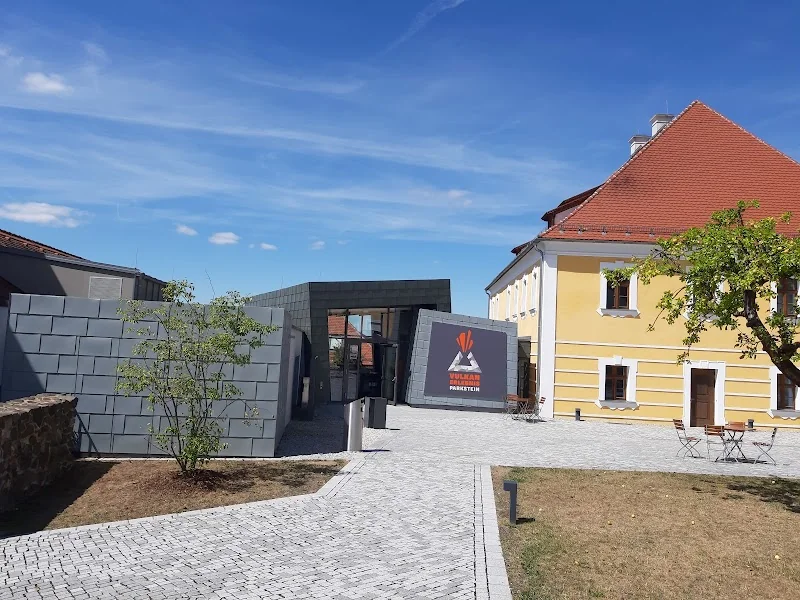
The Vulkan Experience Parkstein is the place to go if you want to experience the power of volcanoes in Bavaria. Located in the cultural and community center of Parkstein near Weiden, the facility combines a modern permanent exhibition with the adjacent natural experience at the famous basalt cone Hohen Parkstein. Since its reopening on February 1, 2025, the museum has presented new interactive areas, a volcano cinema, and even more offerings for families, school classes, and curious individual visitors. Particularly spectacular is the staged “volcanic eruption,” which can be experienced on three floors just before every full hour, vividly demonstrating the geological processes that shape our landscape. Outside, the 38-meter-high basalt wall, a well-signposted geo-path, and a viewing platform with a wide view await – all freely accessible. Conveniently, parking can be found at the marketplace (about 100 meters) or at the basalt wall (about 300 meters), and the museum itself is barrier-free with an elevator and appropriate restroom facilities. This page consolidates opening hours, admission prices, directions, and highlights – ensuring your visit goes smoothly.
Opening Hours of the Vulkan Experience Parkstein
Planning your visit begins with a look at the seasonal times of the facility. In the winter season from November 11, 2025, to March 30, 2026, the museum opens from Thursday to Sunday between 1 PM and 5 PM; it is closed from Monday to Wednesday. In the summer season from March 31, 2026, to November 7, 2026, the doors are open from Tuesday to Sunday from 11 AM to 5 PM; Mondays are a day of rest. Additionally, the Vulkan Experience Parkstein publishes special regulations for holidays each year. For 2025/2026, the following applies: Good Friday (April 18, 2025) was closed, Easter Sunday and Easter Monday were open; on Labor Day, Ascension Day, Pentecost, and Corpus Christi, it is open; All Saints' Day (November 1, 2025) is closed; Day of Repentance and Thanksgiving (November 19, 2025) is open; on Christmas Eve, Christmas holidays, New Year's Eve, and New Year's Day, it remains closed; Epiphany (January 6, 2026) is open. Those planning a combined indoor and outdoor visit benefit from the flexibility of the geo-site: The basalt cone with viewing platform, the striking basalt wall, and the geo-path are freely accessible year-round. The rock cellars in Kapuzinergasse are open daily from 8:00 AM to 8:00 PM. Important for the cold season: There is no winter service for the footpaths at the basalt cone; walking on snow and ice is at your own risk. The western ascent along the geo-path is stroller-friendly. Thanks to clear signage with gray signs and orange arrows, navigation around the cone is very easy. Those who only want to gather information can use the info point located right next to the museum: it is open daily from 9 AM to 5 PM and provides free brochure material in Czech and English.
Many guests combine their museum visit with a walk to the viewing platform. Here, it is advisable to cleverly utilize the opening hours: Start with the museum shortly after 1 PM in the winter season or from 11 AM in the summer season, plan for the hourly eruption, and then head to the geo-path. This way, one experiences the lively transition between indoor knowledge and outdoor impressions particularly intensely. For current information (e.g., deviations on holidays), a quick look at the official notices on-site or the museum team's announcements is recommended.
Admission Prices and Tickets for the Vulkan Experience Parkstein
Transparent and family-friendly prices are part of the Vulkan Experience Parkstein's profile. Adults pay €6.00 for admission. Reduced tickets cost €4.50 and apply to students, seniors, and people with disabilities upon presentation of valid proof. Families benefit from the family ticket for €15.00. Groups of ten or more pay €4.50 per person; for school classes and kindergartens, the price is €3.50 per person. Preschool children have free admission when accompanied by a full-paying adult. These conditions make the visit planable for different target groups – whether as a family outing, school trip, club program, or spontaneous weekend activity. Tickets can be purchased at the museum ticket office on-site at Schloßgasse 5, 92711 Parkstein. For group tours, prior coordination is advisable; the facility offers tours in collaboration with rangers from GEOPARK Bayern–Böhmen and develops age-specific educational programs upon request. The team can be reached by phone at +49 (0)9602 61639-10 and via email at vulkanerlebnis@parkstein.de.
Content-wise, the visit is designed so that even without a guide, a red thread runs through the exhibition. Particularly popular is the staged volcanic eruption, which starts just before every full hour – ideal for timing the tour: Start with the tactile models and interactive stations, plan the eruption as a highlight, and then deepen the insights in the volcano cinema or at the quiz station. Those coming with children should allow time for the children's corner and the listening cinema. For people with mobility impairments, an elevator and barrier-free restroom are available; guests with disabilities may park directly in front of the entrance. A tip for everyone: Plan an additional 30 to 60 minutes after the museum visit to experience the basalt wall, geo-path, and viewing platform – together, they create the “volcano experience” in the best sense.
Directions and Parking: Schloßgasse 5, Basalt Wall & Marketplace
The Vulkan Experience Parkstein is located in the cultural and community center in the heart of the market town of Parkstein, northeast in Bavaria in the northern Upper Palatinate, near the city of Weiden. The exact address for navigation and maps is: Schloßgasse 5, 92711 Parkstein. Those arriving by car have two particularly practical parking options: Parking spaces are available along the marketplace about 100 meters from the museum – ideal if you want to go directly into the building. Those who want to consciously combine the trip with a walk at the geo-site can park at the parking lot at the basalt wall; from there, it is about 300 meters on foot to the museum. The path is well signposted and level towards Schloßgasse. Guests with mobility impairments can park directly in front of the museum entrance.
From the direction of Regensburg/Munich, you can reach Parkstein fastest via the A93, exit Weiden West. Follow the B470 towards Grafenwöhr, turn right towards Parkstein after about eight kilometers, and drive another four kilometers to the town entrance. Follow Pressather Straße, just before the turnoff to Schwand, turn right into Klostergasse, pass the steep alley, and reach the marketplace with parking options on the left; the museum is located in the second row to the marketplace with access via Schloßgasse. From Berlin, drive via the A93 through Hof/Marktredwitz towards Regensburg, take the exit Altenstadt/Parkstein, follow the B22 towards Erbendorf/Bayreuth, turn left towards Parkstein after about two kilometers, and follow Neustädter Straße in Parkstein. At the church, turn towards the marketplace and orient yourself at the old town hall – the museum is located directly behind it on Schloßgasse.
Useful on the way: At the basalt wall parking lot, there is a public restroom (daily 7 AM–8 PM, including barrier-free restroom). If you have questions or need additional brochures, you can find the info point in the building next to the museum (daily 9 AM–5 PM). For everyone who wants to orient themselves outdoors: A simple guidance system with gray signposts and orange arrows leads around the basalt cone, allowing even newcomers to find their way quickly. The combination of indoor and outdoor stations makes the trip easy to plan – whether you come by car, as a hiking group, or as a school class.
Highlights of the Exhibition and Geo-Site Experience
The exhibition of the Vulkan Experience Parkstein was fundamentally expanded as part of the reopening on February 1, 2025. New additions include tactile models that make various types of volcanoes and plate tectonics tangible, as well as a model of earth layers. A live ticker earthquake map shows current seismic activities worldwide and connects local geology with global dynamics. For children and families, a volcano cinema, a quiz station, a children's corner, and a listening cinema have been set up. The dramatic highlight remains the three-story staged volcanic eruption, which starts just before every full hour and conveys how an eruption might feel – without any danger, but with a significant learning effect.
Right outside the door, the experience continues in nature. The 38-meter-high basalt wall is one of the most impressive basalt column formations in Bavaria. Here, the polygonal basalt columns – depending on the section, five-, six-, or seven-sided – are perfectly formed. They were created during the cooling process of basaltic magma and were exposed through erosion and historical quarrying operations. At the foot of the wall, there is a natural stage where theater performances by the Basalt Theater, serenades, and community festivals take place in summer. The geo-path (Joseph-Edenhofer-Weg) leads from the basalt wall parking lot up to the summit; along the route, rock exhibits tell the 500 million-year-long earth history of the Upper Palatinate – from the Variscan mountains through magma from the depths and crystal formation to the Franconian line. Along the way, there is also the Lourdes grotto, carved into the rock around 1900, and the rock cellars, which provide insight into local geology and mining history.
Geoscientifically, Parkstein is a teaching example: The basalt cone is considered an eroded feeder pipe of a Tertiary volcano. According to geological findings, basaltic magma penetrated along deep cracks in the earth's crust about 24 million years ago. The contrast between hot magma and groundwater led to explosive eruptions – the pipe breccia at the western end of the rock wall documents this event with rock fragments from basalt as well as entrained sand and clay stones. The excellently formed basalt columns inspired Alexander von Humboldt, who referred to Parkstein as the “most beautiful basalt cone in Europe.” The Bavarian State Office for the Environment recognizes the “Basalt Cone Hoher Parkstein” in the list of “Bavaria's most beautiful geotopes” (No. 20). Together, the museum and geo-site not only explain how basalt is formed but also why Parkstein, as a prominent hill, has outlasted the soft sand and clay stones of the surrounding area.
Weather, Best Visiting Time, and Barrier-Free Visit
Thanks to the combination of indoor and outdoor experiences, the Vulkan Experience Parkstein is attractive year-round. In uncertain weather conditions, it is advisable to visit the museum first and catch the eruption shortly before a full hour. For the subsequent walk to the basalt wall and the ascent to the summit, sturdy footwear is recommended. The geo-path is well marked; the western ascent is considered stroller-friendly, making planning easier for families. Since there is no winter service for the paths at the basalt cone, special caution is advised in icy and snowy conditions – walking is then at your own risk. Those visiting in summer benefit from long, bright days; the natural stage at the foot of the basalt wall serves as a backdrop for local events. Regardless of the season, the rock cellars are accessible daily from 8:00 AM to 8:00 PM; public restrooms (daily 7 AM–8 PM, including barrier-free restroom) are available at the basalt wall parking lot.
The museum itself is designed to be barrier-free. An elevator connects the exhibition levels, a barrier-free restroom is available, and other areas in the building – event hall and stone barn – are also accessible by elevator. Guests with disabilities may park directly in front of the entrance. For those who rely on clear orientation, the guidance system around the cone with gray signposts and orange arrows is helpful. In addition, the info point next door supports with material in several languages. Those who want to dive deeper can book a tour with rangers from GEOPARK Bayern–Böhmen – these offers are not only exciting for school classes but also for adults, as they vividly convey the current state of geosciences on-site. Conveniently, since the exhibition works with tactile models, volcano cinema, and quiz stations, younger visitors are continuously engaged.
For daily planning, weather windows can be well utilized. If you come during uncertain forecasts in the winter season in the early afternoon, you can take advantage of the daylight at the basalt cone; in the summer season, starting in the late morning is worthwhile, combined with the geo-path and a detour to the viewing platform. The combination of affordability, barrier-free access, and short distances makes the Vulkan Experience Parkstein an uncomplicated destination – from family visits to school trips to geology enthusiasts who specifically explore the geo-site.
Photos and Photo Spots: Basalt Cone, Basalt Wall, Viewing Platform & Museum
Those searching for “Vulkan Experience Parkstein Photos” usually have the iconic basalt wall in mind: 38 meters high, seamlessly structured columns that stand out clearly in the afternoon sun. The parking lot at the basalt wall is the best starting point for this. From here, overview shots of the wall can be taken, as well as detailed studies of the polygonal columns – five-, six-, and seven-sided, depending on cooling stresses. A few meters further, the natural stage provides a natural foreground for wide-angle compositions. The ascent via the geo-path offers further motifs: At the stations, rock exhibits tell stories from 500 million years of earth history in the Upper Palatinate; macro shots of minerals and crystals work here just as well as wide-angle images that integrate the educational path panels into the landscape. At the summit, the viewing platform offers unobstructed views; with clear visibility, atmospheric panoramas are possible. In the rock cellars, exciting light-shadow contrasts emerge – here, restraint with flash is advisable to preserve the atmosphere.
In the museum itself, reportage images work particularly well: Hands working on tactile models, focused children in the children's corner, a moment in the listening cinema, the view of the live ticker earthquake map. The staged eruption just before every full hour is photogenic; to capture movement and light, a slightly shorter exposure time is recommended. Please be considerate of other guests and adhere to the usual museum rules. Those with strollers or wheelchairs can use the elevator; the paths are wide enough for relaxed movement between the stations. After the museum visit, the return path via the marketplace is worthwhile to photograph the location of the building in the town center. A detour to the Lourdes grotto can also incorporate motifs with historical character. Overall, the ensemble of museum, basalt wall, geo-path, rock cellars, and viewing platform offers numerous perspectives – ideal for social media, photo albums, and presentations in class.
Sources:
Mehr anzeigenWeniger anzeigen
Vulkan Experience Parkstein | Opening Hours & Admission Prices
The Vulkan Experience Parkstein is the place to go if you want to experience the power of volcanoes in Bavaria. Located in the cultural and community center of Parkstein near Weiden, the facility combines a modern permanent exhibition with the adjacent natural experience at the famous basalt cone Hohen Parkstein. Since its reopening on February 1, 2025, the museum has presented new interactive areas, a volcano cinema, and even more offerings for families, school classes, and curious individual visitors. Particularly spectacular is the staged “volcanic eruption,” which can be experienced on three floors just before every full hour, vividly demonstrating the geological processes that shape our landscape. Outside, the 38-meter-high basalt wall, a well-signposted geo-path, and a viewing platform with a wide view await – all freely accessible. Conveniently, parking can be found at the marketplace (about 100 meters) or at the basalt wall (about 300 meters), and the museum itself is barrier-free with an elevator and appropriate restroom facilities. This page consolidates opening hours, admission prices, directions, and highlights – ensuring your visit goes smoothly.
Opening Hours of the Vulkan Experience Parkstein
Planning your visit begins with a look at the seasonal times of the facility. In the winter season from November 11, 2025, to March 30, 2026, the museum opens from Thursday to Sunday between 1 PM and 5 PM; it is closed from Monday to Wednesday. In the summer season from March 31, 2026, to November 7, 2026, the doors are open from Tuesday to Sunday from 11 AM to 5 PM; Mondays are a day of rest. Additionally, the Vulkan Experience Parkstein publishes special regulations for holidays each year. For 2025/2026, the following applies: Good Friday (April 18, 2025) was closed, Easter Sunday and Easter Monday were open; on Labor Day, Ascension Day, Pentecost, and Corpus Christi, it is open; All Saints' Day (November 1, 2025) is closed; Day of Repentance and Thanksgiving (November 19, 2025) is open; on Christmas Eve, Christmas holidays, New Year's Eve, and New Year's Day, it remains closed; Epiphany (January 6, 2026) is open. Those planning a combined indoor and outdoor visit benefit from the flexibility of the geo-site: The basalt cone with viewing platform, the striking basalt wall, and the geo-path are freely accessible year-round. The rock cellars in Kapuzinergasse are open daily from 8:00 AM to 8:00 PM. Important for the cold season: There is no winter service for the footpaths at the basalt cone; walking on snow and ice is at your own risk. The western ascent along the geo-path is stroller-friendly. Thanks to clear signage with gray signs and orange arrows, navigation around the cone is very easy. Those who only want to gather information can use the info point located right next to the museum: it is open daily from 9 AM to 5 PM and provides free brochure material in Czech and English.
Many guests combine their museum visit with a walk to the viewing platform. Here, it is advisable to cleverly utilize the opening hours: Start with the museum shortly after 1 PM in the winter season or from 11 AM in the summer season, plan for the hourly eruption, and then head to the geo-path. This way, one experiences the lively transition between indoor knowledge and outdoor impressions particularly intensely. For current information (e.g., deviations on holidays), a quick look at the official notices on-site or the museum team's announcements is recommended.
Admission Prices and Tickets for the Vulkan Experience Parkstein
Transparent and family-friendly prices are part of the Vulkan Experience Parkstein's profile. Adults pay €6.00 for admission. Reduced tickets cost €4.50 and apply to students, seniors, and people with disabilities upon presentation of valid proof. Families benefit from the family ticket for €15.00. Groups of ten or more pay €4.50 per person; for school classes and kindergartens, the price is €3.50 per person. Preschool children have free admission when accompanied by a full-paying adult. These conditions make the visit planable for different target groups – whether as a family outing, school trip, club program, or spontaneous weekend activity. Tickets can be purchased at the museum ticket office on-site at Schloßgasse 5, 92711 Parkstein. For group tours, prior coordination is advisable; the facility offers tours in collaboration with rangers from GEOPARK Bayern–Böhmen and develops age-specific educational programs upon request. The team can be reached by phone at +49 (0)9602 61639-10 and via email at vulkanerlebnis@parkstein.de.
Content-wise, the visit is designed so that even without a guide, a red thread runs through the exhibition. Particularly popular is the staged volcanic eruption, which starts just before every full hour – ideal for timing the tour: Start with the tactile models and interactive stations, plan the eruption as a highlight, and then deepen the insights in the volcano cinema or at the quiz station. Those coming with children should allow time for the children's corner and the listening cinema. For people with mobility impairments, an elevator and barrier-free restroom are available; guests with disabilities may park directly in front of the entrance. A tip for everyone: Plan an additional 30 to 60 minutes after the museum visit to experience the basalt wall, geo-path, and viewing platform – together, they create the “volcano experience” in the best sense.
Directions and Parking: Schloßgasse 5, Basalt Wall & Marketplace
The Vulkan Experience Parkstein is located in the cultural and community center in the heart of the market town of Parkstein, northeast in Bavaria in the northern Upper Palatinate, near the city of Weiden. The exact address for navigation and maps is: Schloßgasse 5, 92711 Parkstein. Those arriving by car have two particularly practical parking options: Parking spaces are available along the marketplace about 100 meters from the museum – ideal if you want to go directly into the building. Those who want to consciously combine the trip with a walk at the geo-site can park at the parking lot at the basalt wall; from there, it is about 300 meters on foot to the museum. The path is well signposted and level towards Schloßgasse. Guests with mobility impairments can park directly in front of the museum entrance.
From the direction of Regensburg/Munich, you can reach Parkstein fastest via the A93, exit Weiden West. Follow the B470 towards Grafenwöhr, turn right towards Parkstein after about eight kilometers, and drive another four kilometers to the town entrance. Follow Pressather Straße, just before the turnoff to Schwand, turn right into Klostergasse, pass the steep alley, and reach the marketplace with parking options on the left; the museum is located in the second row to the marketplace with access via Schloßgasse. From Berlin, drive via the A93 through Hof/Marktredwitz towards Regensburg, take the exit Altenstadt/Parkstein, follow the B22 towards Erbendorf/Bayreuth, turn left towards Parkstein after about two kilometers, and follow Neustädter Straße in Parkstein. At the church, turn towards the marketplace and orient yourself at the old town hall – the museum is located directly behind it on Schloßgasse.
Useful on the way: At the basalt wall parking lot, there is a public restroom (daily 7 AM–8 PM, including barrier-free restroom). If you have questions or need additional brochures, you can find the info point in the building next to the museum (daily 9 AM–5 PM). For everyone who wants to orient themselves outdoors: A simple guidance system with gray signposts and orange arrows leads around the basalt cone, allowing even newcomers to find their way quickly. The combination of indoor and outdoor stations makes the trip easy to plan – whether you come by car, as a hiking group, or as a school class.
Highlights of the Exhibition and Geo-Site Experience
The exhibition of the Vulkan Experience Parkstein was fundamentally expanded as part of the reopening on February 1, 2025. New additions include tactile models that make various types of volcanoes and plate tectonics tangible, as well as a model of earth layers. A live ticker earthquake map shows current seismic activities worldwide and connects local geology with global dynamics. For children and families, a volcano cinema, a quiz station, a children's corner, and a listening cinema have been set up. The dramatic highlight remains the three-story staged volcanic eruption, which starts just before every full hour and conveys how an eruption might feel – without any danger, but with a significant learning effect.
Right outside the door, the experience continues in nature. The 38-meter-high basalt wall is one of the most impressive basalt column formations in Bavaria. Here, the polygonal basalt columns – depending on the section, five-, six-, or seven-sided – are perfectly formed. They were created during the cooling process of basaltic magma and were exposed through erosion and historical quarrying operations. At the foot of the wall, there is a natural stage where theater performances by the Basalt Theater, serenades, and community festivals take place in summer. The geo-path (Joseph-Edenhofer-Weg) leads from the basalt wall parking lot up to the summit; along the route, rock exhibits tell the 500 million-year-long earth history of the Upper Palatinate – from the Variscan mountains through magma from the depths and crystal formation to the Franconian line. Along the way, there is also the Lourdes grotto, carved into the rock around 1900, and the rock cellars, which provide insight into local geology and mining history.
Geoscientifically, Parkstein is a teaching example: The basalt cone is considered an eroded feeder pipe of a Tertiary volcano. According to geological findings, basaltic magma penetrated along deep cracks in the earth's crust about 24 million years ago. The contrast between hot magma and groundwater led to explosive eruptions – the pipe breccia at the western end of the rock wall documents this event with rock fragments from basalt as well as entrained sand and clay stones. The excellently formed basalt columns inspired Alexander von Humboldt, who referred to Parkstein as the “most beautiful basalt cone in Europe.” The Bavarian State Office for the Environment recognizes the “Basalt Cone Hoher Parkstein” in the list of “Bavaria's most beautiful geotopes” (No. 20). Together, the museum and geo-site not only explain how basalt is formed but also why Parkstein, as a prominent hill, has outlasted the soft sand and clay stones of the surrounding area.
Weather, Best Visiting Time, and Barrier-Free Visit
Thanks to the combination of indoor and outdoor experiences, the Vulkan Experience Parkstein is attractive year-round. In uncertain weather conditions, it is advisable to visit the museum first and catch the eruption shortly before a full hour. For the subsequent walk to the basalt wall and the ascent to the summit, sturdy footwear is recommended. The geo-path is well marked; the western ascent is considered stroller-friendly, making planning easier for families. Since there is no winter service for the paths at the basalt cone, special caution is advised in icy and snowy conditions – walking is then at your own risk. Those visiting in summer benefit from long, bright days; the natural stage at the foot of the basalt wall serves as a backdrop for local events. Regardless of the season, the rock cellars are accessible daily from 8:00 AM to 8:00 PM; public restrooms (daily 7 AM–8 PM, including barrier-free restroom) are available at the basalt wall parking lot.
The museum itself is designed to be barrier-free. An elevator connects the exhibition levels, a barrier-free restroom is available, and other areas in the building – event hall and stone barn – are also accessible by elevator. Guests with disabilities may park directly in front of the entrance. For those who rely on clear orientation, the guidance system around the cone with gray signposts and orange arrows is helpful. In addition, the info point next door supports with material in several languages. Those who want to dive deeper can book a tour with rangers from GEOPARK Bayern–Böhmen – these offers are not only exciting for school classes but also for adults, as they vividly convey the current state of geosciences on-site. Conveniently, since the exhibition works with tactile models, volcano cinema, and quiz stations, younger visitors are continuously engaged.
For daily planning, weather windows can be well utilized. If you come during uncertain forecasts in the winter season in the early afternoon, you can take advantage of the daylight at the basalt cone; in the summer season, starting in the late morning is worthwhile, combined with the geo-path and a detour to the viewing platform. The combination of affordability, barrier-free access, and short distances makes the Vulkan Experience Parkstein an uncomplicated destination – from family visits to school trips to geology enthusiasts who specifically explore the geo-site.
Photos and Photo Spots: Basalt Cone, Basalt Wall, Viewing Platform & Museum
Those searching for “Vulkan Experience Parkstein Photos” usually have the iconic basalt wall in mind: 38 meters high, seamlessly structured columns that stand out clearly in the afternoon sun. The parking lot at the basalt wall is the best starting point for this. From here, overview shots of the wall can be taken, as well as detailed studies of the polygonal columns – five-, six-, and seven-sided, depending on cooling stresses. A few meters further, the natural stage provides a natural foreground for wide-angle compositions. The ascent via the geo-path offers further motifs: At the stations, rock exhibits tell stories from 500 million years of earth history in the Upper Palatinate; macro shots of minerals and crystals work here just as well as wide-angle images that integrate the educational path panels into the landscape. At the summit, the viewing platform offers unobstructed views; with clear visibility, atmospheric panoramas are possible. In the rock cellars, exciting light-shadow contrasts emerge – here, restraint with flash is advisable to preserve the atmosphere.
In the museum itself, reportage images work particularly well: Hands working on tactile models, focused children in the children's corner, a moment in the listening cinema, the view of the live ticker earthquake map. The staged eruption just before every full hour is photogenic; to capture movement and light, a slightly shorter exposure time is recommended. Please be considerate of other guests and adhere to the usual museum rules. Those with strollers or wheelchairs can use the elevator; the paths are wide enough for relaxed movement between the stations. After the museum visit, the return path via the marketplace is worthwhile to photograph the location of the building in the town center. A detour to the Lourdes grotto can also incorporate motifs with historical character. Overall, the ensemble of museum, basalt wall, geo-path, rock cellars, and viewing platform offers numerous perspectives – ideal for social media, photo albums, and presentations in class.
Sources:
Vulkan Experience Parkstein | Opening Hours & Admission Prices
The Vulkan Experience Parkstein is the place to go if you want to experience the power of volcanoes in Bavaria. Located in the cultural and community center of Parkstein near Weiden, the facility combines a modern permanent exhibition with the adjacent natural experience at the famous basalt cone Hohen Parkstein. Since its reopening on February 1, 2025, the museum has presented new interactive areas, a volcano cinema, and even more offerings for families, school classes, and curious individual visitors. Particularly spectacular is the staged “volcanic eruption,” which can be experienced on three floors just before every full hour, vividly demonstrating the geological processes that shape our landscape. Outside, the 38-meter-high basalt wall, a well-signposted geo-path, and a viewing platform with a wide view await – all freely accessible. Conveniently, parking can be found at the marketplace (about 100 meters) or at the basalt wall (about 300 meters), and the museum itself is barrier-free with an elevator and appropriate restroom facilities. This page consolidates opening hours, admission prices, directions, and highlights – ensuring your visit goes smoothly.
Opening Hours of the Vulkan Experience Parkstein
Planning your visit begins with a look at the seasonal times of the facility. In the winter season from November 11, 2025, to March 30, 2026, the museum opens from Thursday to Sunday between 1 PM and 5 PM; it is closed from Monday to Wednesday. In the summer season from March 31, 2026, to November 7, 2026, the doors are open from Tuesday to Sunday from 11 AM to 5 PM; Mondays are a day of rest. Additionally, the Vulkan Experience Parkstein publishes special regulations for holidays each year. For 2025/2026, the following applies: Good Friday (April 18, 2025) was closed, Easter Sunday and Easter Monday were open; on Labor Day, Ascension Day, Pentecost, and Corpus Christi, it is open; All Saints' Day (November 1, 2025) is closed; Day of Repentance and Thanksgiving (November 19, 2025) is open; on Christmas Eve, Christmas holidays, New Year's Eve, and New Year's Day, it remains closed; Epiphany (January 6, 2026) is open. Those planning a combined indoor and outdoor visit benefit from the flexibility of the geo-site: The basalt cone with viewing platform, the striking basalt wall, and the geo-path are freely accessible year-round. The rock cellars in Kapuzinergasse are open daily from 8:00 AM to 8:00 PM. Important for the cold season: There is no winter service for the footpaths at the basalt cone; walking on snow and ice is at your own risk. The western ascent along the geo-path is stroller-friendly. Thanks to clear signage with gray signs and orange arrows, navigation around the cone is very easy. Those who only want to gather information can use the info point located right next to the museum: it is open daily from 9 AM to 5 PM and provides free brochure material in Czech and English.
Many guests combine their museum visit with a walk to the viewing platform. Here, it is advisable to cleverly utilize the opening hours: Start with the museum shortly after 1 PM in the winter season or from 11 AM in the summer season, plan for the hourly eruption, and then head to the geo-path. This way, one experiences the lively transition between indoor knowledge and outdoor impressions particularly intensely. For current information (e.g., deviations on holidays), a quick look at the official notices on-site or the museum team's announcements is recommended.
Admission Prices and Tickets for the Vulkan Experience Parkstein
Transparent and family-friendly prices are part of the Vulkan Experience Parkstein's profile. Adults pay €6.00 for admission. Reduced tickets cost €4.50 and apply to students, seniors, and people with disabilities upon presentation of valid proof. Families benefit from the family ticket for €15.00. Groups of ten or more pay €4.50 per person; for school classes and kindergartens, the price is €3.50 per person. Preschool children have free admission when accompanied by a full-paying adult. These conditions make the visit planable for different target groups – whether as a family outing, school trip, club program, or spontaneous weekend activity. Tickets can be purchased at the museum ticket office on-site at Schloßgasse 5, 92711 Parkstein. For group tours, prior coordination is advisable; the facility offers tours in collaboration with rangers from GEOPARK Bayern–Böhmen and develops age-specific educational programs upon request. The team can be reached by phone at +49 (0)9602 61639-10 and via email at vulkanerlebnis@parkstein.de.
Content-wise, the visit is designed so that even without a guide, a red thread runs through the exhibition. Particularly popular is the staged volcanic eruption, which starts just before every full hour – ideal for timing the tour: Start with the tactile models and interactive stations, plan the eruption as a highlight, and then deepen the insights in the volcano cinema or at the quiz station. Those coming with children should allow time for the children's corner and the listening cinema. For people with mobility impairments, an elevator and barrier-free restroom are available; guests with disabilities may park directly in front of the entrance. A tip for everyone: Plan an additional 30 to 60 minutes after the museum visit to experience the basalt wall, geo-path, and viewing platform – together, they create the “volcano experience” in the best sense.
Directions and Parking: Schloßgasse 5, Basalt Wall & Marketplace
The Vulkan Experience Parkstein is located in the cultural and community center in the heart of the market town of Parkstein, northeast in Bavaria in the northern Upper Palatinate, near the city of Weiden. The exact address for navigation and maps is: Schloßgasse 5, 92711 Parkstein. Those arriving by car have two particularly practical parking options: Parking spaces are available along the marketplace about 100 meters from the museum – ideal if you want to go directly into the building. Those who want to consciously combine the trip with a walk at the geo-site can park at the parking lot at the basalt wall; from there, it is about 300 meters on foot to the museum. The path is well signposted and level towards Schloßgasse. Guests with mobility impairments can park directly in front of the museum entrance.
From the direction of Regensburg/Munich, you can reach Parkstein fastest via the A93, exit Weiden West. Follow the B470 towards Grafenwöhr, turn right towards Parkstein after about eight kilometers, and drive another four kilometers to the town entrance. Follow Pressather Straße, just before the turnoff to Schwand, turn right into Klostergasse, pass the steep alley, and reach the marketplace with parking options on the left; the museum is located in the second row to the marketplace with access via Schloßgasse. From Berlin, drive via the A93 through Hof/Marktredwitz towards Regensburg, take the exit Altenstadt/Parkstein, follow the B22 towards Erbendorf/Bayreuth, turn left towards Parkstein after about two kilometers, and follow Neustädter Straße in Parkstein. At the church, turn towards the marketplace and orient yourself at the old town hall – the museum is located directly behind it on Schloßgasse.
Useful on the way: At the basalt wall parking lot, there is a public restroom (daily 7 AM–8 PM, including barrier-free restroom). If you have questions or need additional brochures, you can find the info point in the building next to the museum (daily 9 AM–5 PM). For everyone who wants to orient themselves outdoors: A simple guidance system with gray signposts and orange arrows leads around the basalt cone, allowing even newcomers to find their way quickly. The combination of indoor and outdoor stations makes the trip easy to plan – whether you come by car, as a hiking group, or as a school class.
Highlights of the Exhibition and Geo-Site Experience
The exhibition of the Vulkan Experience Parkstein was fundamentally expanded as part of the reopening on February 1, 2025. New additions include tactile models that make various types of volcanoes and plate tectonics tangible, as well as a model of earth layers. A live ticker earthquake map shows current seismic activities worldwide and connects local geology with global dynamics. For children and families, a volcano cinema, a quiz station, a children's corner, and a listening cinema have been set up. The dramatic highlight remains the three-story staged volcanic eruption, which starts just before every full hour and conveys how an eruption might feel – without any danger, but with a significant learning effect.
Right outside the door, the experience continues in nature. The 38-meter-high basalt wall is one of the most impressive basalt column formations in Bavaria. Here, the polygonal basalt columns – depending on the section, five-, six-, or seven-sided – are perfectly formed. They were created during the cooling process of basaltic magma and were exposed through erosion and historical quarrying operations. At the foot of the wall, there is a natural stage where theater performances by the Basalt Theater, serenades, and community festivals take place in summer. The geo-path (Joseph-Edenhofer-Weg) leads from the basalt wall parking lot up to the summit; along the route, rock exhibits tell the 500 million-year-long earth history of the Upper Palatinate – from the Variscan mountains through magma from the depths and crystal formation to the Franconian line. Along the way, there is also the Lourdes grotto, carved into the rock around 1900, and the rock cellars, which provide insight into local geology and mining history.
Geoscientifically, Parkstein is a teaching example: The basalt cone is considered an eroded feeder pipe of a Tertiary volcano. According to geological findings, basaltic magma penetrated along deep cracks in the earth's crust about 24 million years ago. The contrast between hot magma and groundwater led to explosive eruptions – the pipe breccia at the western end of the rock wall documents this event with rock fragments from basalt as well as entrained sand and clay stones. The excellently formed basalt columns inspired Alexander von Humboldt, who referred to Parkstein as the “most beautiful basalt cone in Europe.” The Bavarian State Office for the Environment recognizes the “Basalt Cone Hoher Parkstein” in the list of “Bavaria's most beautiful geotopes” (No. 20). Together, the museum and geo-site not only explain how basalt is formed but also why Parkstein, as a prominent hill, has outlasted the soft sand and clay stones of the surrounding area.
Weather, Best Visiting Time, and Barrier-Free Visit
Thanks to the combination of indoor and outdoor experiences, the Vulkan Experience Parkstein is attractive year-round. In uncertain weather conditions, it is advisable to visit the museum first and catch the eruption shortly before a full hour. For the subsequent walk to the basalt wall and the ascent to the summit, sturdy footwear is recommended. The geo-path is well marked; the western ascent is considered stroller-friendly, making planning easier for families. Since there is no winter service for the paths at the basalt cone, special caution is advised in icy and snowy conditions – walking is then at your own risk. Those visiting in summer benefit from long, bright days; the natural stage at the foot of the basalt wall serves as a backdrop for local events. Regardless of the season, the rock cellars are accessible daily from 8:00 AM to 8:00 PM; public restrooms (daily 7 AM–8 PM, including barrier-free restroom) are available at the basalt wall parking lot.
The museum itself is designed to be barrier-free. An elevator connects the exhibition levels, a barrier-free restroom is available, and other areas in the building – event hall and stone barn – are also accessible by elevator. Guests with disabilities may park directly in front of the entrance. For those who rely on clear orientation, the guidance system around the cone with gray signposts and orange arrows is helpful. In addition, the info point next door supports with material in several languages. Those who want to dive deeper can book a tour with rangers from GEOPARK Bayern–Böhmen – these offers are not only exciting for school classes but also for adults, as they vividly convey the current state of geosciences on-site. Conveniently, since the exhibition works with tactile models, volcano cinema, and quiz stations, younger visitors are continuously engaged.
For daily planning, weather windows can be well utilized. If you come during uncertain forecasts in the winter season in the early afternoon, you can take advantage of the daylight at the basalt cone; in the summer season, starting in the late morning is worthwhile, combined with the geo-path and a detour to the viewing platform. The combination of affordability, barrier-free access, and short distances makes the Vulkan Experience Parkstein an uncomplicated destination – from family visits to school trips to geology enthusiasts who specifically explore the geo-site.
Photos and Photo Spots: Basalt Cone, Basalt Wall, Viewing Platform & Museum
Those searching for “Vulkan Experience Parkstein Photos” usually have the iconic basalt wall in mind: 38 meters high, seamlessly structured columns that stand out clearly in the afternoon sun. The parking lot at the basalt wall is the best starting point for this. From here, overview shots of the wall can be taken, as well as detailed studies of the polygonal columns – five-, six-, and seven-sided, depending on cooling stresses. A few meters further, the natural stage provides a natural foreground for wide-angle compositions. The ascent via the geo-path offers further motifs: At the stations, rock exhibits tell stories from 500 million years of earth history in the Upper Palatinate; macro shots of minerals and crystals work here just as well as wide-angle images that integrate the educational path panels into the landscape. At the summit, the viewing platform offers unobstructed views; with clear visibility, atmospheric panoramas are possible. In the rock cellars, exciting light-shadow contrasts emerge – here, restraint with flash is advisable to preserve the atmosphere.
In the museum itself, reportage images work particularly well: Hands working on tactile models, focused children in the children's corner, a moment in the listening cinema, the view of the live ticker earthquake map. The staged eruption just before every full hour is photogenic; to capture movement and light, a slightly shorter exposure time is recommended. Please be considerate of other guests and adhere to the usual museum rules. Those with strollers or wheelchairs can use the elevator; the paths are wide enough for relaxed movement between the stations. After the museum visit, the return path via the marketplace is worthwhile to photograph the location of the building in the town center. A detour to the Lourdes grotto can also incorporate motifs with historical character. Overall, the ensemble of museum, basalt wall, geo-path, rock cellars, and viewing platform offers numerous perspectives – ideal for social media, photo albums, and presentations in class.
Sources:
Upcoming Events
No events found
Frequently Asked Questions
Reviews
Der Masder
30. July 2025
Very nice, smaller, and very informative museum about volcanoes and Parkstein. There are some info points where you can get very interesting information (short films) with the free headphones. The hourly volcanic eruption is also great. The staff was very friendly and helpful. The museum is also accessible by wheelchair. The entrance fee of 6.00 euros is very fair.
Nico Lindemann
31. July 2025
The geotope is great, definitely worth a look! The museum is very nice and informative. It would be nice for kids to have a bit more hands-on activities, but that's obviously difficult to implement with this topic.
Marc Hahn
11. September 2025
Manageable but still interesting. The kids found it moderately exciting. The price was absolutely fair and falls into the category of 'worth a try.' The lady at the ticket counter was very friendly and informed us well about everything.
Birgit Windpassinger
8. August 2025
Very worth seeing exhibition, great also for kids, fascinating insights, a really great exhibition😃😃👍 For kids, there's the Geo experience trail and during the holidays, the Geo quiz; plan more time for the quiz since the geo path and the basalt cone will be walked again. Absolutely recommendable😃😃😃👍👍👍
Michaela Bittner
10. September 2025
Very interestingly done 👍 the volcano simulation could last a bit longer, but it was still an exciting experience 👍 the story about the Parkstein volcano was very nicely designed. Always worth a visit 😊