Civic Participation and Urban Development in Weiden
Civic Participation & Urban Development in Weiden: How a City Plans Its Future Together
Weiden in der Oberpfalz relies on transparent procedures, early information, and participation formats that interlock online and on-site for key future issues. This article explains how framework plans, inner development, and cultural/identity processes interact – and how you can effectively contribute in upcoming participation phases.
What Civic Participation in Urban Development Actually Means
Urban development only becomes convincing when it is understandable, verifiable, and connectable: What goals does a project pursue? Which alternatives are being examined? What trade-offs are necessary? Civic participation can fulfill two roles here:
- Inform: Present plans, goals, conditions, and responsibilities in a way that non-experts can understand.
- Participate: Feed structured input from everyday experience (routes, safety, noise, usage needs), local expertise (clubs, initiatives, business), and value questions (identity, culture, open spaces) into the process.
It is important to distinguish between formal participation (legally regulated in the land use planning process) and informal participation (workshops, online dialogues, planning workshops). Informal formats can open up options early; the formal steps later ensure legal clarity, documentation, and weighing of interests.
Framework Plan as a Tool: From Guiding Principle to Implementation
A framework plan is a strategic planning instrument: It bundles guiding ideas for an area (uses, open spaces, access, climate adaptation) and creates a common basis for administration, politics, specialist planning, and the public. As a rule, it does not replace later land use planning, but prepares it.
What a Good Framework Plan Achieves
- Orientation: understandable guidelines for use mix, density, open spaces, and mobility.
- Conflict Resolution: Make topics such as noise, traffic, green spaces, flood/heavy rain prevention, or monument protection visible at an early stage.
- Traceability: Document alternatives and trade-offs so that later decisions remain justified.
- Transition to Implementation: Name step sequences (in-depth studies, preliminary drafts, development plan, implementation stages).
For citizens, it is crucial that participation does not end with a one-time feedback: It becomes effective when contributions are systematically evaluated, publicly summarized, and answered with reasons (e.g. "adopted", "partially considered", "not considered" – with justification).
Future Area Volksfestplatz: Use Mix, Open Spaces, Mobility
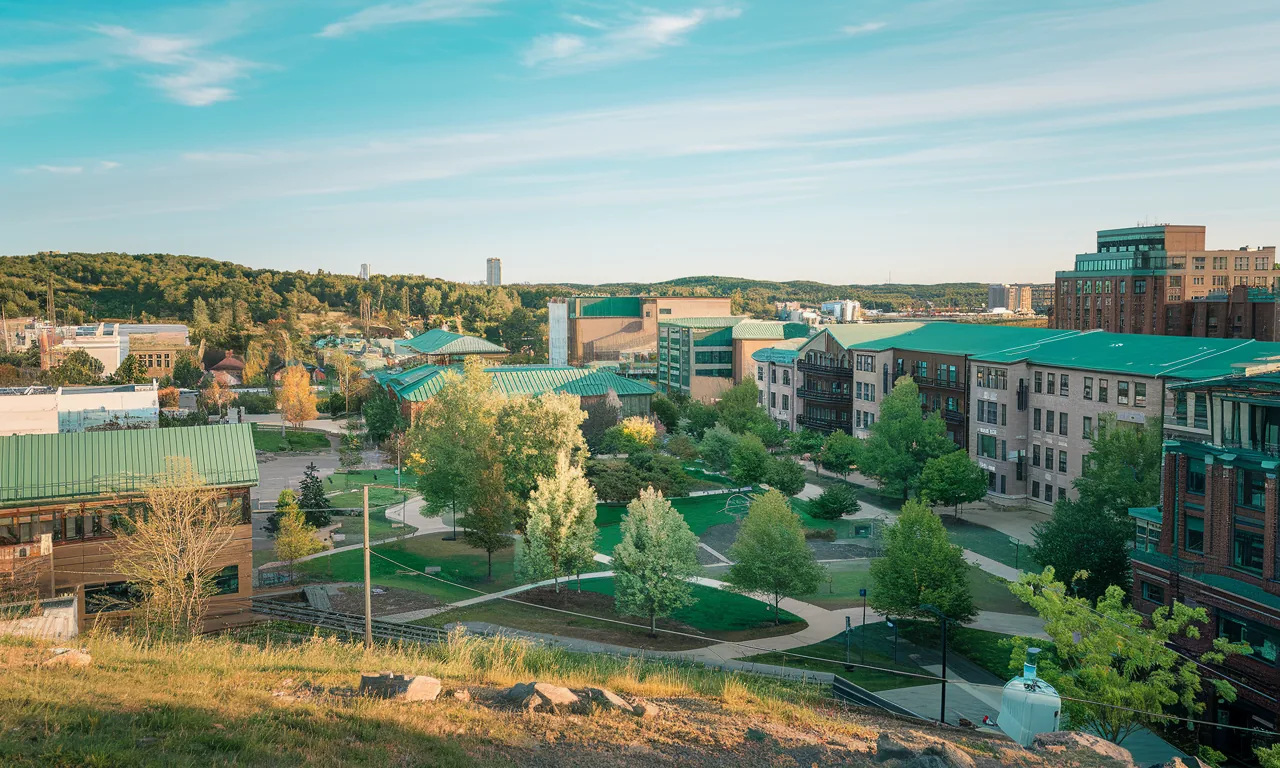
At the site of the former Volksfestplatz, Weiden bundles key future topics: education and innovation (including university reference), work, housing, efficient infrastructure, and well-connected open spaces. Such locations are particularly sensitive in terms of urban strategy, because they shape how a city grows and where everyday routes emerge over decades.
Typical Building Blocks Combined in a Framework Plan for an Urban Quarter
- Urban Use Mix: education/research, offices/services, and housing – aiming for short distances.
- Parking and Traffic: bundled solutions (e.g. neighborhood garage) can free up above-ground areas for quality of stay, trees, and safe routes.
- Urban Services: Areas for central facilities (e.g. safety and rescue infrastructure) are functionally integrated into the overall concept.
- Green and Open Space Network: shady recreation areas, rainwater management, fresh air corridors, and continuous pedestrian/cycling connections.
The open space network is particularly crucial for future viability: It strengthens the city during heat periods, supports infiltration and retention during heavy rain, and creates places where everyday life and encounters can take place. Thus, climate adaptation is not treated as an add-on, but as a planning basis.
"Good participation is achieved when people understand what is being decided, why there are alternatives, and how their input is included in the weighing of interests."
For upcoming participation phases, it is particularly relevant which questions can typically be improved through citizen input: safe crossings, good cycling/pedestrian connections, ground floor uses, noise/delivery logistics, quality of stay, accessibility, shade, trees, and the integration of the quarter into existing neighborhoods.
Culture & Identity: Soft Factors, Hard Impact
Urban development is not just about buildings and traffic areas. At least as important is whether people identify with their city, whether they experience places as "their" places – and whether cultural offerings, clubs, and initiatives have space and visibility. Weiden links this perspective with participation to sharpen long-term guidelines.
What an Identity and Culture Process Typically Involves
- Places of Meaning: Which squares, paths, landscapes, or buildings shape the cityscape and everyday life?
- Participation & Accessibility: Who is reached – and who is not? Which formats lower barriers (online, on-site, multilingual, youth-friendly, low-barrier)?
- Spaces for Culture: Which spaces are missing (rehearsal, performance, studio, meeting)? How can existing structures be strengthened?
- Guiding Principles for Future Decisions: Which values should remain recognizable in later building and open space decisions?
The added value arises when results are not only collected, but translated into planning-relevant criteria – for example, into design principles for public spaces, requirements for ground floor uses, or priorities for redesigning streets and squares.
Inner Development Before Outer Development: Land Saving as a Guiding Principle
The strategy "inner development before outer development" aims to make better use of existing potential: closing gaps, activating brownfields, upgrading neighborhoods, using infrastructure more efficiently – while at the same time protecting landscape and open spaces on the outskirts. This guiding idea is anchored as a principle in German planning law.
Why Inner Development is Especially Relevant for Weiden (and Similar Medium-Sized Cities)
- Land Protection: Less new sealing helps preserve natural and recreational areas.
- Short Distances: Housing, work, and supply can be brought closer together, which can relieve traffic.
- Existing Quality: Modernization, accessibility, and energy-efficient refurbishment can be considered together with open space and mobility measures.
- Cost Efficiency: Existing networks (roads, water, wastewater, public transport) are used more purposefully.
To ensure that inner development remains socially compatible, participation processes should also address issues such as use mix, noise protection, green space share, heat protection, affordable housing within municipal possibilities, and the quality of public space. Transparent communication is crucial as to which aspects the municipality can control and which are shaped by private ownership and investment decisions.
How to Participate in the Next Steps
When Weiden opens participation windows (online or on-site), you increase the impact of your contributions if you formulate them concretely, locally referenced, and solution-oriented. The following have proven effective, among others:
- Name place & situation: "At the connection X–Y, ... is missing" instead of "The traffic is bad."
- Describe impact: Safety, accessibility, school route, noise, delivery traffic, quality of stay.
- Suggestion with priority: "Short-term... / medium-term..." or "Must-have" vs. "Nice-to-have".
- Acknowledge conflicts: Parking vs. green, density vs. shading, use mix vs. need for quiet – and add a compromise proposal.
- Make input verifiable: e.g. photos, time windows (morning/evening), route chains (daycare–shopping–public transport).
Good urban development is rarely "either–or". Participation helps most when it makes the perspectives of many visible and enables administration and politics to make better, more comprehensible trade-offs.