
Carl Philipp Emanuel Bach
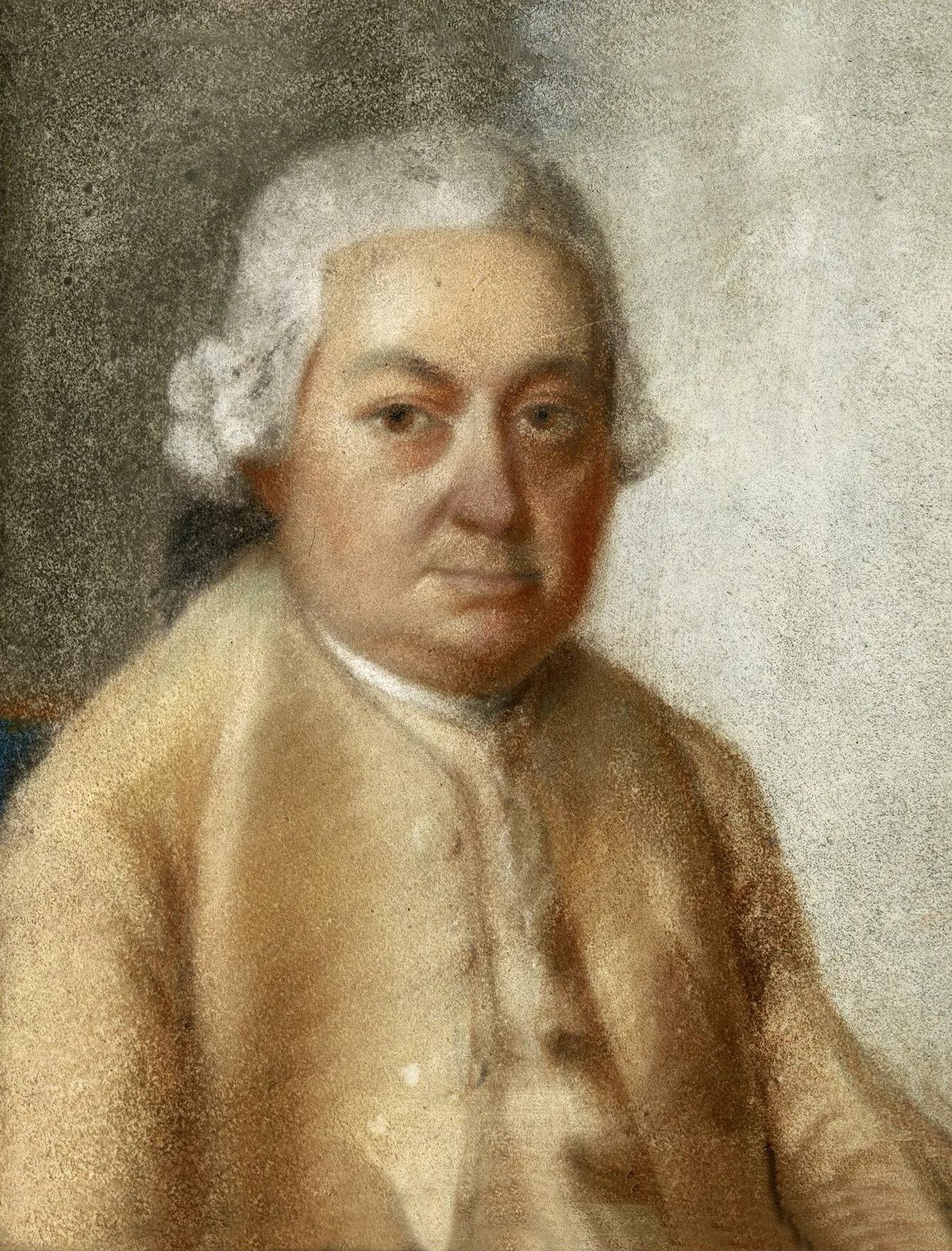
Image from Wikipedia
Image from Wikipedia
Carl Philipp Emanuel Bach – The Great Innovator Between Baroque and Classicism
A Composer of the Sensitive Revolution
Carl Philipp Emanuel Bach is considered one of the most fascinating musical personalities of the 18th century. As the son of Johann Sebastian Bach, he stepped out of the shadow of one of the most powerful names in music history and shaped, with a distinct profile, the stylistic shift from the Baroque world to the early Classical period. His reputation as an outstanding composer, keyboard virtuoso, teacher, and music theorist was based on an extraordinarily productive musical career that took him from Weimar to Leipzig, Frankfurt an der Oder, and finally to Berlin and Hamburg. ([bach-leipzig.de](https://www.bach-leipzig.de/en/bach-archive/carl-philipp-emanuel-bach?utm_source=openai))
Background, Education, and Early Influences
Born on March 8, 1714, in Weimar, Carl Philipp Emanuel Bach grew up in a family where music was not just a profession among many, but a way of life. In Leipzig, where the family moved in 1723, he attended the Thomasschule and claimed that he received his musical training exclusively from his father. This early influence explains why his works preserve the contrapuntal discipline of the Bach tradition while also breaking new ground with a more fluid sonic language. ([bach-leipzig.de](https://www.bach-leipzig.de/en/bach-archive/carl-philipp-emanuel-bach?utm_source=openai))
Even at a young age, he combined an academic career with the practice of a musician. In 1731, he enrolled in law school in Leipzig, transferred to Frankfurt an der Oder in 1734, and worked there as a harpsichordist, teacher, and conductor. His first compositions emerged during this phase; this initial dual role of scholarship and stage practice laid the groundwork for the stylistic sovereignty that later made him the most admired of the Bach sons. ([bach-leipzig.de](https://www.bach-leipzig.de/en/bach-archive/carl-philipp-emanuel-bach?utm_source=openai))
Berlin: Service at Court and Artistic Self-Assertion
In 1740, Bach entered the service of Frederick the Great in Berlin and became one of the most important musicians in Prussian cultural life as a harpsichordist at the court. This position brought him close to a highly educated courtly public but also the necessity to meet the expectations of a musically demanding system. It was here that he developed that distinctive blend of expressive density, surprising harmonies, and rhetorical tension that makes his music appear modern to this day. ([bach-leipzig.de](https://www.bach-leipzig.de/en/bach-archive/carl-philipp-emanuel-bach?utm_source=openai))
In Berlin, he established himself as a composer for keyboard instruments and as a musical thinker. His later famous teachings and his practice of performance intertwined to create an authority that extended far beyond the court. The combination of interpretation, composition, and reflection made him a key figure in the musical Enlightenment. ([cpebach.org](https://www.cpebach.org/prefaces/concertos-preface.html?utm_source=openai))
Hamburg: Late Flourishing and Public Recognition
In 1768, Carl Philipp Emanuel Bach took up the position of music director and cantor in Hamburg. There, he developed his most mature phase of creativity, during which spiritual works, oratorios, passions, and numerous instrumental pieces were created. His years in Hamburg made him a public authority in Protestant musical life; his reputation was so great that contemporaries estimated his fame surpassed that of his father in certain circles. ([bach-leipzig.de](https://www.bach-leipzig.de/en/node/353?utm_source=openai))
This late phase represents both intensity and expansiveness: strict form, sensitive expression, dramatic affects, and spiritual elevation intertwine. It became clear in Hamburg that Bach was not merely a transitional figure but an independent classic of this transformative period. His death on December 14, 1788, marked the end of an era, but not the end of his influence. ([bach-leipzig.de](https://www.bach-leipzig.de/en/node/353?utm_source=openai))
Discography, Work Profile, and Musical Handwriting
The work of Carl Philipp Emanuel Bach encompasses nearly all genres of his time with the exception of opera. His output for solo piano and other keyboard instruments is particularly strong; it is precisely there that his most innovative legacy lies. The edition Carl Philipp Emanuel Bach: The Complete Works presents him as one of the most influential and productive composers of the 18th century, whose oeuvre was widely disseminated and highly regarded. ([cpebach.org](https://cpebach.org/description.html?utm_source=openai))
His most important works include sonatas, fantasies, rondos, concertos, oratorios, and passions. In reception, the piano works stand out, as they exemplarily encapsulate the closeness to improvisation, the changing affects, and the expressive release of the sensitive style. His concert compositions are also regarded as progressive and central to his artistic reputation. ([cpebach.org](https://www.cpebach.org/prefaces/concertos-preface.html?utm_source=openai))
The historical significance of his music is evident not only in the original works but also in scholarly exploration. The ongoing complete edition, the collaboration with the Bach-Archiv Leipzig, the Saxon Academy of Sciences, and Harvard University, as well as digital materials for performances, demonstrate how alive his œuvre remains to this day. Thus, Bach possesses a rare dual presence: as a historical canonical composer and as a practical part of today's concert repertoire. ([cpebach.org](https://cpebach.org/description.html?utm_source=openai))
Style: Sensitivity, Drama, and Musical Freedom
Carl Philipp Emanuel Bach is considered one of the most important representatives of the sensitive style. His music employs abrupt harmonic turns, sudden pauses, restless gestures, and an intensity of expression considered bold in the 18th century. This language is not ornamental, but psychological; it exhibits not only beauty but also inner movement. ([britannica.com](https://www.britannica.com/art/empfindsamer-Stil?utm_source=openai))
In music history, he stands at the threshold of Baroque and Classicism. His compositional thinking influenced later generations, including Haydn, Mozart, and Beethoven; the impact extended into the Romantic era. His ability to merge contrapuntal tradition with free rhetoric and emotional immediacy makes him indispensable to music history. ([cambridge.org](https://www.cambridge.org/core/journals/eighteenth-century-music/article/c-p-e-bach-haydn-and-the-evolving-keyboard-idioms-of-the-later-eighteenth-century/903B35C7D792FE67ACBDD1D1256DF65F?utm_source=openai))
Teacher, Theorist, and Authority on Performance Practice
With the treatise Essay on the True Art of Playing the Clavier, Bach left one of the most important sources for the historical performance practice of the 18th century. The writing is more than a technique book: It articulates a musical thinking where feeling, articulation, and sound speech are inseparably linked. For pianists and harpsichordists, this work became a foundational reference for style, ornamentation, and musical expression. ([versuch.cpebach.org](https://versuch.cpebach.org/?utm_source=openai))
His authority rested on experience, practice, and reflection alike. As a composer, instrumentalist, and teacher, he understood music as a living communication rather than mere compositional technique. This is precisely where his lasting fascination lies: He wrote music that thinks, speaks, and feels. ([bach-leipzig.de](https://www.bach-leipzig.de/en/bach-archive/carl-philipp-emanuel-bach?utm_source=openai))
Cultural Influence and Contemporary Relevance
The rediscovery and ongoing editorial work on his oeuvre show how present Carl Philipp Emanuel Bach remains in today's musical world. New editions, scholarly projects, and recordings contribute to sharpening his status alongside the great names in music history. The specialized press regularly acknowledges him as one of the most innovative composers of the mid-18th century. ([cpebach.org](https://cpebach.org/description.html?utm_source=openai))
His cultural influence lies in the liberation of musical language. He provided subjective feeling a place in the artwork without relinquishing structural discipline. Those who listen to his music experience not merely a historical treasure but a remarkably direct, vibrant form of musical thought. ([britannica.com](https://www.britannica.com/art/empfindsamer-Stil?utm_source=openai))
Current Projects and Publications
Although Carl Philipp Emanuel Bach is not an active artist of the present, his work remains the subject of current editorial and scholarly projects. The complete edition Carl Philipp Emanuel Bach: The Complete Works continuously publishes volumes and provides performance materials digitally. Such projects keep his repertoire circulating and strengthen his presence in the concert and research scene. ([cpebach.org](https://cpebach.org/parts-index?utm_source=openai))
Additionally, recent publications and re-editions of recordings further solidify his reputation as a key composer of the early Classical period. Especially his sonatas, concertos, and sacred works serve as a benchmark for performers regarding stylistic sensibility, articulation, and emotional depth. Thus, Bach remains not only historically significant but also highly relevant in today's music market and in the repertoire of the early music scene. ([academic.oup.com](https://academic.oup.com/em/article/43/3/545/414633?login=true&utm_source=openai))
Conclusion: Why Carl Philipp Emanuel Bach Continues to Captivate Today
Carl Philipp Emanuel Bach is exciting because he did not manage tradition; he transformed it. He represents a moment in music history when courtly order suddenly became a personal voice. Those who listen to his works experience a composer of enormous imagination, intellectual sharpness, and emotional immediacy. ([theguardian.com](https://www.theguardian.com/music/2017/sep/03/cpe-bach-fantasias-sonatas-rondos-solfeggios-alexei-lubimov?utm_source=openai))
That is why it is worth experiencing his music live or in carefully interpreted recordings. Between sensitive introspection, dramatic tension, and classical clarity unfolds a sound world that still feels fresh today. Carl Philipp Emanuel Bach is not a footnote to the Bach family but an independent titan of musical innovation. ([cpebach.org](https://cpebach.org/description.html?utm_source=openai))
Official Channels of Carl Philipp Emanuel Bach:
- Instagram: No official profile found
- Facebook: No official profile found
- YouTube: No official profile found
- Spotify: No official profile found
- TikTok: No official profile found
Sources:
- Bach-Archiv Leipzig – Carl Philipp Emanuel Bach
- C.P.E. Bach: The Complete Works – Project Description
- C.P.E. Bach – Essay
- Britannica – Carl Philipp Emanuel Bach
- Britannica – Empfindsamer Stil
- Early Music – Affective practices in mid-18th-century German music-making
- The Guardian – CPE Bach: Fantasias, Sonatas, Rondos, Solfeggios
- Wikipedia – Carl Philipp Emanuel Bach