
Miloš Forman
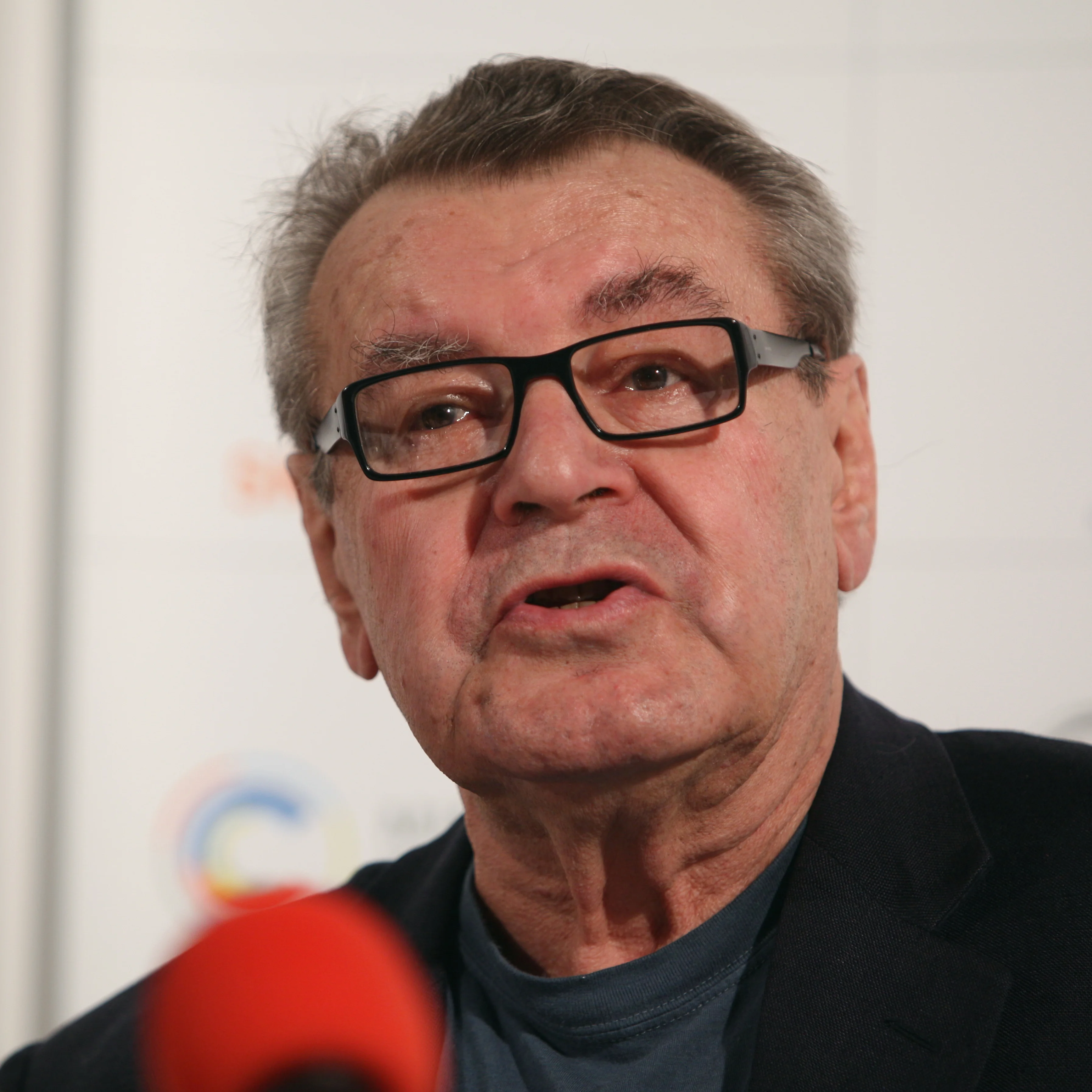
Image from Wikipedia
Image from Wikipedia
Miloš Forman: The Director Who Reimagined Freedom Drama and Musical Film
A Master of Cinema Between the Czech New Wave, Hollywood, and Musical Storytelling
Miloš Forman, born Jan Tomáš Forman on February 18, 1932, in Čáslav and passed away on April 13, 2018, in Danbury, Connecticut, is among the most influential directors of the 20th century. His career blends the precise observation of everyday life in Czechoslovakia with the grand emotion of American auteur cinema. He first gained international attention in the 1960s as a central figure of the Czechoslovak New Wave; later, works like One Flew Over the Cuckoo's Nest and Amadeus solidified his reputation as an exceptional artist with two Oscars. ([britannica.com](https://www.britannica.com/biography/Milo-Forman?utm_source=openai))
Early Years: War, Loss, and the Perception of Human Contradictions
Forman's childhood was marked by historical upheaval. He grew up in Czechoslovakia, lost his parents early, and experienced World War II as an existential turning point that profoundly shaped his later views on authority, conformity, and individual freedom. The biography on the official Forman website emphasizes his origins in Čáslav, his youth in a theater and amateur stage setting, and the formative war years. It is from these experiences that he developed the skeptical yet deeply humane perspective that later characterized his films. ([milosforman.com](https://milosforman.com/en/about/biography?utm_source=openai))
From an early age, Forman showed an interest in narrative observation over theatrical staging. His studies at the Prague Film School included directing, cinematography, film history, criticism, and production; this broad education laid the groundwork for a style that combined dramaturgical precision with documentary awareness. In his later works, it remained evident that he did not idealize people but took their tensions, vanities, and vulnerabilities seriously. ([encyclopedia.com](https://www.encyclopedia.com/education/news-wires-white-papers-and-books/forman-milos-1932?utm_source=openai))
The Breakthrough in the Czechoslovak New Wave
In the 1960s, Forman became a leading figure in Czechoslovak cinema. Films like Black Peter, Loves of a Blonde, and The Firemen's Ball made him internationally known and showcased a new style of socially accurate, lightly ironic storytelling. Both official and biographical sources indicate that it was precisely these early works that defined his signature: a keen sense of milieu, a preference for ensemble scenes, and a perspective on the absurdities of everyday life. ([milosforman.com](https://milosforman.com/en/about/biography?utm_source=openai))
The political context is particularly significant. After the suppression of the Prague Spring, the situation in the communist state became decidedly more severe, Forman was dismissed from the film studio, and he emigrated to the United States. This break marked not only a biographical turning point but also an artistic rebirth: The observer of Czech society became a director who discussed the relationship between individual and system even more directly in Hollywood. ([milosforman.com](https://milosforman.com/en/about/biography?utm_source=openai))
Hollywood: Freedom, Friction, and Major Awards
In the USA, Forman continued his career with works that have since become part of the canon of world cinema. Taking Off opened the door for him, but it was One Flew Over the Cuckoo's Nest that became a historic triumph: the film won the Oscar, and Forman received worldwide recognition for his ability to portray institutional violence as psychological drama. The Golden Globe data also confirm the enormous resonance of this work and his later projects. ([goldenglobes.com](https://goldenglobes.com/person/milos-forman/?utm_source=openai))
Amadeus showcased his artistic signature particularly impressively. The film combined historical opulence with psychological intensity and turned Mozart, Salieri, and the relationship between genius, jealousy, and power into a compelling cinematic drama. The accolades on the most important awards stages underline the significance of this work: Forman won further major awards for it and solidified his reputation as a director who tells history not in a museum-like manner but existentially. ([goldenglobes.com](https://goldenglobes.com/person/milos-forman/?utm_source=openai))
Filmography with Musical Resonance
Forman's body of work includes not only his early Czech films but also American key works like Hair, Ragtime, Valmont, The People vs. Larry Flynt, Man on the Moon, and Goya’s Ghosts. These titles showcase an extraordinary range: social satire, historical literary adaptations, biopics, and political dramas. Particularly Hair and Amadeus demonstrate how adeptly Forman utilized music as a dramatic engine without ever descending into mere illustration. ([goldenglobes.com](https://goldenglobes.com/person/milos-forman/?utm_source=openai))
In particular, in his films with strong musical references, Forman displayed a fine understanding of rhythm, ensemble dynamics, and the staging of stage energy. Whether it was rock culture in Hair or classical music in Amadeus – he used music not only as a sound space but as a field of conflict. As a result, his films acquired a unique tension between emotional weight and analytical distance, which continues to fascinate many viewers and critics today. ([goldenglobes.com](https://goldenglobes.com/person/milos-forman/?utm_source=openai))
Style, Themes, and Artistic Development
Forman's style combines apparent lightness with precise social analysis. His films often work with a closeness to amateurs, precise characterization, and a staging that does not separate comic moments from their tragic origins but allows them to emerge from tragedy. This attitude made him a director who revealed universal conflicts: the pressure of institutions, the desire for self-determination, and the fragility of dignity. ([goldenglobes.com](https://goldenglobes.com/articles/milos-forman-three-time-golden-globe-winner-1932-2018/?utm_source=openai))
This attitude remains relevant musically, as Forman repeatedly juxtaposed the sound of freedom and control. In Amadeus, music becomes a metaphor for genius, in Hair the voice of a generation, and in other works the emotional structure of storytelling. This artistic development makes him a key figure for anyone wanting to understand the interplay of cinema, music, and society. ([goldenglobes.com](https://goldenglobes.com/person/milos-forman/?utm_source=openai))
Awards, Prestige, and Cultural Influence
Miloš Forman's award record impressively documents his international significance. The Golden Globes list several nominations and three wins; the Academy honored his work with Oscars, and both official and biographical sources cite him as one of the most influential European directors who successfully transitioned to Hollywood. This recognition is based not only on success but on a clear artistic signature that has influenced generations of filmmakers. ([goldenglobes.com](https://goldenglobes.com/person/milos-forman/?utm_source=openai))
His cultural influence extends far beyond individual films. Forman demonstrated how political memory, musical dramaturgy, and humanistic observation can converge in cinema that is both popular and demanding. For this reason, his work remains relevant for both film and music culture: it preserves the energy of grand narratives and the precision of detail. ([britannica.com](https://www.britannica.com/biography/Milo-Forman?utm_source=openai))
Conclusion: Why Miloš Forman Continues to Fascinate Today
Miloš Forman represents a cinema that does not preach freedom but makes it experiential. His films are driven by strong performances, a confident rhythm, a sharp eye for power structures, and a rare balance between irony and empathy. Discovering or revisiting his work introduces viewers to a director who shaped a universal cinematic language from personal experience. His films are worth watching again—especially when experienced on the big screen. ([milosforman.com](https://milosforman.com/en/about/biography?utm_source=openai))
Official Channels of Miloš Forman:
- Instagram: no official profile found
- Facebook: no official profile found
- YouTube: no official profile found
- Spotify: no official profile found
- TikTok: no official profile found