
Orit Nahmias
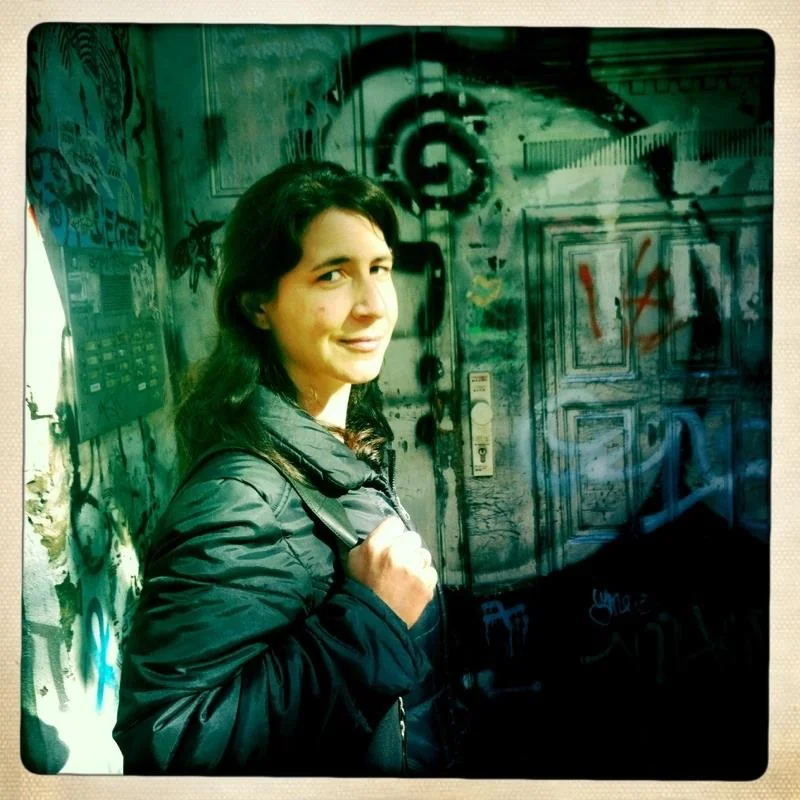
Image from Wikipedia
Image from Wikipedia
Orit Nahmias: The Israeli actress, author, and stage presence between Jerusalem, Berlin, and political theater
An artist who brings intimacy, humor, and identity to the stage
Orit Nahmias is one of the most distinctive voices in contemporary German-language theater. Born in 1977 in Jerusalem and living in Berlin since 2012, she has developed an unmistakable artistic signature as an actress, playwright, screenwriter, and stand-up comedian. Her work combines personal experience, political friction, and an uncompromising stage presence that oscillates between seriousness, irony, and self-exposure.
Nahmias became well-known mainly through her close collaboration with director Yael Ronen and the Berliner Maxim Gorki Theater. There, she became a core member of an ensemble that understands theater as a collective space for thought and transforms biographical material into precise, often painfully comedic stage forms. This blend of openness, intelligence, and boldness in provocation makes Orit Nahmias an extraordinary figure in contemporary culture.
From Jerusalem to Tel Aviv: The foundations of an artistic career
Orit Nahmias was born in Jerusalem and trained as an actress at the Seminar Hakibutzim College of Education in Tel Aviv. Early on, it became clear that her career would not be confined to a single aesthetic box. She worked in various theater productions in Israel, including Taxi, Revizor, and Reluctant Heroes, moving through a repertoire that intertwines classic materials with contemporary perspectives.
One of her first significant successes was her play Why Me?, which won an award at the Israeli TeatroNeto Festival in 2008. This early recognition marks more than just a career milestone; it showcases an artist who is not only convincing as a performer but also possesses a clear voice as a writer. Nahmias' artistic development has thus been twofold from the start – as a performative presence and as a reflective storyteller.
The path to Berlin: Maxim Gorki Theater and working with Yael Ronen
Since 2012, Orit Nahmias has lived in Berlin, a city that has become a crucial resonance space for her artistic development. At the Schaubühne, she appeared in Dritte Generation and Day Before the Last Day by Yael Ronen & Ensemble. These works demonstrated how adept Nahmias is at handling multilingual, intercultural, and biographically charged forms of theater.
Since the 2015/2016 season, she has been part of the ensemble at the Maxim Gorki Theater, a stage known for political, post-migrant, and discursive theater. In productions such as Common Ground, Erotic Crisis, The Situation, Denial, A Walk on the Dark Side, and Yes but No by Yael Ronen, as well as In Unserem Namen by Sebastian Nübling, Nahmias has crafted a role profile characterized by emotional precision and a high degree of self-irony. She was also present in Ersan Mondtag's works Ödipus, Antigone, and Salome, expanding her repertoire to include more archaic, physical forms of performance.
Common Ground and The Situation: Theater as a collective narrative machine
Among the most defining stages of her career are the productions Common Ground and The Situation. Both were invited to the Berliner Theatertreffen, with Common Ground in 2015 and The Situation in 2016. Additionally, Common Ground received the Audience Award at the Mülheimer Theatertage, underscoring the relevance of this work beyond the Berlin theater context.
In these pieces, Nahmias emerges as a performer who not only interprets texts but also develops material in collaboration with the ensemble. This is a crucial part of her artistic identity: Her work often arises from a collective rehearsal process where personal experiences, political conflicts, and theatrical forms intertwine. As a result, acting becomes not merely representation but a dynamic process of observation, intensification, and self-examination.
Jerusalem for Cowards: Personal memory as documentary form
In 2013, Orit Nahmias co-wrote the screenplay for the documentary film Jerusalem for Cowards with Dalia Castel. The film is closely tied to their own biographies and explores the relationship with Jerusalem as a place of origin, loss, and inner distance. At the Jewish Museum Berlin, the film was shown as a deeply personal document of a shared retrospective, raising questions about belonging, memory, and alienation.
This project extends Nahmias’s profile beyond the stage. It demonstrates how deeply her work is influenced by documentary thinking and how consistently she transforms personal experience into an artistic form. Rather than asserting biographical truth, she reveals ambivalence: homeland as a space of longing, but also as a place of contradictions and wounds.
Female Shit and Make Love Not War: Stand-up, self-irony, and radical directness
In 2017, Orit Nahmias presented the double bill Female Shit at Studio Я together with Jilet Ayşe. The show narrates with biting humor the pitiful attempts to be a successful actress, a caring mother, and a foreigner in Berlin at the same time. The description from the Gorki Theater highlights how significantly Nahmias grapples with and humorously dismantles role models.
In 2025, she returned to the stage with Make Love Not War. This new stand-up comedy builds on Female Shit but goes even further: Nahmias speaks about separation, dating, fear of death, desire for life, as well as love, sex, trauma, and politics. The press and theater announcements emphasize the brutal honesty and self-irony with which she addresses her themes. This creates a stage persona that observes sharply, remains emotionally open, and consistently undermines any form of pose.
Playing style, language, and artistic development
Orit Nahmias is one of the actresses who has spoken primarily in English on a German stage for a long time. This linguistic positioning is more than a detail; it reflects an artistic biography that oscillates between Israel and Germany, between belonging and otherness, between private and political. Her roles thrive on this tension, as they never appear smooth but always carry an element of friction.
Her stage presence is characterized by precise timing, emotional directness, and a strong ability for self-presentation in the best sense. Whether in documentary forms, ensemble works, or stand-up solos: Nahmias shapes characters and narrative attitudes that are both vulnerable and rebellious. This mix imparts a rare authenticity to her art and makes her equally intriguing for audiences and critics.
Cultural influence and reception
Nahmias' work exemplifies a theater culture in which identity is not simplified but negotiated. Her themes – Jewish and Israeli biography, migration, motherhood, partnership, sexuality, and political conflicts – are not used as buzzwords but as experiences that resonate immediately with both stage and audience. Especially her collaboration with Yael Ronen has profoundly shaped the discussion around autobiographically influenced ensemble theater in the German-speaking world.
The reception of her work shows that Orit Nahmias is far more than just a member of an ensemble. She is a writer and performer whose artistic value lies in the connection of humor, wounds, and resistance. The fact that her works have repeatedly been invited to renowned festivals and are visible at significant Berlin stages underscores her authority within the theater landscape.
Conclusion: Why Orit Nahmias remains so exciting
Orit Nahmias is exciting because she transforms intimate experience into precise, clever, and often unexpectedly humorous art. She does not only speak about origin, family, or relationships but reveals how profoundly personal identity, politics, and the body are intertwined. This is precisely where the strength of her work lies: It is honest, linguistically sharp, and on stage possesses a presence that lingers.
Anyone who experiences Orit Nahmias live encounters an artist who understands theater as a space of revelation and friction. Her productions are not smooth answers but open, often risky questions. That is precisely why it is worthwhile to see her on stage.
Official channels of Orit Nahmias:
- Instagram: No official profile found
- Facebook: No official profile found
- YouTube: No official profile found
- Spotify: No official profile found
- TikTok: No official profile found
Sources:
- Wikipedia – Orit Nahmias
- Maxim Gorki Theater – Orit Nahmias
- Maxim Gorki Theater – Orit Nahmias (German ensemble page)
- Maxim Gorki Theater – Make Love Not War
- Berliner Zeitung – Actress Orit Nahmias: "No matter what you say, you'll be attacked or insulted"
- Jewish Museum Berlin – "Jerusalem is like an ex-boyfriend"
- Berliner Herbstsalon – Orit Nahmias
- Maxim Gorki Theater – Make Love Not War (English page)