
Robert Wilson (Regisseur)
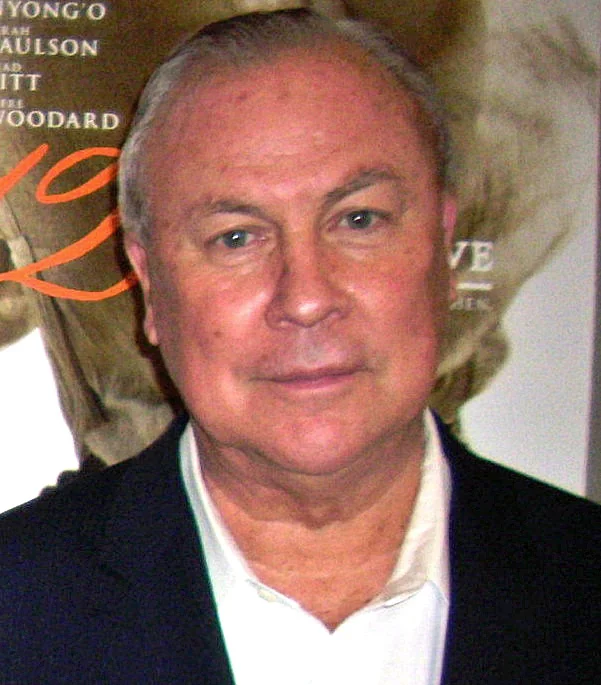
Image from Wikipedia
Image from Wikipedia
Robert Wilson: The Visionary of Contemporary Theater Between Light, Space, and Radical Imagery
An Artist Who Redefined the Stage
Robert “Bob” Wilson was one of the defining figures of experimental theater in the 20th and early 21st centuries. Born on October 4, 1941, in Waco, Texas, and passing away on July 31, 2025, in Water Mill, Long Island, he combined directing, set design, lighting design, painting, architecture, and performance into a distinct artistic language. His works blurred the boundaries between theater, opera, and visual art, making him an international reference point for visual music theater and avant-garde directing.
Wilson developed his music career in a broader sense as an opera and theater maker who collaborated with composers, authors, and musicians on an equal footing, shaping staging into an autonomous artwork. Particularly in his operatic works, his extraordinary presence as a conceptual artist was evident: time stretched, gestures were choreographed, and light became a compositional element. Thus, he created a body of work that today stands for cultural influence, technical precision, and immense poetic power.
Early Years, Education, and the Path to New York
Wilson studied at the University of Texas and the Pratt Institute in Brooklyn, where architecture and design significantly shaped his aesthetic thinking. Later, he worked in Paris with painter George McNeil and in Arizona with architect Paolo Soleri, before immersing himself in the experimental atmosphere of the free art scene in New York City in the mid-1960s. There, he delved into the works of George Balanchine, Merce Cunningham, and Martha Graham, whose consciousness of form greatly influenced his subsequent artistic development.
In 1968, Wilson founded the Byrd Hoffman School of Byrds, an experimental collective in a loft in Lower Manhattan. Here, he developed a radically unique stage language that broke with narrative conventions and instead worked with rhythm, stillness, repetition, and visual rigor. Early on, he connected theater, performance, visual art, and music into a holistic aesthetic that would define his later work.
The International Breakthrough with Deafman Glance and Einstein on the Beach
Wilson achieved his breakthrough in 1971 with Deafman Glance, a silent opera he developed with Raymond Andrews. The work made him internationally recognized and early on showcased the aspects that would characterize his later oeuvre: extreme slowness, precisely composed images, and an almost musical organization of space and time. The reception was remarkable, not least because Wilson understood theater not merely as a storytelling machine but as a visual score.
Among the pivotal milestones is Einstein on the Beach from 1976, the opera created in collaboration with Philip Glass. This work became a landmark event in the history of music and theater when it premiered in Avignon and is today regarded as one of the most influential operas of the 20th century. The success was not only based on the music but also on Wilson's ability to merge structure, light, choreography, and image composition into a unique aesthetic order.
Episodic Formats and the Theater of Duration
In the 1970s, Wilson developed a series of large-scale works that redefined the relationship between the duration of theater and dramaturgy. Works such as KA MOUNTain and GUARDenia Terrace, The Life and Times of Joseph Stalin, and A Letter for Queen Victoria demonstrated his willingness to expand: scenes became tableaux, time became a material size, and the stage became a space of perception rather than action. Wilson's works departed from fast-paced storytelling, instead favoring contemplation, architectural order, and visual tension.
The unfinished major project the CIVIL warS: a tree is best measured when it is down remained central to his reputation as a visionary. Although it was never fully realized, individual parts of the project had a tremendous impact and validated Wilson's claim to understand theater as a transnational, collaborative art system. It is precisely in this openness to fragmentation, process, and incompleteness that a core of his artistic authority lies.
Musical Collaborations with Philip Glass, Tom Waits, Lou Reed, and Others
Wilson collaborated with some of the most distinctive voices in the pop, art, and opera worlds. With Philip Glass, he not only created Einstein on the Beach but also established a model of music theater where minimal music and visual rigor interweave. With Tom Waits, he produced The Black Rider, Alice, and Woyzeck, works where Wilson's visual direction met Waits' gritty, literary musical language, forming a darkly luminous stage world.
With Lou Reed, Wilson developed works including Time Rocker, POEtry, and Lulu. These works also demonstrate his exceptional ability to create a new theatrical form from collaborations with musicians rather than just an illustration. Further collaborations with David Byrne, Allen Ginsberg, Laurie Anderson, Susan Sontag, Jessye Norman, Herbert Grönemeyer, Anohni, CocoRosie, and Anna Calvi underline the breadth of his artistic network and how consistently he broke down genre boundaries.
Opera Art on the Great Stages of Europe
A significant part of Wilson's work developed on the opera stages of Europe. Productions at venues such as La Scala in Milan, the Metropolitan Opera in New York, the Opéra Bastille in Paris, the Zurich Opera, the Hamburg State Opera, and the Bolshoi in Moscow testify to his rank as an internationally sought-after director. He worked on classics by Mozart, Wagner, Verdi, Monteverdi, Gluck, Janáček, Ibsen, Beckett, and Goethe, transforming them into rigorously composed visual spaces.
His approach was particularly evident in works such as Madama Butterfly, Parsifal, The Magic Flute, Lohengrin, Norma, Macbeth, La Traviata, Otello, and Turandot. Wilson's understanding of opera was not based on psychological overload but on precise form, light dramaturgy, and a choreographed presence of the performers. As a result, each production acquired an almost sculptural quality that uniquely intertwined music, space, and movement.
Visual Art, Video Portraits, and the Expansion of the Concept of Stage
Wilson was never merely a director; he was always also a visual artist. His drawings, paintings, sculptures, and installations were exhibited worldwide, including in Paris, Boston, Houston, Munich, Rotterdam, Vancouver, Madrid, New York, and at international biennials. His imagery was characterized by clear lines, strong composition, and a sensitivity to surface, shadow, and spatial effect that directly influenced his work in theater.
Since 2004, Wilson has worked on the Video Portraits, a series of HD video works featuring personalities like Lady Gaga, Brad Pitt, Winona Ryder, Alan Cumming, Jeanne Moreau, Johnny Depp, Mikhail Baryshnikov, Renée Fleming, Sean Penn, and Robert Downey Jr. These works demonstrate his enduring fascination with moving images and the question of how presence can be re-staged in a media culture. Here too, Wilson's signature remains unmistakable: silence, rigor, theatricality, and visual concentration.
Awards, Recognition, and Cultural Influence
Wilson received numerous honors, including two Rockefeller and two Guggenheim fellowships, a Pulitzer Prize nomination for CIVIL warS, the Golden Lion at the Venice Biennale for Memory/Loss, the Olivier Award for Einstein on the Beach, and the Praemium Imperiale in 2023. Added to this are many other awards from Germany, France, Italy, the USA, and other countries, underscoring his international significance. His career demonstrates a rare connection of artistic radicalism and institutional recognition.
His cultural influence extends far beyond theater. Wilson shaped music theater, inspired opera directors, set designers, performance artists, and visual artists, and established an aesthetic of slowness, light, and composition that continues to resonate today. In reviews and portraits, he has repeatedly been described as a master of time and space, as an artist who made seeing itself the subject.
Legacy and Final Years
In 1992, Wilson founded the Watermill Center on Long Island, an interdisciplinary place for research, residencies, and artistic experiments. This institution became a central part of his legacy and continues to serve as a laboratory for performance, visual art, and interdisciplinary exchange. It is here that Wilson's work is revealed to be oriented toward the future: open, exploratory, and internationally connected.
Even in his later years, he remained active and present. His later works included Moby Dick in Düsseldorf and posthumously opened projects such as Tristan and Isolde in Ljubljana. Wilson left behind a body of work that has made theater history and simultaneously serves as an open invitation to new generations of artists to understand the stage as a place of radical imagination.
Conclusion: Why Robert Wilson Continues to Fascinate Today
Robert Wilson is compelling because he did not understand theater as a mere representation of reality but as an art of seeing, hearing, and perceiving. His directorial work combined music, light, movement, and space into a distinctive form of modern stage art. Encountering Wilson means experiencing not a conventional evening of theater but an intense aesthetic experience that lingers long after.
It is precisely in this lies his enduring greatness: Wilson created works of rare formal clarity and emotional depth that have permanently changed opera, performance, and visual art. Those who have the opportunity to experience his productions, archives, or exhibition projects should take it—because Robert Wilson's art shows how powerful a stage can be when it becomes a vision.
Official Channels of Robert Wilson:
- Instagram: https://www.instagram.com/bob___wilson
- Facebook: https://www.facebook.com/RobertWilsonNY
- YouTube: No official profile found
- Spotify: No official profile found
- TikTok: No official profile found
Sources:
Upcoming Events
Moby Dick
Moby Dick