
Satyajit Ray
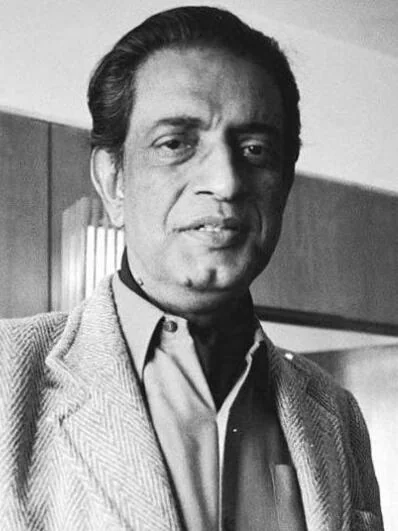
Image from Wikipedia
Image from Wikipedia
Satyajit Ray – The Great Humanist of World Cinema
A Cinematic Body of Work Between Poetry, Precision, and Cultural Breadth
Satyajit Ray was not just a director but a true author of cinema: screenwriter, illustrator, producer, composer, and a precise observer of human relationships. Born on May 2, 1921, in Kolkata and passing away on April 23, 1992, in the same city, he shaped Bengali cinema with a signature characterized by humanistic realism, literary depth, and formal clarity. His work brought Indian cinema to the international stage and permanently anchored Kolkata in the canon of world cinema. (britannica.com)
Biography: Intellect, Artistic Sensibility, and the Path to Cinema
Ray came from a respected Bengali intellectual family where literature, art, and music played a central role. His education and early interest in graphic design and illustration shaped the visual discipline that later distinguished his films. The official categorization of his work still emphasizes his status as a humanist and polymath, an artist who deftly combined multiple disciplines. (satyajitray.org)
Before Ray became world-famous as a filmmaker, he worked in visual design, developing the clarity of vision that would later define his direction. The website SatyajitRay.org explicitly describes him as someone who directly controlled many aspects of filmmaking, striving for an invisible technique where form never overpowers content. This approach explains why his films often appear simple yet are extremely meticulously crafted. (satyajitray.org)
The Breakthrough with the Apu Trilogy
The international breakthrough came with Pather Panchali, the first part of the Apu Trilogy, which is regarded in research and criticism as a milestone of world cinema. The film was made under difficult production conditions, as Ray initially struggled to find support; ultimately, the project was made possible through his own funds and government assistance. The effort paid off: Pather Panchali was completed in 1955, celebrated as both an artistic and commercial success, and won a significant award at Cannes in 1956, securing Ray's career for the long term. (britannica.com)
With Aparajito and Apur Sansar, Ray completed a trilogy that spans from growing up in rural poverty to the maturation of a sensitive, educated man. Criterion describes this series as "achingly beautiful" and profoundly human, while Britannica highlights how Western modernity and personal ambition chronicle themselves in Apu's life journey. Herein lies Ray's greatness: he does not merely tell stories but depicts social and emotional development in cinematic form. (criterion.com)
Musical, Literary, and Visual Signature
Ray was a cinematic singular artist who often took charge of script, editing, casting, music, and even poster design. The Eye Filmmuseum regards him as a true polymath, emphasizing his ability to make content, environments, and human behavior visible with understated precision. His art rested on meticulously observed gestures, careful arrangement, and a visual language that is neither pathetic nor ornamental, but analytical and poetic at the same time. (assets.eyefilm.nl)
Musically and dramaturgically, Ray often worked with motifs, rhythm, and the interplay of closeness and distance. His films seamlessly move between chamber drama, family chronicle, literary adaptation, social study, comedy, and historical film. This stylistic range, which the Eye Filmmuseum explicitly highlighted in 2024, explains why Ray cannot be reduced to a single genre: he mastered classical storytelling as well as subtle psychological condensation. (assets.eyefilm.nl)
The Great Films and the Development of a Global Career
Following the Apu Trilogy, works that solidified Ray's reputation as a master of finely crafted realism emerged. Frequently mentioned highlights include Jalsaghar, Charulata, Mahanagar, Kanchenjungha, Pratidwandi, and Ghare Baire. Britannica emphasizes especially Charulata, Jalsaghar, Devi, and Kanchenjungha as among his most important films, as they reveal social tensions, female self-assertion, conflicts of tradition, and cultural modernization with extraordinary sensitivity. (britannica.com)
Ray remained productive for decades, regularly delivering new feature films until 1981, along with short films and documentary works. SatyajitRay.org refers to a long career marked by a continuous stream of works, spanning from early successes to late films. This continuity is what makes his stature unique: Ray was not a director of a single triumph but an author whose entire filmography can be read as a coherent artistic project. (satyajitray.org)
Discography, Awards, and Critical Reception
Although Ray is best known as a director, music was a central part of his artistic practice; official material regarding his work expressly counts him as a composer. Thus, his filmography features not only directing credits but fully composed audiovisual designs in which sound, editing, and image are coordinated. Critical reception has honored him as the author of an exceptionally coherent oeuvre that has entered the canon of international arthouse cinema. (assets.eyefilm.nl)
Among the most significant honors are international recognition in Cannes for Pather Panchali, awards in Venice for the Apu films, and the Honorary Oscar that Ray received shortly before his death in 1992. SatyajitRay.org identifies the Honorary Academy Award as the highlight of his life's work, and Britannica emphasizes that Ray made Indian cinema visible worldwide with the first Apu film. FIPRESCI-India also continues to award a memorial award named after him for outstanding contributions to film studies, a testament to how closely his name is associated with serious film culture. (satyajitray.org)
Cultural Influence: From Bengali Cinema to the World History of Film
Ray's influence extends far beyond India. The BFI calls Pather Panchali a realistic classic and highlights that Ray was inspired by Italian neorealism, while the 2024 retrospective at the Eye Filmmuseum emphasizes his status as a universal filmmaker and storyteller. Directly arising from his work was a model for humanistic world art that has profoundly influenced later generations of filmmakers, curators, and film historians. (bfi.org.uk)
Even in 2024 and 2025, Ray remains present, although not through new personal projects, but through screenings, restorations, and tributes. The Eye Filmmuseum showed a series of newly digitally restored films in 2024, and the BFI Southbank dedicated an entire retrospective to him in 2022 with 35mm and 4K restorations. This continued presence demonstrates that Ray's work is not museum-bound but continually comes alive for new audiences. (assets.eyefilm.nl)
Voices of the Films and the Critique
Ray himself described his artistic task as a search for organic coherence, for true observation, and for a balance of visual, acoustic, and emotional means. This is not an empty manifesto but the precise formula for his cinema: every shot serves the character, every rhythmic placement serves the environment, and every dramatic movement serves psychological truth. Critics and institutions from Britannica to BFI repeatedly highlight this quality, positioning Ray as a master of quiet yet unwavering expression. (satyajitray.org)
Conclusion: Why Satyajit Ray Remains Fascinating Today
Satyajit Ray remains compelling because he redefined cinema as the art of empathy and precision. His films are both locally rooted and universally comprehensible, literary and sensual, politically aware and formally disciplined. Anyone wishing to experience world cinema in its purest form should watch Satyajit Ray – and discover his films on the big screen whenever possible. (criterion.com)
Official Channels of Satyajit Ray:
- Instagram: No official profile found
- Facebook: No official profile found
- YouTube: No official profile found
- Spotify: No official profile found
- TikTok: No official profile found
Sources:
- Britannica – Satyajit Ray: Biography, Movies, Awards, & Facts
- SatyajitRay.org – Life, films and filmmaking of Satyajit Ray
- SatyajitRay.org – About Us
- British Film Institute – Pather Panchali
- British Film Institute – July 2022 at BFI Southbank: Satyajit Ray
- The Criterion Collection – The Apu Trilogy
- Eye Filmmuseum – Satyajit Ray: In Search of the Modern
- FIPRESCI-India – Satyajit Ray Memorial Award 2024
- Wikipedia: Image and text source