
Yvonne Georgi
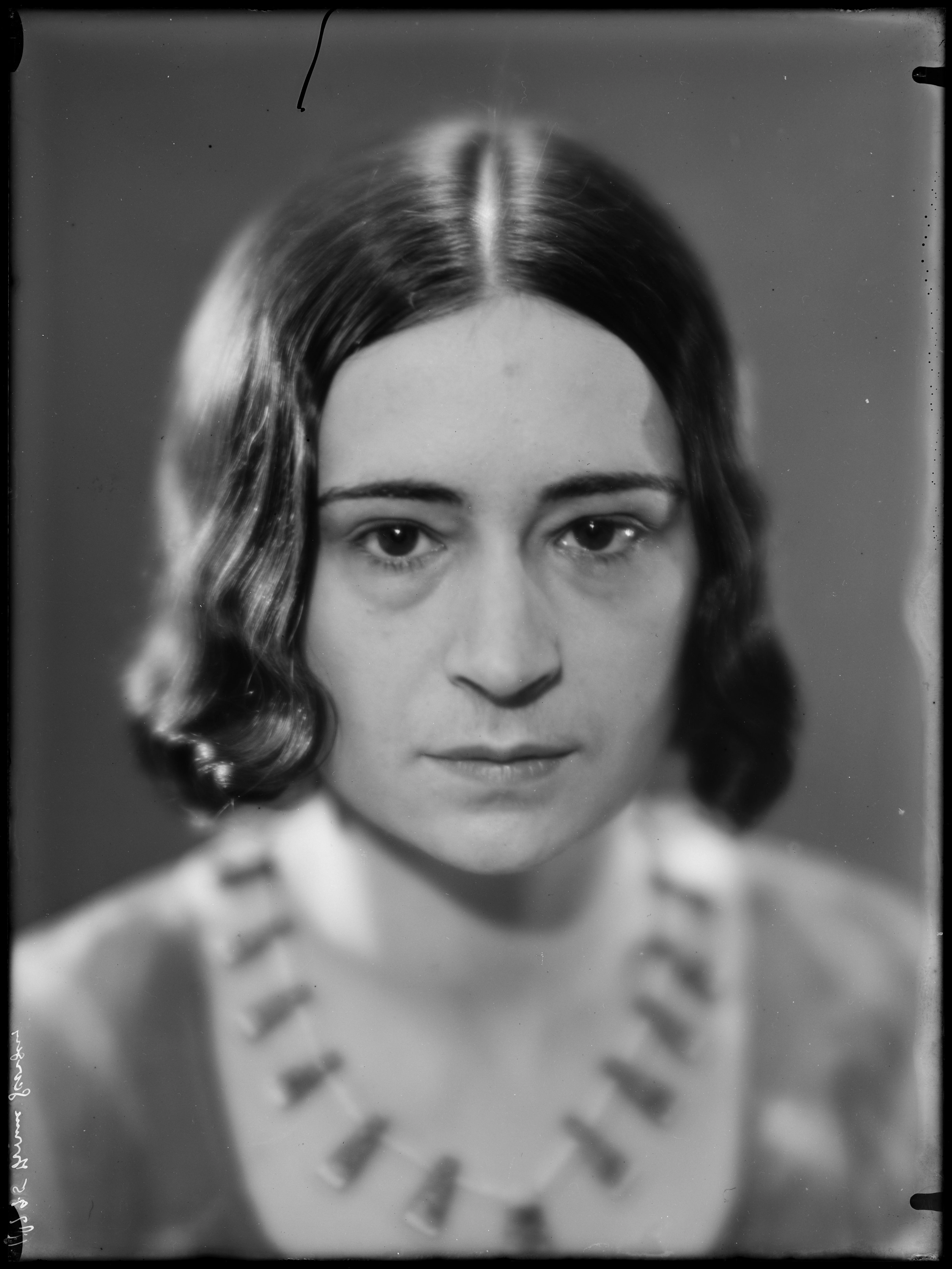
Image from Wikipedia
Image from Wikipedia
Yvonne Georgi: A Pioneer of Modern Dance Between Expression, Ballet, and Avant-Garde
Yvonne Georgi – The Powerful Vision of a Dancer, Choreographer, and Dance Educator
Yvonne Georgi was one of the most prominent figures in German dance in the 20th century. Born on October 29, 1903, in Leipzig and passing away on January 25, 1975, in Hanover, she evolved from an early expression dancer in the circle of Mary Wigman to a choreographer with a distinctive signature. Her artistic career combines modern physicality, classical ballet, and theatrical imagination into a body of work that transcends regional dance history. ([saebi.isgv.de](https://saebi.isgv.de/files/saebi/pdf/28828_Yvonne_Georgi_%281903-1975%29.pdf))
Early Influences in Leipzig: Art, Rhythm, and New Beginnings
Georgi grew up in Leipzig in a culturally open environment: her father was a doctor and her mother was musically talented. She had early access to art and movement, initially attending a higher secondary school for girls and starting training as a librarian at the German Library in Leipzig. During this time, she performed with early mime forms and later attended the Educational Institution for Music and Rhythm in Hellerau. A dance evening by Mary Wigman in November 1920 marked a turning point, as she then studied at Wigman's school until 1924, quickly rising to a master student and solo dancer in her first year of training. ([saebi.isgv.de](https://saebi.isgv.de/files/saebi/pdf/28828_Yvonne_Georgi_%281903-1975%29.pdf))
This phase shaped her aesthetic foundation: she navigated the tension between expression dance, musical modernity, and an increasingly independent stage language. In research, Georgi is considered one of the most avant-garde dancers from the Wigman school, contributing to what was called "German Modern Dance" learned in Dresden. Characteristic of her early development was the blending of the grotesque, classical ballet, and free movement. ([saebi.isgv.de](https://saebi.isgv.de/files/saebi/pdf/28828_Yvonne_Georgi_%281903-1975%29.pdf))
The Breakthrough: From Wigman to Jooss and the "New Dance Stage"
In 1921, Georgi participated in the world premiere of Wigman's "The Seven Dances of Life"; in 1923, she toured Germany with Gret Palucca and worked with music by Ernst Krenek, Béla Bartók, and Francis Poulenc. In 1924, she caught the attention of Kurt Jooss while dancing at the Leipzig cabaret "Retorte" and at the press festival in the Leipzig Zoo. Jooss engaged her for the "Persian Ballet" by Egon Wellesz in Donaueschingen and later brought her to the municipal theater in Münster. There, she became part of the "New Dance Stage," a radically modern collective with Jooss, Fritz Cohen, Sigurd Leeder, and Hein Heckroth. ([saebi.isgv.de](https://saebi.isgv.de/files/saebi/pdf/28828_Yvonne_Georgi_%281903-1975%29.pdf))
The real career jump came in 1925: at just 22 years old, Georgi became ballet mistress at the Princes Reuss Theater in Gera. There, she made a splash with grotesque, often cryptic choreographies like "Arabian Suite," "Saudades do Brasil," and "Barabau." These works were perceived as so successful that invitations followed from Leipzig and Berlin. Even in this early phase, her particular sensitivity for dramaturgy, image power, and a body aesthetics that did not rely solely on pure formalism but rather on character, conflict, and emotion became evident. ([saebi.isgv.de](https://saebi.isgv.de/files/saebi/pdf/28828_Yvonne_Georgi_%281903-1975%29.pdf))
Hanover as an Artistic Center: Stage, School, and Signature
In the autumn of 1926, Georgi moved to the Municipal Theaters Hannover and founded her own dance school there. Her first dance evening in Hanover brought ballet versions of Igor Stravinsky's "Pulcinella" and "Petrushka" to the stage in 1926. Harald Kreutzberg danced alongside her and remained a solo dancer in her troupe until 1931. Georgi's trademark was innovative choreographies with decorative settings, where modern forms of expression fused with classical ballet. ([hannover.de](https://www.hannover.de/Service/Presse-Medien/Landeshauptstadt-Hannover/Aktuelle-Meldungen-und-Veranstaltungen/Stadttafel-f%C3%BCr-T%C3%A4nzerin-und-Choreografin-Yvonne-Georgi-enth%C3%BCllt))
Hanover became a place of stabilization and artistic intensity for her. The city today honors her as a key figure in the development of dance, and her residence was once a sociable center for a large circle of friends. In 1954, Georgi returned to Hanover as ballet mistress and shaped the next generation as a dance educator at the Academy for Music and Theater until 1973. This shifted her influence increasingly from her own stage to the training of the next generation. ([hannover.de](https://www.hannover.de/Service/Presse-Medien/Landeshauptstadt-Hannover/Aktuelle-Meldungen-und-Veranstaltungen/Stadttafel-f%C3%BCr-T%C3%A4nzerin-und-Choreografin-Yvonne-Georgi-enth%C3%BCllt))
Style and Aesthetics: Between Expressiveness, Formal Awareness, and Music Theater
Yvonne Georgi's art was never merely dance in the narrow sense. Her work thrived on a real body language that aimed to convey truths and on the balance of moving grace and expressive physicality. In the Saxon biography, she is described as an artist who smartly balanced convention and free movement, thereby developing a distinctive style. Particularly noticeable is her closeness to music: she created choreographies to contemporary, and later even electronic music, and often worked with partner and group choreographies. ([saebi.isgv.de](https://saebi.isgv.de/files/saebi/pdf/28828_Yvonne_Georgi_%281903-1975%29.pdf))
Her style did not remain restricted to the forms of expression from the Weimar modern period. In later decades, she developed choreographies based on Johann Sebastian Bach, Ludwig van Beethoven, Wolfgang Amadeus Mozart, and Robert Schumann, giving her work a strong music-dramatic character. This openness is one of the reasons why Georgi is considered in dance history not as a marginal figure but as a bridge builder between avant-garde, ballet tradition, and stage experimentation. ([saebi.isgv.de](https://saebi.isgv.de/files/saebi/pdf/28828_Yvonne_Georgi_%281903-1975%29.pdf))
International Impact and Artistic Maturity
Georgi was not only present in Germany. The Saxon biography emphasizes that she and other expression dancers established Dresden's expression dance in the USA as "German Modern Dance." After her marriage and a period in the Netherlands, she continued to work internationally and returned to major stages in various roles as a guest choreographer and director. In 1949/50, she choreographed dances for Ludwig Berger's film "Ballerina" in Paris, later taking over the Abraxas Company and the ballet department of the Municipal Theaters in Düsseldorf. ([saebi.isgv.de](https://saebi.isgv.de/files/saebi/pdf/28828_Yvonne_Georgi_%281903-1975%29.pdf))
Her later works also display an impressive level of stylistic consistency. Pieces such as "Orpheus and Eurydice," "Carmina Burana," "The Woman from Andros," "Prisma," "Demeter," and "The Golem" mark a long artistic evolution in which movement, symbolism, and music became ever more condensed. This dance discography – when considering her choreographies as a catalog of works – documents an artist who remained productive and relevant over decades. ([saebi.isgv.de](https://saebi.isgv.de/files/saebi/pdf/28828_Yvonne_Georgi_%281903-1975%29.pdf))
Recognition, Legacy, and Cultural Historical Significance
Georgi's later work was honored with awards and institutional recognition. She received the Grand Cross of Merit of Lower Saxony and shortly after the Lower Saxony State Medal for her life's work. The city of Hanover remembers her with a street named after her, while the Theater Museum and the Hanover Opera House preserve parts of her estate, costumes, and documents. An exhibition in 2009 and later artistic reconstructions demonstrate that her influence on dance theater still resonates today. ([saebi.isgv.de](https://saebi.isgv.de/files/saebi/pdf/28828_Yvonne_Georgi_%281903-1975%29.pdf))
Particularly significant is her role as a mediator of dance knowledge. From 1959 to 1973, she taught at the Hochschule für Musik und Theater Hannover, over a span of time during which she systematically conveyed her aesthetic experiences to the next generation. Her lasting value for dance history lies precisely in this: Georgi was not only an interpreter of an era but a formative teacher whose perspective on movement, music, and stage influenced several generations. ([saebi.isgv.de](https://saebi.isgv.de/files/saebi/pdf/28828_Yvonne_Georgi_%281903-1975%29.pdf))
Dance Discography: The Major Works and Choreographies
Georgi's central works include "Arabian Suite" (1924), "Saudades do Brasil" (1925), "Barabau" (1925), "Pulcinella" (1926), "Flag Dance" (1928), "Peasant Dance" (1928), "The Angel of the Last Judgment" (1928), "Persian Song" (1928), "Hymnis" (1929), "Salome" (1929), "Dawn" (1929), "Waltz" (1929), "Potpourri" (1929), "Pavane" (1930), and "The Planets" (1931). These titles already indicate the range of her creative output: from folkloristically inspired dance to symbolist images and form-conscious, music-related scenes. ([saebi.isgv.de](https://saebi.isgv.de/files/saebi/pdf/28828_Yvonne_Georgi_%281903-1975%29.pdf))
Later highlights included "Coppélia" (1936), "The Laughing Cavalier" (1937), "Joseph's Legend" (1942), "Orpheus and Eurydice" (1943, revived in 1975), "Carmina Burana" (1944), "Ballerina" (1949/50), "Luck, Death and Dream" (1953), "Human Variations" (1955), "Suite Evolutions" (1958), "Ballet for Dancers, Fire and Water" (1959), "The Woman from Andros" (1960), "Prisma" (1961), "Evolutions" (1961), "Apollon Musagète" (1962), "Demeter" (1963), "The Golem" (1965), "Flower Girl Scene in Parsifal" (1968), "Little Zack" (1970), and "Scorpion" (1973). "Scorpion" is particularly regarded as one of her major late works and an artistic legacy. ([saebi.isgv.de](https://saebi.isgv.de/files/saebi/pdf/28828_Yvonne_Georgi_%281903-1975%29.pdf))
Cultural Influence: A Modernity with Human Scale
Yvonne Georgi represents a dance art that did not pit cool modernity against emotional immediacy. Her influence extends from the Weimar dance avant-garde through the history of Hanoverian dance to the international establishment of German expression dance. The fact that her works continue to live on in archives, museum collections, and research projects speaks to the depth of her cultural heritage. ([hannover.de](https://www.hannover.de/Service/Presse-Medien/Landeshauptstadt-Hannover/Aktuelle-Meldungen-und-Veranstaltungen/Stadttafel-f%C3%BCr-T%C3%A4nzerin-und-Choreografin-Yvonne-Georgi-enth%C3%BCllt))
Her name remains intriguing for dance enthusiasts because it embodies a rare combination of stage magnetism, choreographic independence, and pedagogical authority. Georgi was an artist who conceived of dance not just as form but as a mindset. For those interested in modern dance theater, expression dance, and the history of choreographic avant-garde, Yvonne Georgi stands as a central figure of the 20th century. ([saebi.isgv.de](https://saebi.isgv.de/files/saebi/pdf/28828_Yvonne_Georgi_%281903-1975%29.pdf))
Conclusion: Why Yvonne Georgi Continues to Fascinate Today
Yvonne Georgi combines artistic rigor with creative adventure. Her career reflects an extraordinary development from a Wigman student to an internationally influential choreographer, from a solo dancer to a formative dance educator. This blend of vision, consistency, and stylistic openness makes her a perpetually important figure in dance history. ([saebi.isgv.de](https://saebi.isgv.de/files/saebi/pdf/28828_Yvonne_Georgi_%281903-1975%29.pdf))
Engaging with Georgi reveals a personality that significantly shaped modern dance in Germany and expanded its expressive possibilities over decades. Her work deserves renewed attention, scholarly precision, and vibrant stage presence. Yvonne Georgi remains an artist whose energy still inspires today – a name that must not fade from the cultural memory. ([hannover.de](https://www.hannover.de/Service/Presse-Medien/Landeshauptstadt-Hannover/Aktuelle-Meldungen-und-Veranstaltungen/Stadttafel-f%C3%BCr-T%C3%A4nzerin-und-Choreografin-Yvonne-Georgi-enth%C3%BCllt))
Official Channels of Yvonne Georgi:
- Instagram: No official profile found
- Facebook: No official profile found
- YouTube: No official profile found
- Spotify: No official profile found
- TikTok: No official profile found