
Weiden in der Oberpfalz
Luitpoldstraße 25, 92637 Weiden in der Oberpfalz, Deutschland
International Ceramics Museum Weiden | Photos & Reviews
When people search for the International Ceramics Museum Weiden, it is usually not just about a museum name, but about a very specific information request: What does the building look like, is the visit worthwhile, what does the exhibition show, how do you get there, and what do other visitors say about it? That is why this page focuses on the search terms photos, images, reviews, and Weiden in the Upper Palatinate. The museum itself fits perfectly with this search behavior, as it is not just any exhibition venue, but a building with a clear identity. Since 1990, it has existed as a branch museum of the Neue Sammlung – The Design Museum Munich, housed in the historic Waldsassener Kasten, a baroque building from the 18th century. On approximately 1,000 square meters, the museum presents ceramics from 7,000 years, from the Stone Age to the present, thus connecting regional history, international perspectives, and high-quality presentation. This mixture makes the house attractive for visitors who want to get an idea beforehand before planning their time in Weiden. The official website clearly shows that the museum can today be understood as a modern cultural house: historical building, updated exhibition spaces, curated collections, and a visitor offer that is interesting for both spontaneous guests and consciously planning cultural travelers. ([ikmweiden.de](https://www.ikmweiden.de/?utm_source=openai))
Photos and Images from the International Ceramics Museum Weiden
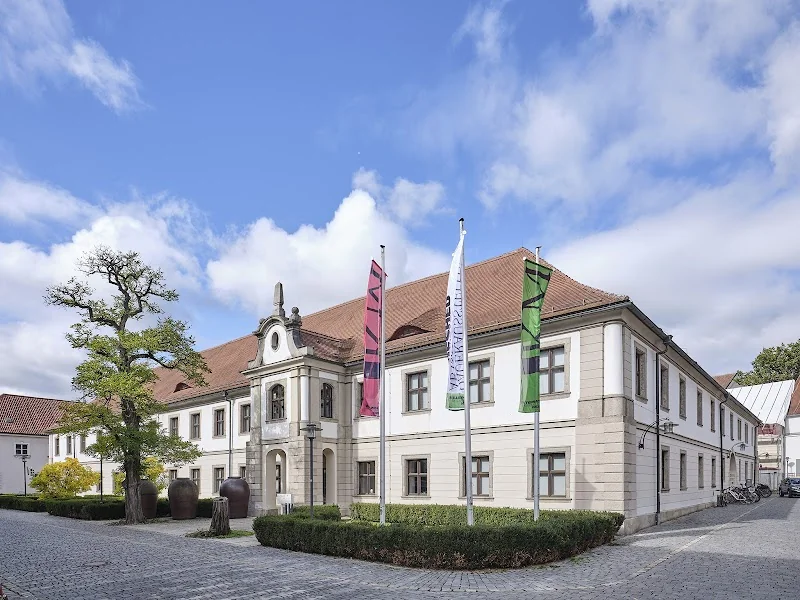
Those searching for photos and images generally want to capture the actual impression of a place, not just see a logo or an address line. At the International Ceramics Museum Weiden, this is particularly meaningful because the visual character of the house itself is a central argument for the visit. The museum is located in the Waldsassener Kasten, a baroque building with a strong historical presence. Even the exterior view conveys a different impression than a modern functional building: The structure appears grown, calm, and culturally charged. Inside, this impression continues, as the official representations show bright exhibition spaces, glass showcases, ceramic objects, colorful vases, and design pieces from different eras. For seekers who want to get an authentic picture in advance, such photos are important because they convey the atmosphere better than any short description. The visual language of the museum is also helpful in understanding the connection between old and new: historical architecture on one side, carefully lit exhibits on the other. This combination makes the house photogenic and credible at the same time. Those viewing images quickly recognize that it is not about an overloaded staging, but about a calm, concentrated presentation that gives space to the objects. This is particularly valuable for a museum with a ceramic focus because ceramics thrive on light, materiality, and surface. ([weiden.de](https://www.weiden.de/kultur/kultur/keramikmuseum?utm_source=openai))
For the search intent of photos and images, it is also important that the museum not only shows individual exhibits but also allows for very different perspectives. The official website and the tourism page of the city of Weiden use motifs that focus both on the architecture and the collection. This creates a visual narrative: outside the baroque frame, inside the international art and design history. This is SEO-relevant because people searching for images often hope for this kind of orientation. They want to know whether the place appears more monumental, familial, classical, or modern. The answer for the Ceramics Museum Weiden is clear: It is classical in the building but modern in the presentation. The showcases appear orderly, the exhibition is not loud but concentrated, and the ceramic works are at the center as material and art form. For visitors traveling with family, friends, or on a spontaneous cultural stop, photos are therefore not only decorative but also a decision criterion. They help assess whether the visit meets their expectations. That is why it is worthwhile to view the visual language of the house in advance: It not only shows objects but the entire attitude of the museum towards material, history, and design. ([weiden.de](https://www.weiden.de/kultur/kultur/keramikmuseum?utm_source=openai))
Reviews and the First Impression upon Visiting
Those searching for reviews usually want to find out whether a visit is really worthwhile and what kind of experience awaits them on-site. Several factors speak for a positive first impression at the International Ceramics Museum Weiden. The conveyed rating of 4.3 from 79 reviews indicates solid visitor interest that fits a house that convinces more with quality than with spectacular size. The museum is very clearly positioned in terms of content: It does not offer ephemeral entertainment but a concentrated journey through 7,000 years of ceramic history. This is appreciated by many cultural travelers because the visit neither overwhelms nor appears arbitrary. The house is manageable enough not to be exhausting, yet rich enough in content to connect several eras, regions, and collection backgrounds. Added to this are the historical framework of the Waldsassener Kasten, the modernized exhibition spaces, and the fair admission price. For reviews, this often means: a place that is experienced as calm, educational, and pleasantly different from large, crowded museums. Those reading reviews fundamentally seek a sense of reliability, and the ceramics museum offers exactly that through its clear structure and precise concept. ([ikmweiden.de](https://www.ikmweiden.de/?utm_source=openai))
The first impression is particularly important because it heavily depends on atmosphere, accessibility, and orientation in museums. The International Ceramics Museum Weiden is only a few minutes' walk from the old town, thus embedded in a spatially pleasant context. Visitors can easily combine their museum visit with a stroll through Weiden, making the experience relaxed and practical. Admission prices are low, opening hours clear, and according to official visitor information, one should plan about 1.5 to 2 hours for the entire tour. This is ideal for those who understand reviews not just as star ratings but as orientation for their daily schedule. A museum that can be fully experienced in this time is often particularly attractive for weekend visits, short trips, or cultural stops on a city trip through the Upper Palatinate. The content mix of historical ceramics, modern design, and changing special exhibitions also ensures that visitors would usually describe their impression as balanced: not too large, not too small, not superficial, and not elitist. This relationship between accessibility and quality makes the house strong in reviews. ([ikmweiden.de](https://www.ikmweiden.de/en/besuch-planen/?utm_source=openai))
International Ceramics Museum Weiden in the Upper Palatinate: History and Collection
The history of the International Ceramics Museum Weiden began in 1990 when the house was founded as a branch museum of the Neue Sammlung – The Design Museum Munich. The sponsor is the city of Weiden in cooperation with the Free State of Bavaria. This is more than a formal statement, as this is precisely where the strength of the museum lies: it is locally rooted and simultaneously embedded in a large, supra-regional collection context. The historical location in the Waldsassener Kasten further enhances this effect. The building itself dates back to the 18th century and was designed as a baroque economic building. The official texts also mention the architect Johann Jacob Philipp Muttone, which gives the place a concrete architectural historical depth. For those seeking history, this is important because the museum not only shows objects but is also part of a longer city narrative. The connection between baroque building, municipal responsibility, and state collection makes the house a cultural hub in the Upper Palatinate. The fact that the exhibition spaces were fundamentally modernized in 2025 additionally shows how seriously the museum takes its task: to preserve historical substance while keeping the presentation contemporary. ([ikmweiden.de](https://www.ikmweiden.de/ueber-das-museum/?utm_source=openai))
Particularly impressive is the collection structure. On the ground floor, the Neue Sammlung presents modern and contemporary ceramics; on the upper floor, the collections of five other Bavarian state museums are shown: the State Antiquities Collection, the Archaeological State Collection, the Museum Five Continents, the State Museum of Egyptian Art, and the Bavarian National Museum. This compilation is unusual and makes the museum in Weiden a true specialty place. Instead of showing just a single perspective on ceramics, the house opens up different cultural perspectives. Additionally, there is the Seltmann collection with Chinese porcelain, which was entrusted to the city of Weiden in 1994. This combination of state loans, municipal collection, and international perspective makes the tour exciting. Ceramics are not presented here as a marginal discipline but as a material that connects art, everyday life, trade, technology, and taste over millennia. The official website rightly speaks of 7,000 years of ceramic history. Those interested in history will find not only individual beautiful pieces but a clearly structured narrative about forms, functions, and cultural relationships. This is particularly fitting in the Upper Palatinate, as the region itself is one of the most traditional ceramic landscapes in Europe. ([ikmweiden.de](https://www.ikmweiden.de/ueber-das-museum/?utm_source=openai))
Opening Hours, Admission, and Planning Your Visit
For practical planning, the opening hours of the International Ceramics Museum Weiden are particularly important. According to official visitor information, the museum is open from Tuesday to Sunday and on public holidays from 11:00 AM to 5:00 PM. It is closed on Mondays; additionally, the house is closed on Rosenmontag, Faschingsdienstag, Christmas Eve, the first Christmas holiday, and New Year's Eve. These clear times make planning easy, especially for guests who want to combine their visit with a city stroll, a café stop, or a trip from the region. The admission is deliberately set low: adults pay 4 euros, reduced visitors 3 euros, and children and teenagers 2 euros. Children up to 6 years have free admission, and the exhibition openings are free. This positions the museum as a very accessible cultural address that remains attractive for spontaneous visits. Those looking for a place that offers a lot of cultural substance for little money will find a convincing offer in Weiden. The official website also recommends planning about 1.5 to 2 hours for the entire museum visit. This is a helpful guideline because it allows the tour to be easily integrated into half a day. ([ikmweiden.de](https://www.ikmweiden.de/en/besuch-planen/?utm_source=openai))
The museum is also well-prepared for groups and special occasions. According to official visitor information, private tours cost 45 euros plus admission. This shows that the house is not only geared towards individual visitors but also towards organized small groups. For many travelers, this is relevant because they view the museum not in isolation but as part of a day's program. Those who are only briefly in Weiden can therefore easily combine a museum visit with other stops. The location near the old town makes this particularly pleasant. Payment is also uncomplicated, as the usual cards are accepted. Practical details like these are often crucial for reviews and search queries because they lower the threshold. The museum thus does not appear as a hard-to-access specialty place but as a clearly structured, hospitable house. The official contact page also provides a direct phone number and an email address, which is helpful for inquiries. For visitors, this means: If you want to clarify opening hours, admission, or the organization of a tour, you will quickly find reliable information. This strengthens planning and particularly appeals to those who do not want to improvise but consciously want to travel with a cultural orientation. ([ikmweiden.de](https://www.ikmweiden.de/en/besuch-planen/?utm_source=openai))
Access, Parking, and Barrier-Free Access
The access to the International Ceramics Museum Weiden is straightforward because the house is very centrally located. The official visitor information describes the museum as only a few minutes' walk from the Weiden old town. This is an important advantage for everyone arriving by car, as they can easily combine the museum visit with a city walk. Parking options are available near the museum and the old town in various parking garages or on parking lots. This keeps the path to the museum short and practical, without the fear of a complicated parking search. For travelers visiting Weiden as part of an excursion to the Upper Palatinate, this is a real plus. This location is also ideal for cultural weekends as it integrates the visit into an urban context rather than pushing it to the outskirts. The address Luitpoldstraße 25 is located in the center and is therefore easy to locate. Those specifically searching for access and parking will find no unclear situation but a very well-embedded museum location with short distances and a reasonable visitor logic. ([ikmweiden.de](https://www.ikmweiden.de/en/besuch-planen/?utm_source=openai))
Regarding accessibility, the museum also makes a very solid impression. The official information mentions an elevator that provides access to large parts of the exhibition. However, two rooms are only partially accessible, which is communicated openly. Additionally, there is a barrier-free restroom. The page on barrier-free use also explains that folding chairs can be borrowed and that guide dogs for the blind and epilepsy warning dogs are allowed if they are appropriately marked. Since 2025, information about the exhibitions is also available in easy-to-understand language or in easy-to-read form, and the texts can be read or listened to via QR codes. This is remarkable for a museum of this size and shows that the communication is designed to be not only expert but also accessible. For visitors needing support, a phone number is provided where inquiries can be made. Overall, this creates an image of a museum that connects tradition and inclusion. This is particularly important for those searching for barrier-free access, parking, and access because it provides real orientation rather than mere promises. ([ikmweiden.de](https://www.ikmweiden.de/en/besuch-planen/?utm_source=openai))
Exhibitions, Tours, and Special Highlights
The program of the International Ceramics Museum Weiden thrives on its mix of permanent presentations and changing exhibitions. The current website mentions three permanent presentations: Ceramics of the Neue Sammlung, Historical Ceramics from five Bavarian State Museums, and the Seltmann Collection. Additionally, there is a program of tours and special events that adds extra dynamism to the house. Particularly exciting is that the collection is not only thought of in European terms. The official texts explicitly emphasize a global perspective with works from Japan, Korea, Africa, Europe, and America. This makes the visit interesting for people who want to trace cultural developments, not just view art objects. Ceramics appear here as a material that connects people across times and continents. For the search intent of exhibitions, this is a strong signal because visitors recognize that they are not merely expecting a static permanent display but a lively museum with regularly renewed perspectives. The modernization of the exhibition spaces in 2025 further underscores this claim. The house does not want to become museum-like and wants to show its objects as well as possible. ([ikmweiden.de](https://www.ikmweiden.de/en/alle-ausstellungen/?utm_source=openai))
The educational offerings are also important. The program page and museum information mention tours, thematic walks, and events, including offerings related to the special exhibition and the new permanent presentation. This is valuable for visitors because it allows the museum to be experienced multiple times: once as an independent tour, once as part of a guided tour, and once as part of a changing program. So, for those looking for more than just a short tour, there is real added value here. The regional embedding is also particularly interesting: The museum is located in the heart of the porcelain region Upper Palatinate, in an environment that is itself shaped by ceramic and industrial history. This local anchoring makes the visit credible and thematically rounded. Together with the Seltmann collection, the state loans, and the baroque architecture, a house emerges that answers many search queries simultaneously: photos, images, reviews, history, opening hours, admission, access, parking, and barrier-free access. This breadth is strong for SEO because it leads different user intentions to a single, content-appropriate address. ([ikmweiden.de](https://www.ikmweiden.de/en/programm/?utm_source=openai))
Sources:
Mehr anzeigenWeniger anzeigen
International Ceramics Museum Weiden | Photos & Reviews
When people search for the International Ceramics Museum Weiden, it is usually not just about a museum name, but about a very specific information request: What does the building look like, is the visit worthwhile, what does the exhibition show, how do you get there, and what do other visitors say about it? That is why this page focuses on the search terms photos, images, reviews, and Weiden in the Upper Palatinate. The museum itself fits perfectly with this search behavior, as it is not just any exhibition venue, but a building with a clear identity. Since 1990, it has existed as a branch museum of the Neue Sammlung – The Design Museum Munich, housed in the historic Waldsassener Kasten, a baroque building from the 18th century. On approximately 1,000 square meters, the museum presents ceramics from 7,000 years, from the Stone Age to the present, thus connecting regional history, international perspectives, and high-quality presentation. This mixture makes the house attractive for visitors who want to get an idea beforehand before planning their time in Weiden. The official website clearly shows that the museum can today be understood as a modern cultural house: historical building, updated exhibition spaces, curated collections, and a visitor offer that is interesting for both spontaneous guests and consciously planning cultural travelers. ([ikmweiden.de](https://www.ikmweiden.de/?utm_source=openai))
Photos and Images from the International Ceramics Museum Weiden
Those searching for photos and images generally want to capture the actual impression of a place, not just see a logo or an address line. At the International Ceramics Museum Weiden, this is particularly meaningful because the visual character of the house itself is a central argument for the visit. The museum is located in the Waldsassener Kasten, a baroque building with a strong historical presence. Even the exterior view conveys a different impression than a modern functional building: The structure appears grown, calm, and culturally charged. Inside, this impression continues, as the official representations show bright exhibition spaces, glass showcases, ceramic objects, colorful vases, and design pieces from different eras. For seekers who want to get an authentic picture in advance, such photos are important because they convey the atmosphere better than any short description. The visual language of the museum is also helpful in understanding the connection between old and new: historical architecture on one side, carefully lit exhibits on the other. This combination makes the house photogenic and credible at the same time. Those viewing images quickly recognize that it is not about an overloaded staging, but about a calm, concentrated presentation that gives space to the objects. This is particularly valuable for a museum with a ceramic focus because ceramics thrive on light, materiality, and surface. ([weiden.de](https://www.weiden.de/kultur/kultur/keramikmuseum?utm_source=openai))
For the search intent of photos and images, it is also important that the museum not only shows individual exhibits but also allows for very different perspectives. The official website and the tourism page of the city of Weiden use motifs that focus both on the architecture and the collection. This creates a visual narrative: outside the baroque frame, inside the international art and design history. This is SEO-relevant because people searching for images often hope for this kind of orientation. They want to know whether the place appears more monumental, familial, classical, or modern. The answer for the Ceramics Museum Weiden is clear: It is classical in the building but modern in the presentation. The showcases appear orderly, the exhibition is not loud but concentrated, and the ceramic works are at the center as material and art form. For visitors traveling with family, friends, or on a spontaneous cultural stop, photos are therefore not only decorative but also a decision criterion. They help assess whether the visit meets their expectations. That is why it is worthwhile to view the visual language of the house in advance: It not only shows objects but the entire attitude of the museum towards material, history, and design. ([weiden.de](https://www.weiden.de/kultur/kultur/keramikmuseum?utm_source=openai))
Reviews and the First Impression upon Visiting
Those searching for reviews usually want to find out whether a visit is really worthwhile and what kind of experience awaits them on-site. Several factors speak for a positive first impression at the International Ceramics Museum Weiden. The conveyed rating of 4.3 from 79 reviews indicates solid visitor interest that fits a house that convinces more with quality than with spectacular size. The museum is very clearly positioned in terms of content: It does not offer ephemeral entertainment but a concentrated journey through 7,000 years of ceramic history. This is appreciated by many cultural travelers because the visit neither overwhelms nor appears arbitrary. The house is manageable enough not to be exhausting, yet rich enough in content to connect several eras, regions, and collection backgrounds. Added to this are the historical framework of the Waldsassener Kasten, the modernized exhibition spaces, and the fair admission price. For reviews, this often means: a place that is experienced as calm, educational, and pleasantly different from large, crowded museums. Those reading reviews fundamentally seek a sense of reliability, and the ceramics museum offers exactly that through its clear structure and precise concept. ([ikmweiden.de](https://www.ikmweiden.de/?utm_source=openai))
The first impression is particularly important because it heavily depends on atmosphere, accessibility, and orientation in museums. The International Ceramics Museum Weiden is only a few minutes' walk from the old town, thus embedded in a spatially pleasant context. Visitors can easily combine their museum visit with a stroll through Weiden, making the experience relaxed and practical. Admission prices are low, opening hours clear, and according to official visitor information, one should plan about 1.5 to 2 hours for the entire tour. This is ideal for those who understand reviews not just as star ratings but as orientation for their daily schedule. A museum that can be fully experienced in this time is often particularly attractive for weekend visits, short trips, or cultural stops on a city trip through the Upper Palatinate. The content mix of historical ceramics, modern design, and changing special exhibitions also ensures that visitors would usually describe their impression as balanced: not too large, not too small, not superficial, and not elitist. This relationship between accessibility and quality makes the house strong in reviews. ([ikmweiden.de](https://www.ikmweiden.de/en/besuch-planen/?utm_source=openai))
International Ceramics Museum Weiden in the Upper Palatinate: History and Collection
The history of the International Ceramics Museum Weiden began in 1990 when the house was founded as a branch museum of the Neue Sammlung – The Design Museum Munich. The sponsor is the city of Weiden in cooperation with the Free State of Bavaria. This is more than a formal statement, as this is precisely where the strength of the museum lies: it is locally rooted and simultaneously embedded in a large, supra-regional collection context. The historical location in the Waldsassener Kasten further enhances this effect. The building itself dates back to the 18th century and was designed as a baroque economic building. The official texts also mention the architect Johann Jacob Philipp Muttone, which gives the place a concrete architectural historical depth. For those seeking history, this is important because the museum not only shows objects but is also part of a longer city narrative. The connection between baroque building, municipal responsibility, and state collection makes the house a cultural hub in the Upper Palatinate. The fact that the exhibition spaces were fundamentally modernized in 2025 additionally shows how seriously the museum takes its task: to preserve historical substance while keeping the presentation contemporary. ([ikmweiden.de](https://www.ikmweiden.de/ueber-das-museum/?utm_source=openai))
Particularly impressive is the collection structure. On the ground floor, the Neue Sammlung presents modern and contemporary ceramics; on the upper floor, the collections of five other Bavarian state museums are shown: the State Antiquities Collection, the Archaeological State Collection, the Museum Five Continents, the State Museum of Egyptian Art, and the Bavarian National Museum. This compilation is unusual and makes the museum in Weiden a true specialty place. Instead of showing just a single perspective on ceramics, the house opens up different cultural perspectives. Additionally, there is the Seltmann collection with Chinese porcelain, which was entrusted to the city of Weiden in 1994. This combination of state loans, municipal collection, and international perspective makes the tour exciting. Ceramics are not presented here as a marginal discipline but as a material that connects art, everyday life, trade, technology, and taste over millennia. The official website rightly speaks of 7,000 years of ceramic history. Those interested in history will find not only individual beautiful pieces but a clearly structured narrative about forms, functions, and cultural relationships. This is particularly fitting in the Upper Palatinate, as the region itself is one of the most traditional ceramic landscapes in Europe. ([ikmweiden.de](https://www.ikmweiden.de/ueber-das-museum/?utm_source=openai))
Opening Hours, Admission, and Planning Your Visit
For practical planning, the opening hours of the International Ceramics Museum Weiden are particularly important. According to official visitor information, the museum is open from Tuesday to Sunday and on public holidays from 11:00 AM to 5:00 PM. It is closed on Mondays; additionally, the house is closed on Rosenmontag, Faschingsdienstag, Christmas Eve, the first Christmas holiday, and New Year's Eve. These clear times make planning easy, especially for guests who want to combine their visit with a city stroll, a café stop, or a trip from the region. The admission is deliberately set low: adults pay 4 euros, reduced visitors 3 euros, and children and teenagers 2 euros. Children up to 6 years have free admission, and the exhibition openings are free. This positions the museum as a very accessible cultural address that remains attractive for spontaneous visits. Those looking for a place that offers a lot of cultural substance for little money will find a convincing offer in Weiden. The official website also recommends planning about 1.5 to 2 hours for the entire museum visit. This is a helpful guideline because it allows the tour to be easily integrated into half a day. ([ikmweiden.de](https://www.ikmweiden.de/en/besuch-planen/?utm_source=openai))
The museum is also well-prepared for groups and special occasions. According to official visitor information, private tours cost 45 euros plus admission. This shows that the house is not only geared towards individual visitors but also towards organized small groups. For many travelers, this is relevant because they view the museum not in isolation but as part of a day's program. Those who are only briefly in Weiden can therefore easily combine a museum visit with other stops. The location near the old town makes this particularly pleasant. Payment is also uncomplicated, as the usual cards are accepted. Practical details like these are often crucial for reviews and search queries because they lower the threshold. The museum thus does not appear as a hard-to-access specialty place but as a clearly structured, hospitable house. The official contact page also provides a direct phone number and an email address, which is helpful for inquiries. For visitors, this means: If you want to clarify opening hours, admission, or the organization of a tour, you will quickly find reliable information. This strengthens planning and particularly appeals to those who do not want to improvise but consciously want to travel with a cultural orientation. ([ikmweiden.de](https://www.ikmweiden.de/en/besuch-planen/?utm_source=openai))
Access, Parking, and Barrier-Free Access
The access to the International Ceramics Museum Weiden is straightforward because the house is very centrally located. The official visitor information describes the museum as only a few minutes' walk from the Weiden old town. This is an important advantage for everyone arriving by car, as they can easily combine the museum visit with a city walk. Parking options are available near the museum and the old town in various parking garages or on parking lots. This keeps the path to the museum short and practical, without the fear of a complicated parking search. For travelers visiting Weiden as part of an excursion to the Upper Palatinate, this is a real plus. This location is also ideal for cultural weekends as it integrates the visit into an urban context rather than pushing it to the outskirts. The address Luitpoldstraße 25 is located in the center and is therefore easy to locate. Those specifically searching for access and parking will find no unclear situation but a very well-embedded museum location with short distances and a reasonable visitor logic. ([ikmweiden.de](https://www.ikmweiden.de/en/besuch-planen/?utm_source=openai))
Regarding accessibility, the museum also makes a very solid impression. The official information mentions an elevator that provides access to large parts of the exhibition. However, two rooms are only partially accessible, which is communicated openly. Additionally, there is a barrier-free restroom. The page on barrier-free use also explains that folding chairs can be borrowed and that guide dogs for the blind and epilepsy warning dogs are allowed if they are appropriately marked. Since 2025, information about the exhibitions is also available in easy-to-understand language or in easy-to-read form, and the texts can be read or listened to via QR codes. This is remarkable for a museum of this size and shows that the communication is designed to be not only expert but also accessible. For visitors needing support, a phone number is provided where inquiries can be made. Overall, this creates an image of a museum that connects tradition and inclusion. This is particularly important for those searching for barrier-free access, parking, and access because it provides real orientation rather than mere promises. ([ikmweiden.de](https://www.ikmweiden.de/en/besuch-planen/?utm_source=openai))
Exhibitions, Tours, and Special Highlights
The program of the International Ceramics Museum Weiden thrives on its mix of permanent presentations and changing exhibitions. The current website mentions three permanent presentations: Ceramics of the Neue Sammlung, Historical Ceramics from five Bavarian State Museums, and the Seltmann Collection. Additionally, there is a program of tours and special events that adds extra dynamism to the house. Particularly exciting is that the collection is not only thought of in European terms. The official texts explicitly emphasize a global perspective with works from Japan, Korea, Africa, Europe, and America. This makes the visit interesting for people who want to trace cultural developments, not just view art objects. Ceramics appear here as a material that connects people across times and continents. For the search intent of exhibitions, this is a strong signal because visitors recognize that they are not merely expecting a static permanent display but a lively museum with regularly renewed perspectives. The modernization of the exhibition spaces in 2025 further underscores this claim. The house does not want to become museum-like and wants to show its objects as well as possible. ([ikmweiden.de](https://www.ikmweiden.de/en/alle-ausstellungen/?utm_source=openai))
The educational offerings are also important. The program page and museum information mention tours, thematic walks, and events, including offerings related to the special exhibition and the new permanent presentation. This is valuable for visitors because it allows the museum to be experienced multiple times: once as an independent tour, once as part of a guided tour, and once as part of a changing program. So, for those looking for more than just a short tour, there is real added value here. The regional embedding is also particularly interesting: The museum is located in the heart of the porcelain region Upper Palatinate, in an environment that is itself shaped by ceramic and industrial history. This local anchoring makes the visit credible and thematically rounded. Together with the Seltmann collection, the state loans, and the baroque architecture, a house emerges that answers many search queries simultaneously: photos, images, reviews, history, opening hours, admission, access, parking, and barrier-free access. This breadth is strong for SEO because it leads different user intentions to a single, content-appropriate address. ([ikmweiden.de](https://www.ikmweiden.de/en/programm/?utm_source=openai))
Sources:
International Ceramics Museum Weiden | Photos & Reviews
When people search for the International Ceramics Museum Weiden, it is usually not just about a museum name, but about a very specific information request: What does the building look like, is the visit worthwhile, what does the exhibition show, how do you get there, and what do other visitors say about it? That is why this page focuses on the search terms photos, images, reviews, and Weiden in the Upper Palatinate. The museum itself fits perfectly with this search behavior, as it is not just any exhibition venue, but a building with a clear identity. Since 1990, it has existed as a branch museum of the Neue Sammlung – The Design Museum Munich, housed in the historic Waldsassener Kasten, a baroque building from the 18th century. On approximately 1,000 square meters, the museum presents ceramics from 7,000 years, from the Stone Age to the present, thus connecting regional history, international perspectives, and high-quality presentation. This mixture makes the house attractive for visitors who want to get an idea beforehand before planning their time in Weiden. The official website clearly shows that the museum can today be understood as a modern cultural house: historical building, updated exhibition spaces, curated collections, and a visitor offer that is interesting for both spontaneous guests and consciously planning cultural travelers. ([ikmweiden.de](https://www.ikmweiden.de/?utm_source=openai))
Photos and Images from the International Ceramics Museum Weiden
Those searching for photos and images generally want to capture the actual impression of a place, not just see a logo or an address line. At the International Ceramics Museum Weiden, this is particularly meaningful because the visual character of the house itself is a central argument for the visit. The museum is located in the Waldsassener Kasten, a baroque building with a strong historical presence. Even the exterior view conveys a different impression than a modern functional building: The structure appears grown, calm, and culturally charged. Inside, this impression continues, as the official representations show bright exhibition spaces, glass showcases, ceramic objects, colorful vases, and design pieces from different eras. For seekers who want to get an authentic picture in advance, such photos are important because they convey the atmosphere better than any short description. The visual language of the museum is also helpful in understanding the connection between old and new: historical architecture on one side, carefully lit exhibits on the other. This combination makes the house photogenic and credible at the same time. Those viewing images quickly recognize that it is not about an overloaded staging, but about a calm, concentrated presentation that gives space to the objects. This is particularly valuable for a museum with a ceramic focus because ceramics thrive on light, materiality, and surface. ([weiden.de](https://www.weiden.de/kultur/kultur/keramikmuseum?utm_source=openai))
For the search intent of photos and images, it is also important that the museum not only shows individual exhibits but also allows for very different perspectives. The official website and the tourism page of the city of Weiden use motifs that focus both on the architecture and the collection. This creates a visual narrative: outside the baroque frame, inside the international art and design history. This is SEO-relevant because people searching for images often hope for this kind of orientation. They want to know whether the place appears more monumental, familial, classical, or modern. The answer for the Ceramics Museum Weiden is clear: It is classical in the building but modern in the presentation. The showcases appear orderly, the exhibition is not loud but concentrated, and the ceramic works are at the center as material and art form. For visitors traveling with family, friends, or on a spontaneous cultural stop, photos are therefore not only decorative but also a decision criterion. They help assess whether the visit meets their expectations. That is why it is worthwhile to view the visual language of the house in advance: It not only shows objects but the entire attitude of the museum towards material, history, and design. ([weiden.de](https://www.weiden.de/kultur/kultur/keramikmuseum?utm_source=openai))
Reviews and the First Impression upon Visiting
Those searching for reviews usually want to find out whether a visit is really worthwhile and what kind of experience awaits them on-site. Several factors speak for a positive first impression at the International Ceramics Museum Weiden. The conveyed rating of 4.3 from 79 reviews indicates solid visitor interest that fits a house that convinces more with quality than with spectacular size. The museum is very clearly positioned in terms of content: It does not offer ephemeral entertainment but a concentrated journey through 7,000 years of ceramic history. This is appreciated by many cultural travelers because the visit neither overwhelms nor appears arbitrary. The house is manageable enough not to be exhausting, yet rich enough in content to connect several eras, regions, and collection backgrounds. Added to this are the historical framework of the Waldsassener Kasten, the modernized exhibition spaces, and the fair admission price. For reviews, this often means: a place that is experienced as calm, educational, and pleasantly different from large, crowded museums. Those reading reviews fundamentally seek a sense of reliability, and the ceramics museum offers exactly that through its clear structure and precise concept. ([ikmweiden.de](https://www.ikmweiden.de/?utm_source=openai))
The first impression is particularly important because it heavily depends on atmosphere, accessibility, and orientation in museums. The International Ceramics Museum Weiden is only a few minutes' walk from the old town, thus embedded in a spatially pleasant context. Visitors can easily combine their museum visit with a stroll through Weiden, making the experience relaxed and practical. Admission prices are low, opening hours clear, and according to official visitor information, one should plan about 1.5 to 2 hours for the entire tour. This is ideal for those who understand reviews not just as star ratings but as orientation for their daily schedule. A museum that can be fully experienced in this time is often particularly attractive for weekend visits, short trips, or cultural stops on a city trip through the Upper Palatinate. The content mix of historical ceramics, modern design, and changing special exhibitions also ensures that visitors would usually describe their impression as balanced: not too large, not too small, not superficial, and not elitist. This relationship between accessibility and quality makes the house strong in reviews. ([ikmweiden.de](https://www.ikmweiden.de/en/besuch-planen/?utm_source=openai))
International Ceramics Museum Weiden in the Upper Palatinate: History and Collection
The history of the International Ceramics Museum Weiden began in 1990 when the house was founded as a branch museum of the Neue Sammlung – The Design Museum Munich. The sponsor is the city of Weiden in cooperation with the Free State of Bavaria. This is more than a formal statement, as this is precisely where the strength of the museum lies: it is locally rooted and simultaneously embedded in a large, supra-regional collection context. The historical location in the Waldsassener Kasten further enhances this effect. The building itself dates back to the 18th century and was designed as a baroque economic building. The official texts also mention the architect Johann Jacob Philipp Muttone, which gives the place a concrete architectural historical depth. For those seeking history, this is important because the museum not only shows objects but is also part of a longer city narrative. The connection between baroque building, municipal responsibility, and state collection makes the house a cultural hub in the Upper Palatinate. The fact that the exhibition spaces were fundamentally modernized in 2025 additionally shows how seriously the museum takes its task: to preserve historical substance while keeping the presentation contemporary. ([ikmweiden.de](https://www.ikmweiden.de/ueber-das-museum/?utm_source=openai))
Particularly impressive is the collection structure. On the ground floor, the Neue Sammlung presents modern and contemporary ceramics; on the upper floor, the collections of five other Bavarian state museums are shown: the State Antiquities Collection, the Archaeological State Collection, the Museum Five Continents, the State Museum of Egyptian Art, and the Bavarian National Museum. This compilation is unusual and makes the museum in Weiden a true specialty place. Instead of showing just a single perspective on ceramics, the house opens up different cultural perspectives. Additionally, there is the Seltmann collection with Chinese porcelain, which was entrusted to the city of Weiden in 1994. This combination of state loans, municipal collection, and international perspective makes the tour exciting. Ceramics are not presented here as a marginal discipline but as a material that connects art, everyday life, trade, technology, and taste over millennia. The official website rightly speaks of 7,000 years of ceramic history. Those interested in history will find not only individual beautiful pieces but a clearly structured narrative about forms, functions, and cultural relationships. This is particularly fitting in the Upper Palatinate, as the region itself is one of the most traditional ceramic landscapes in Europe. ([ikmweiden.de](https://www.ikmweiden.de/ueber-das-museum/?utm_source=openai))
Opening Hours, Admission, and Planning Your Visit
For practical planning, the opening hours of the International Ceramics Museum Weiden are particularly important. According to official visitor information, the museum is open from Tuesday to Sunday and on public holidays from 11:00 AM to 5:00 PM. It is closed on Mondays; additionally, the house is closed on Rosenmontag, Faschingsdienstag, Christmas Eve, the first Christmas holiday, and New Year's Eve. These clear times make planning easy, especially for guests who want to combine their visit with a city stroll, a café stop, or a trip from the region. The admission is deliberately set low: adults pay 4 euros, reduced visitors 3 euros, and children and teenagers 2 euros. Children up to 6 years have free admission, and the exhibition openings are free. This positions the museum as a very accessible cultural address that remains attractive for spontaneous visits. Those looking for a place that offers a lot of cultural substance for little money will find a convincing offer in Weiden. The official website also recommends planning about 1.5 to 2 hours for the entire museum visit. This is a helpful guideline because it allows the tour to be easily integrated into half a day. ([ikmweiden.de](https://www.ikmweiden.de/en/besuch-planen/?utm_source=openai))
The museum is also well-prepared for groups and special occasions. According to official visitor information, private tours cost 45 euros plus admission. This shows that the house is not only geared towards individual visitors but also towards organized small groups. For many travelers, this is relevant because they view the museum not in isolation but as part of a day's program. Those who are only briefly in Weiden can therefore easily combine a museum visit with other stops. The location near the old town makes this particularly pleasant. Payment is also uncomplicated, as the usual cards are accepted. Practical details like these are often crucial for reviews and search queries because they lower the threshold. The museum thus does not appear as a hard-to-access specialty place but as a clearly structured, hospitable house. The official contact page also provides a direct phone number and an email address, which is helpful for inquiries. For visitors, this means: If you want to clarify opening hours, admission, or the organization of a tour, you will quickly find reliable information. This strengthens planning and particularly appeals to those who do not want to improvise but consciously want to travel with a cultural orientation. ([ikmweiden.de](https://www.ikmweiden.de/en/besuch-planen/?utm_source=openai))
Access, Parking, and Barrier-Free Access
The access to the International Ceramics Museum Weiden is straightforward because the house is very centrally located. The official visitor information describes the museum as only a few minutes' walk from the Weiden old town. This is an important advantage for everyone arriving by car, as they can easily combine the museum visit with a city walk. Parking options are available near the museum and the old town in various parking garages or on parking lots. This keeps the path to the museum short and practical, without the fear of a complicated parking search. For travelers visiting Weiden as part of an excursion to the Upper Palatinate, this is a real plus. This location is also ideal for cultural weekends as it integrates the visit into an urban context rather than pushing it to the outskirts. The address Luitpoldstraße 25 is located in the center and is therefore easy to locate. Those specifically searching for access and parking will find no unclear situation but a very well-embedded museum location with short distances and a reasonable visitor logic. ([ikmweiden.de](https://www.ikmweiden.de/en/besuch-planen/?utm_source=openai))
Regarding accessibility, the museum also makes a very solid impression. The official information mentions an elevator that provides access to large parts of the exhibition. However, two rooms are only partially accessible, which is communicated openly. Additionally, there is a barrier-free restroom. The page on barrier-free use also explains that folding chairs can be borrowed and that guide dogs for the blind and epilepsy warning dogs are allowed if they are appropriately marked. Since 2025, information about the exhibitions is also available in easy-to-understand language or in easy-to-read form, and the texts can be read or listened to via QR codes. This is remarkable for a museum of this size and shows that the communication is designed to be not only expert but also accessible. For visitors needing support, a phone number is provided where inquiries can be made. Overall, this creates an image of a museum that connects tradition and inclusion. This is particularly important for those searching for barrier-free access, parking, and access because it provides real orientation rather than mere promises. ([ikmweiden.de](https://www.ikmweiden.de/en/besuch-planen/?utm_source=openai))
Exhibitions, Tours, and Special Highlights
The program of the International Ceramics Museum Weiden thrives on its mix of permanent presentations and changing exhibitions. The current website mentions three permanent presentations: Ceramics of the Neue Sammlung, Historical Ceramics from five Bavarian State Museums, and the Seltmann Collection. Additionally, there is a program of tours and special events that adds extra dynamism to the house. Particularly exciting is that the collection is not only thought of in European terms. The official texts explicitly emphasize a global perspective with works from Japan, Korea, Africa, Europe, and America. This makes the visit interesting for people who want to trace cultural developments, not just view art objects. Ceramics appear here as a material that connects people across times and continents. For the search intent of exhibitions, this is a strong signal because visitors recognize that they are not merely expecting a static permanent display but a lively museum with regularly renewed perspectives. The modernization of the exhibition spaces in 2025 further underscores this claim. The house does not want to become museum-like and wants to show its objects as well as possible. ([ikmweiden.de](https://www.ikmweiden.de/en/alle-ausstellungen/?utm_source=openai))
The educational offerings are also important. The program page and museum information mention tours, thematic walks, and events, including offerings related to the special exhibition and the new permanent presentation. This is valuable for visitors because it allows the museum to be experienced multiple times: once as an independent tour, once as part of a guided tour, and once as part of a changing program. So, for those looking for more than just a short tour, there is real added value here. The regional embedding is also particularly interesting: The museum is located in the heart of the porcelain region Upper Palatinate, in an environment that is itself shaped by ceramic and industrial history. This local anchoring makes the visit credible and thematically rounded. Together with the Seltmann collection, the state loans, and the baroque architecture, a house emerges that answers many search queries simultaneously: photos, images, reviews, history, opening hours, admission, access, parking, and barrier-free access. This breadth is strong for SEO because it leads different user intentions to a single, content-appropriate address. ([ikmweiden.de](https://www.ikmweiden.de/en/programm/?utm_source=openai))
Sources:
Frequently Asked Questions
Reviews
KJ Dude
6. February 2017
Very well put together museum. Incredible value for the money. Many examples of ceramics from the ancient to today. Only drawback for this non German speaker is all the exhibits are in German with no translations available.
Glynis Brown
28. May 2024
A delightful ceramic museum in the centre of town. Some truly jaw dropping pieces from Ancient Greece and before. Extremely well preserved and exhibited. Very helpful staff. The German gentleman on the ticket desk when I arrived was charming, although we did not speak each other's languages! He managed to help me and ensured that my visit was excellent. Thank you, what a very wonderful museum. I will return.
Michael Fritz
9. October 2025
Very nice museum and place to spend time.
Wil Riedijk
8. March 2026
Nice museum overwhelming and a beautiful garden.
Vanessa Volkening
19. June 2023
First, I loved it was inside the library, through the courtyard. Secondly, so many beautiful pieces from so many eras. This was a very happy find for me. If you're in the area, please go see this!