

Weiden in der Oberpfalz
Oberer Markt, 92637 Weiden in der Oberpfalz, Deutschland
Upper Market Weiden | Parking and Events
The Upper Market in Weiden in the Upper Palatinate is much more than just a square in the city center. It is the visible focal point of a historic old town that has preserved its historical character while also being part of the everyday life of a vibrant city center. Between the Upper Gate, the Old Town Hall, and the adjacent alleys unfolds a cityscape characterized by Renaissance facades, clear square edges, and a pleasantly walkable pedestrian area. Those who visit the Upper Market experience not only architecture but also atmosphere: the echo of centuries of city history, the soft chimes of the Old Town Hall, market activities in the morning, and festive moments during events that transform the square into a social center. This mix makes the place attractive for both locals and visitors. It is a meeting point, a point of orientation, a starting point for city explorations, and one of the most important addresses for anyone who wants to experience Weiden at its best. ([weiden-tourismus.info](https://www.weiden-tourismus.info/sehenswuerdigkeiten/bauten-denkmaeler/marktplatz))
Historic Marketplace and Old Town Hall
The historical context of the Upper Market is closely linked to the entire marketplace of Weiden. Between the Upper Gate and the Lower Gate lies the marketplace, which was named Der Ring in 1489. The Upper Market forms the area between the Upper Gate and the Old Town Hall. Particularly defining are the beautiful gabled houses from the period after 1540, which give the square a distinctive character to this day. The residential buildings exhibit the stylistic features of the Renaissance, making the Upper Market not appear as a random open space, but as a consciously developed historic urban area. Standing here, one does not just see individual buildings but an ensemble that makes the development of the city visible. For this reason, the square is often perceived as the heart of the old town and serves as a natural starting point for city tours, old town walks, and tourist orientation. ([weiden-tourismus.info](https://www.weiden-tourismus.info/sehenswuerdigkeiten/bauten-denkmaeler/marktplatz))
At the center of this ensemble stands the Old Town Hall, which was built between 1539 and 1548 by master builder Hans Nopl, carpenter Hans Stieber, and stonemason Andreas Falk. A comprehensive renovation between 1914 and 1917 preserved the historical charm of the building and further strengthened its role as a landmark of the old town. Particularly impressive is the beam ceiling in the large meeting room, a handcrafted work from the 16th century. In the past, the Old Town Hall served not only as an administrative building but also as a social center of the city, where theater and dance events took place. Today, it is a monument with vibrant use: In the passage on the ground floor, there are small shops and dining establishments, as well as the tourist information and the info point with brochures about the city and the region. This way, the building remains not just a backdrop but an active part of city life. ([weiden-tourismus.info](https://www.weiden-tourismus.info/sehenswuerdigkeiten/bauten-denkmaeler/altes-rathaus?L=0))
The significance of the Old Town Hall for the Upper Market extends into the present. The building was further renovated between 2016 and 2019, during which the roof structure, historical paintings, and facade elements were restored. Particularly important is the facade oriented towards the Upper Market with the carillon, which has accompanied the people of Weiden since 1983. Daily at 11:35 AM and 4:35 PM, a selection from a repertoire of 99 works sounds. Thus, the Old Town Hall connects historical architecture with a recurring acoustic marker that makes the square immediately recognizable to many people. This connection of architectural history, public function, and cultural identity makes the Upper Market a place that one does not just pass through but consciously perceives. Those who want to understand the old town ideally start right here. ([weiden-tourismus.info](https://www.weiden-tourismus.info/sehenswuerdigkeiten/bauten-denkmaeler/altes-rathaus?L=0))
Parking, Arrival, and Pedestrian Zone
For visitors, the location of the Upper Market is particularly pleasant because the historic core of the old town can be experienced as a pedestrian zone. The Weiden old town with streets and squares such as Upper and Lower Market, School Alley, Türlgasse, Wörthstraße, and Max-Reger-Straße is explicitly designated as a pedestrian zone. This makes the stay calm, safe, and comfortable, especially if one wants to walk between the town hall, shops, dining options, and attractions. Those arriving by car do not park in the middle of the square but in parking garages or on parking lots in immediate proximity to the historic old town. Thus, the core area remains largely car-free without compromising accessibility. For a visit to the city center, this is a noticeable advantage: One arrives, parks the car, and then moves leisurely in a compact, well-connected urban space. ([weiden-tourismus.info](https://www.weiden-tourismus.info/info-service/anreise-vor-ort/anreise))
The tourist infrastructure further supports this impression. Around 2000 parking spaces are available in the city center, with public street parking not even included in this number. For orientation, there is a map of the old town and a city map with street search, making arrival and destination search easy even for first-time visitors. The train station is about 500 meters from the historic old town, making the Upper Market attractive for train travelers as well. In addition, Weiden is well connected by traffic, including highways and federal roads, making it easily accessible for day visitors as well as weekend guests. The combination of pedestrian zone, central parking options, and short distance from the train station is a clear advantage for anyone wishing to use the Upper Market as a starting point for a city stroll or an event visit. ([weiden-tourismus.info](https://www.weiden-tourismus.info/info-service/anreise-vor-ort/anreise))
In terms of orientation and service, the location is also very practical. The tourist information is located in the Old Town Hall at Upper Market 1 and is thus directly accessible at the square. So, anyone looking for maps, information about tours, or general information about the city has the right contact point right here. This central location connects the Upper Market's practical functions with a historical backdrop. For visitors, this means: short distances, clear orientation, and a place where one not only lingers but also informs oneself. In SEO terms, this would be the perfect mix of visibility, utility, and quality of stay. For real visitors, it is even more simply put: The Upper Market is easy to reach and at the same time one of the most beautiful squares in the city center. ([weiden-tourismus.info](https://www.weiden-tourismus.info/sehenswuerdigkeiten/bauten-denkmaeler/altes-rathaus?L=0))
Events and City Life
The Upper Market is not only a historic square but also a stage for modern city life. Official event pages regularly show that the area around the Old Town Hall and the Upper Market is used for festivals, music, and public actions. During the Culture and Shopping Night Weiden Dreams, the city center transforms into a vibrant experience area with musicians, light moods, and a program that makes the old town shine in a special light. The Old Town Hall is also deliberately staged and illuminated in color, allowing history and present to visually meet. This interplay makes the Upper Market a place that not only functions during the day but also has a strong impact in the evening. It is thus a place that not only shows city identity but actively produces it. ([weiden.de](https://www.weiden.de/kultur/freizeit/veranstaltungen/details/kultur-einkaufsnacht-weiden-traeumt))
The citizens' festival of the city of Weiden also clearly shows the role the Upper Market plays in the event calendar. Around the Old Town Hall, on the Upper Market, and in the neighboring squares, a dense network of stages, music genres, and culinary offerings is created. The spectrum ranges from brass music and rock to pop, soul, funk, and country, as well as culinary stalls and club offerings. This is particularly appealing to visitors because the historic center does not present itself statically but as a social space with changing experiences. A festival at the Upper Market thrives not only on music but also on the backdrop: The Renaissance houses, the square situation, and the Old Town Hall create a harmonious atmosphere in which events automatically gain more character. So, those looking for Upper Market Weiden events will not find a random event venue here but a place that visibly enhances celebrations. ([weiden.de](https://www.weiden.de/kultur/freizeit/veranstaltungen/details/buergerfest-der-stadt-weiden))
Weekly Market and Shopping Experience
A central theme around the Upper Market is the weekly market, which fills the historic center with everyday life, regional offerings, and recognizability. In the heart of the Weiden old town at the Old Town Hall, it takes place on Wednesdays and Saturdays from 07:00 AM to 12:30 PM. This fixed market time gives the square a clear rhythmic structure and ensures that the Upper Market is not only visited on weekends or special occasions but regularly functions as a lively supply point. The history behind it is particularly interesting: The market privileges were first mentioned in 1331. In 1607, the weekly market was reorganized and expanded to include a livestock market. In 1948, it moved from the Lower Market to the Allee before returning to the old town in 1984 after the pedestrian zone was inaugurated. Thus, today's market is not only a sales area but the result of a long history of the city and its use. ([weiden.de](https://www.weiden.de/kultur/einkaufsstadt/wochenmarkt))
For visitors, this means: Those who visit the Upper Market experience not only architecture but also urban life. The weekly market brings fresh products, a conversational atmosphere, and short distances to the old town. At the same time, it complements the shopping experience in the city center, which is officially described as diverse and includes additional retail locations beyond the historic core. This is a significant advantage of the Upper Market: It is part of a compact city center where strolling, shopping, dining, and cultural visits can be easily combined. Those who come to the market in the morning can continue walking through the old town at noon, stop by the Old Town Hall, or later visit a café. The visitor logic is very simple: The square is central, historical, and functional at the same time. This makes it particularly relevant for search queries like Upper Market Weiden weekly market or Upper Market Weiden old town. ([weiden.de](https://www.weiden.de/kultur/einkaufsstadt/wochenmarkt))
Special Features at the Upper Market
One of the most striking features at the Upper Market is the Octagon Fountain directly in front of the Old Town Hall. It was designed in 1983 by the Weiden sculptor Ludwig Hammer and his wife Pilar and conceived as a three-tiered octagon. The fountain is not only a beautiful detail in the cityscape but also a typical example of how public art can shape the character of a place. During the Advent season, it transforms into a nativity scene, gaining a completely different emotional quality. For families, strollers, and photography enthusiasts, this is a strong attraction because the same architectural center presents itself completely differently depending on the season. Such special features make a place memorable: it remains familiar but never quite the same. ([weiden-tourismus.info](https://www.weiden-tourismus.info/sehenswuerdigkeiten/bauten-denkmaeler/marktplatz))
Equally defining is the carillon on the facade of the Old Town Hall, which is oriented towards the Upper Market and has accompanied the city since 1983. It can be heard daily at 11:35 AM and 4:35 PM; the repertoire includes a total of 99 works. This soundscape connects the Upper Market with a very concrete daily structure and makes the square more than just a passageway. Those standing there experience architecture, history, and acoustic identity simultaneously. Additionally, the tourist information in the Old Town Hall enhances the Upper Market organizationally. It is a direct contact point for city information, brochures, and orientation in the Upper Palatinate Forest. This combination of cultural symbol, service function, and urban presence makes the Upper Market a place with high recognizability and a strong local profile. ([weiden-tourismus.info](https://www.weiden-tourismus.info/sehenswuerdigkeiten/bauten-denkmaeler/altes-rathaus?L=0))
Practical Tips for the Visit
Those who really want to enjoy the Upper Market in Weiden should take time for the surroundings. The square works best not as an isolated point but as part of a tour through the old town. The historic alleys, the Old Town Hall, the pedestrian zone, and the neighboring squares can be comfortably explored on foot. Since the Upper Market is not a closed hall with fixed seating but an open city square, there is also no classic seating plan or fixed room layout. This is not a disadvantage but part of its charm: the space remains flexible, open, and can be experienced very differently depending on the occasion. For city visitors who enjoy photography, strolling, or simply letting themselves be carried away, this is ideal. Those who come early experience more tranquility and market atmosphere; those who stay later feel more of the urban life of the city center. ([weiden-tourismus.info](https://www.weiden-tourismus.info/info-service/anreise-vor-ort/anreise))
It is also practical that the Upper Market can be very well combined with other attractions. The historic center is part of a larger city center area that is explicitly described in urban planning concepts as an important public and social space. This includes the Lower and Upper Market as well as Wörth and Max-Reger Street. Urban planning also speaks for barrier-free paths and good orientation, as does the short distance from the train station. So, those arriving with family, on foot, or by train can make their visit uncomplicated. And because events, markets, and seasonal highlights regularly take place in the square, a second or third visit is also worthwhile. The Upper Market is not a place that one checks off once but one that can be rediscovered depending on the season, time of day, and occasion. This is exactly where its special strength lies as an SEO topic and as a real destination for visitors. ([weiden.de](https://www.weiden.de/wirtschaft/stadtplanung/konzepte-und-rahmenplanungen/abgeschlossene-planungen/barrierefreie-innenstadt))
Those who use the Upper Market as a starting point quickly discover how well Weiden focuses on short distances and clear orientation. The historic center is compact, the paths are manageable, and many important points are in direct proximity to each other. For a successful visit, it is advisable to plan the square not only as a destination but as the center of a small city experience: first a walk through the market, then a look at the Old Town Hall, perhaps a stop at the fountain, followed by a detour to market stalls, shops, or a guided tour. This way, the place unfolds its full effect. It is rich in tradition, practical, photogenic, and lively at the same time. This multidimensionality makes the Upper Market one of the most important places in Weiden in the Upper Palatinate. ([weiden.de](https://www.weiden-tourismus.info/sehenswuerdigkeiten/bauten-denkmaeler/altes-rathaus?L=0))
Sources:
- Marketplace - Weiden i.d. Oberpfalz / Bavaria
- Old Town Hall - Weiden i.d. Oberpfalz / Bavaria
- Arrival - Weiden i.d. Oberpfalz / Bavaria
- Weekly Market - City of Weiden
- Citizens' Festival of the City of Weiden - City of Weiden
- Culture and Shopping Night Weiden Dreams - City of Weiden
- Barrier-Free City Center - City of Weiden
Mehr anzeigenWeniger anzeigen
Upper Market Weiden | Parking and Events
The Upper Market in Weiden in the Upper Palatinate is much more than just a square in the city center. It is the visible focal point of a historic old town that has preserved its historical character while also being part of the everyday life of a vibrant city center. Between the Upper Gate, the Old Town Hall, and the adjacent alleys unfolds a cityscape characterized by Renaissance facades, clear square edges, and a pleasantly walkable pedestrian area. Those who visit the Upper Market experience not only architecture but also atmosphere: the echo of centuries of city history, the soft chimes of the Old Town Hall, market activities in the morning, and festive moments during events that transform the square into a social center. This mix makes the place attractive for both locals and visitors. It is a meeting point, a point of orientation, a starting point for city explorations, and one of the most important addresses for anyone who wants to experience Weiden at its best. ([weiden-tourismus.info](https://www.weiden-tourismus.info/sehenswuerdigkeiten/bauten-denkmaeler/marktplatz))
Historic Marketplace and Old Town Hall
The historical context of the Upper Market is closely linked to the entire marketplace of Weiden. Between the Upper Gate and the Lower Gate lies the marketplace, which was named Der Ring in 1489. The Upper Market forms the area between the Upper Gate and the Old Town Hall. Particularly defining are the beautiful gabled houses from the period after 1540, which give the square a distinctive character to this day. The residential buildings exhibit the stylistic features of the Renaissance, making the Upper Market not appear as a random open space, but as a consciously developed historic urban area. Standing here, one does not just see individual buildings but an ensemble that makes the development of the city visible. For this reason, the square is often perceived as the heart of the old town and serves as a natural starting point for city tours, old town walks, and tourist orientation. ([weiden-tourismus.info](https://www.weiden-tourismus.info/sehenswuerdigkeiten/bauten-denkmaeler/marktplatz))
At the center of this ensemble stands the Old Town Hall, which was built between 1539 and 1548 by master builder Hans Nopl, carpenter Hans Stieber, and stonemason Andreas Falk. A comprehensive renovation between 1914 and 1917 preserved the historical charm of the building and further strengthened its role as a landmark of the old town. Particularly impressive is the beam ceiling in the large meeting room, a handcrafted work from the 16th century. In the past, the Old Town Hall served not only as an administrative building but also as a social center of the city, where theater and dance events took place. Today, it is a monument with vibrant use: In the passage on the ground floor, there are small shops and dining establishments, as well as the tourist information and the info point with brochures about the city and the region. This way, the building remains not just a backdrop but an active part of city life. ([weiden-tourismus.info](https://www.weiden-tourismus.info/sehenswuerdigkeiten/bauten-denkmaeler/altes-rathaus?L=0))
The significance of the Old Town Hall for the Upper Market extends into the present. The building was further renovated between 2016 and 2019, during which the roof structure, historical paintings, and facade elements were restored. Particularly important is the facade oriented towards the Upper Market with the carillon, which has accompanied the people of Weiden since 1983. Daily at 11:35 AM and 4:35 PM, a selection from a repertoire of 99 works sounds. Thus, the Old Town Hall connects historical architecture with a recurring acoustic marker that makes the square immediately recognizable to many people. This connection of architectural history, public function, and cultural identity makes the Upper Market a place that one does not just pass through but consciously perceives. Those who want to understand the old town ideally start right here. ([weiden-tourismus.info](https://www.weiden-tourismus.info/sehenswuerdigkeiten/bauten-denkmaeler/altes-rathaus?L=0))
Parking, Arrival, and Pedestrian Zone
For visitors, the location of the Upper Market is particularly pleasant because the historic core of the old town can be experienced as a pedestrian zone. The Weiden old town with streets and squares such as Upper and Lower Market, School Alley, Türlgasse, Wörthstraße, and Max-Reger-Straße is explicitly designated as a pedestrian zone. This makes the stay calm, safe, and comfortable, especially if one wants to walk between the town hall, shops, dining options, and attractions. Those arriving by car do not park in the middle of the square but in parking garages or on parking lots in immediate proximity to the historic old town. Thus, the core area remains largely car-free without compromising accessibility. For a visit to the city center, this is a noticeable advantage: One arrives, parks the car, and then moves leisurely in a compact, well-connected urban space. ([weiden-tourismus.info](https://www.weiden-tourismus.info/info-service/anreise-vor-ort/anreise))
The tourist infrastructure further supports this impression. Around 2000 parking spaces are available in the city center, with public street parking not even included in this number. For orientation, there is a map of the old town and a city map with street search, making arrival and destination search easy even for first-time visitors. The train station is about 500 meters from the historic old town, making the Upper Market attractive for train travelers as well. In addition, Weiden is well connected by traffic, including highways and federal roads, making it easily accessible for day visitors as well as weekend guests. The combination of pedestrian zone, central parking options, and short distance from the train station is a clear advantage for anyone wishing to use the Upper Market as a starting point for a city stroll or an event visit. ([weiden-tourismus.info](https://www.weiden-tourismus.info/info-service/anreise-vor-ort/anreise))
In terms of orientation and service, the location is also very practical. The tourist information is located in the Old Town Hall at Upper Market 1 and is thus directly accessible at the square. So, anyone looking for maps, information about tours, or general information about the city has the right contact point right here. This central location connects the Upper Market's practical functions with a historical backdrop. For visitors, this means: short distances, clear orientation, and a place where one not only lingers but also informs oneself. In SEO terms, this would be the perfect mix of visibility, utility, and quality of stay. For real visitors, it is even more simply put: The Upper Market is easy to reach and at the same time one of the most beautiful squares in the city center. ([weiden-tourismus.info](https://www.weiden-tourismus.info/sehenswuerdigkeiten/bauten-denkmaeler/altes-rathaus?L=0))
Events and City Life
The Upper Market is not only a historic square but also a stage for modern city life. Official event pages regularly show that the area around the Old Town Hall and the Upper Market is used for festivals, music, and public actions. During the Culture and Shopping Night Weiden Dreams, the city center transforms into a vibrant experience area with musicians, light moods, and a program that makes the old town shine in a special light. The Old Town Hall is also deliberately staged and illuminated in color, allowing history and present to visually meet. This interplay makes the Upper Market a place that not only functions during the day but also has a strong impact in the evening. It is thus a place that not only shows city identity but actively produces it. ([weiden.de](https://www.weiden.de/kultur/freizeit/veranstaltungen/details/kultur-einkaufsnacht-weiden-traeumt))
The citizens' festival of the city of Weiden also clearly shows the role the Upper Market plays in the event calendar. Around the Old Town Hall, on the Upper Market, and in the neighboring squares, a dense network of stages, music genres, and culinary offerings is created. The spectrum ranges from brass music and rock to pop, soul, funk, and country, as well as culinary stalls and club offerings. This is particularly appealing to visitors because the historic center does not present itself statically but as a social space with changing experiences. A festival at the Upper Market thrives not only on music but also on the backdrop: The Renaissance houses, the square situation, and the Old Town Hall create a harmonious atmosphere in which events automatically gain more character. So, those looking for Upper Market Weiden events will not find a random event venue here but a place that visibly enhances celebrations. ([weiden.de](https://www.weiden.de/kultur/freizeit/veranstaltungen/details/buergerfest-der-stadt-weiden))
Weekly Market and Shopping Experience
A central theme around the Upper Market is the weekly market, which fills the historic center with everyday life, regional offerings, and recognizability. In the heart of the Weiden old town at the Old Town Hall, it takes place on Wednesdays and Saturdays from 07:00 AM to 12:30 PM. This fixed market time gives the square a clear rhythmic structure and ensures that the Upper Market is not only visited on weekends or special occasions but regularly functions as a lively supply point. The history behind it is particularly interesting: The market privileges were first mentioned in 1331. In 1607, the weekly market was reorganized and expanded to include a livestock market. In 1948, it moved from the Lower Market to the Allee before returning to the old town in 1984 after the pedestrian zone was inaugurated. Thus, today's market is not only a sales area but the result of a long history of the city and its use. ([weiden.de](https://www.weiden.de/kultur/einkaufsstadt/wochenmarkt))
For visitors, this means: Those who visit the Upper Market experience not only architecture but also urban life. The weekly market brings fresh products, a conversational atmosphere, and short distances to the old town. At the same time, it complements the shopping experience in the city center, which is officially described as diverse and includes additional retail locations beyond the historic core. This is a significant advantage of the Upper Market: It is part of a compact city center where strolling, shopping, dining, and cultural visits can be easily combined. Those who come to the market in the morning can continue walking through the old town at noon, stop by the Old Town Hall, or later visit a café. The visitor logic is very simple: The square is central, historical, and functional at the same time. This makes it particularly relevant for search queries like Upper Market Weiden weekly market or Upper Market Weiden old town. ([weiden.de](https://www.weiden.de/kultur/einkaufsstadt/wochenmarkt))
Special Features at the Upper Market
One of the most striking features at the Upper Market is the Octagon Fountain directly in front of the Old Town Hall. It was designed in 1983 by the Weiden sculptor Ludwig Hammer and his wife Pilar and conceived as a three-tiered octagon. The fountain is not only a beautiful detail in the cityscape but also a typical example of how public art can shape the character of a place. During the Advent season, it transforms into a nativity scene, gaining a completely different emotional quality. For families, strollers, and photography enthusiasts, this is a strong attraction because the same architectural center presents itself completely differently depending on the season. Such special features make a place memorable: it remains familiar but never quite the same. ([weiden-tourismus.info](https://www.weiden-tourismus.info/sehenswuerdigkeiten/bauten-denkmaeler/marktplatz))
Equally defining is the carillon on the facade of the Old Town Hall, which is oriented towards the Upper Market and has accompanied the city since 1983. It can be heard daily at 11:35 AM and 4:35 PM; the repertoire includes a total of 99 works. This soundscape connects the Upper Market with a very concrete daily structure and makes the square more than just a passageway. Those standing there experience architecture, history, and acoustic identity simultaneously. Additionally, the tourist information in the Old Town Hall enhances the Upper Market organizationally. It is a direct contact point for city information, brochures, and orientation in the Upper Palatinate Forest. This combination of cultural symbol, service function, and urban presence makes the Upper Market a place with high recognizability and a strong local profile. ([weiden-tourismus.info](https://www.weiden-tourismus.info/sehenswuerdigkeiten/bauten-denkmaeler/altes-rathaus?L=0))
Practical Tips for the Visit
Those who really want to enjoy the Upper Market in Weiden should take time for the surroundings. The square works best not as an isolated point but as part of a tour through the old town. The historic alleys, the Old Town Hall, the pedestrian zone, and the neighboring squares can be comfortably explored on foot. Since the Upper Market is not a closed hall with fixed seating but an open city square, there is also no classic seating plan or fixed room layout. This is not a disadvantage but part of its charm: the space remains flexible, open, and can be experienced very differently depending on the occasion. For city visitors who enjoy photography, strolling, or simply letting themselves be carried away, this is ideal. Those who come early experience more tranquility and market atmosphere; those who stay later feel more of the urban life of the city center. ([weiden-tourismus.info](https://www.weiden-tourismus.info/info-service/anreise-vor-ort/anreise))
It is also practical that the Upper Market can be very well combined with other attractions. The historic center is part of a larger city center area that is explicitly described in urban planning concepts as an important public and social space. This includes the Lower and Upper Market as well as Wörth and Max-Reger Street. Urban planning also speaks for barrier-free paths and good orientation, as does the short distance from the train station. So, those arriving with family, on foot, or by train can make their visit uncomplicated. And because events, markets, and seasonal highlights regularly take place in the square, a second or third visit is also worthwhile. The Upper Market is not a place that one checks off once but one that can be rediscovered depending on the season, time of day, and occasion. This is exactly where its special strength lies as an SEO topic and as a real destination for visitors. ([weiden.de](https://www.weiden.de/wirtschaft/stadtplanung/konzepte-und-rahmenplanungen/abgeschlossene-planungen/barrierefreie-innenstadt))
Those who use the Upper Market as a starting point quickly discover how well Weiden focuses on short distances and clear orientation. The historic center is compact, the paths are manageable, and many important points are in direct proximity to each other. For a successful visit, it is advisable to plan the square not only as a destination but as the center of a small city experience: first a walk through the market, then a look at the Old Town Hall, perhaps a stop at the fountain, followed by a detour to market stalls, shops, or a guided tour. This way, the place unfolds its full effect. It is rich in tradition, practical, photogenic, and lively at the same time. This multidimensionality makes the Upper Market one of the most important places in Weiden in the Upper Palatinate. ([weiden.de](https://www.weiden-tourismus.info/sehenswuerdigkeiten/bauten-denkmaeler/altes-rathaus?L=0))
Sources:
- Marketplace - Weiden i.d. Oberpfalz / Bavaria
- Old Town Hall - Weiden i.d. Oberpfalz / Bavaria
- Arrival - Weiden i.d. Oberpfalz / Bavaria
- Weekly Market - City of Weiden
- Citizens' Festival of the City of Weiden - City of Weiden
- Culture and Shopping Night Weiden Dreams - City of Weiden
- Barrier-Free City Center - City of Weiden
Upper Market Weiden | Parking and Events
The Upper Market in Weiden in the Upper Palatinate is much more than just a square in the city center. It is the visible focal point of a historic old town that has preserved its historical character while also being part of the everyday life of a vibrant city center. Between the Upper Gate, the Old Town Hall, and the adjacent alleys unfolds a cityscape characterized by Renaissance facades, clear square edges, and a pleasantly walkable pedestrian area. Those who visit the Upper Market experience not only architecture but also atmosphere: the echo of centuries of city history, the soft chimes of the Old Town Hall, market activities in the morning, and festive moments during events that transform the square into a social center. This mix makes the place attractive for both locals and visitors. It is a meeting point, a point of orientation, a starting point for city explorations, and one of the most important addresses for anyone who wants to experience Weiden at its best. ([weiden-tourismus.info](https://www.weiden-tourismus.info/sehenswuerdigkeiten/bauten-denkmaeler/marktplatz))
Historic Marketplace and Old Town Hall
The historical context of the Upper Market is closely linked to the entire marketplace of Weiden. Between the Upper Gate and the Lower Gate lies the marketplace, which was named Der Ring in 1489. The Upper Market forms the area between the Upper Gate and the Old Town Hall. Particularly defining are the beautiful gabled houses from the period after 1540, which give the square a distinctive character to this day. The residential buildings exhibit the stylistic features of the Renaissance, making the Upper Market not appear as a random open space, but as a consciously developed historic urban area. Standing here, one does not just see individual buildings but an ensemble that makes the development of the city visible. For this reason, the square is often perceived as the heart of the old town and serves as a natural starting point for city tours, old town walks, and tourist orientation. ([weiden-tourismus.info](https://www.weiden-tourismus.info/sehenswuerdigkeiten/bauten-denkmaeler/marktplatz))
At the center of this ensemble stands the Old Town Hall, which was built between 1539 and 1548 by master builder Hans Nopl, carpenter Hans Stieber, and stonemason Andreas Falk. A comprehensive renovation between 1914 and 1917 preserved the historical charm of the building and further strengthened its role as a landmark of the old town. Particularly impressive is the beam ceiling in the large meeting room, a handcrafted work from the 16th century. In the past, the Old Town Hall served not only as an administrative building but also as a social center of the city, where theater and dance events took place. Today, it is a monument with vibrant use: In the passage on the ground floor, there are small shops and dining establishments, as well as the tourist information and the info point with brochures about the city and the region. This way, the building remains not just a backdrop but an active part of city life. ([weiden-tourismus.info](https://www.weiden-tourismus.info/sehenswuerdigkeiten/bauten-denkmaeler/altes-rathaus?L=0))
The significance of the Old Town Hall for the Upper Market extends into the present. The building was further renovated between 2016 and 2019, during which the roof structure, historical paintings, and facade elements were restored. Particularly important is the facade oriented towards the Upper Market with the carillon, which has accompanied the people of Weiden since 1983. Daily at 11:35 AM and 4:35 PM, a selection from a repertoire of 99 works sounds. Thus, the Old Town Hall connects historical architecture with a recurring acoustic marker that makes the square immediately recognizable to many people. This connection of architectural history, public function, and cultural identity makes the Upper Market a place that one does not just pass through but consciously perceives. Those who want to understand the old town ideally start right here. ([weiden-tourismus.info](https://www.weiden-tourismus.info/sehenswuerdigkeiten/bauten-denkmaeler/altes-rathaus?L=0))
Parking, Arrival, and Pedestrian Zone
For visitors, the location of the Upper Market is particularly pleasant because the historic core of the old town can be experienced as a pedestrian zone. The Weiden old town with streets and squares such as Upper and Lower Market, School Alley, Türlgasse, Wörthstraße, and Max-Reger-Straße is explicitly designated as a pedestrian zone. This makes the stay calm, safe, and comfortable, especially if one wants to walk between the town hall, shops, dining options, and attractions. Those arriving by car do not park in the middle of the square but in parking garages or on parking lots in immediate proximity to the historic old town. Thus, the core area remains largely car-free without compromising accessibility. For a visit to the city center, this is a noticeable advantage: One arrives, parks the car, and then moves leisurely in a compact, well-connected urban space. ([weiden-tourismus.info](https://www.weiden-tourismus.info/info-service/anreise-vor-ort/anreise))
The tourist infrastructure further supports this impression. Around 2000 parking spaces are available in the city center, with public street parking not even included in this number. For orientation, there is a map of the old town and a city map with street search, making arrival and destination search easy even for first-time visitors. The train station is about 500 meters from the historic old town, making the Upper Market attractive for train travelers as well. In addition, Weiden is well connected by traffic, including highways and federal roads, making it easily accessible for day visitors as well as weekend guests. The combination of pedestrian zone, central parking options, and short distance from the train station is a clear advantage for anyone wishing to use the Upper Market as a starting point for a city stroll or an event visit. ([weiden-tourismus.info](https://www.weiden-tourismus.info/info-service/anreise-vor-ort/anreise))
In terms of orientation and service, the location is also very practical. The tourist information is located in the Old Town Hall at Upper Market 1 and is thus directly accessible at the square. So, anyone looking for maps, information about tours, or general information about the city has the right contact point right here. This central location connects the Upper Market's practical functions with a historical backdrop. For visitors, this means: short distances, clear orientation, and a place where one not only lingers but also informs oneself. In SEO terms, this would be the perfect mix of visibility, utility, and quality of stay. For real visitors, it is even more simply put: The Upper Market is easy to reach and at the same time one of the most beautiful squares in the city center. ([weiden-tourismus.info](https://www.weiden-tourismus.info/sehenswuerdigkeiten/bauten-denkmaeler/altes-rathaus?L=0))
Events and City Life
The Upper Market is not only a historic square but also a stage for modern city life. Official event pages regularly show that the area around the Old Town Hall and the Upper Market is used for festivals, music, and public actions. During the Culture and Shopping Night Weiden Dreams, the city center transforms into a vibrant experience area with musicians, light moods, and a program that makes the old town shine in a special light. The Old Town Hall is also deliberately staged and illuminated in color, allowing history and present to visually meet. This interplay makes the Upper Market a place that not only functions during the day but also has a strong impact in the evening. It is thus a place that not only shows city identity but actively produces it. ([weiden.de](https://www.weiden.de/kultur/freizeit/veranstaltungen/details/kultur-einkaufsnacht-weiden-traeumt))
The citizens' festival of the city of Weiden also clearly shows the role the Upper Market plays in the event calendar. Around the Old Town Hall, on the Upper Market, and in the neighboring squares, a dense network of stages, music genres, and culinary offerings is created. The spectrum ranges from brass music and rock to pop, soul, funk, and country, as well as culinary stalls and club offerings. This is particularly appealing to visitors because the historic center does not present itself statically but as a social space with changing experiences. A festival at the Upper Market thrives not only on music but also on the backdrop: The Renaissance houses, the square situation, and the Old Town Hall create a harmonious atmosphere in which events automatically gain more character. So, those looking for Upper Market Weiden events will not find a random event venue here but a place that visibly enhances celebrations. ([weiden.de](https://www.weiden.de/kultur/freizeit/veranstaltungen/details/buergerfest-der-stadt-weiden))
Weekly Market and Shopping Experience
A central theme around the Upper Market is the weekly market, which fills the historic center with everyday life, regional offerings, and recognizability. In the heart of the Weiden old town at the Old Town Hall, it takes place on Wednesdays and Saturdays from 07:00 AM to 12:30 PM. This fixed market time gives the square a clear rhythmic structure and ensures that the Upper Market is not only visited on weekends or special occasions but regularly functions as a lively supply point. The history behind it is particularly interesting: The market privileges were first mentioned in 1331. In 1607, the weekly market was reorganized and expanded to include a livestock market. In 1948, it moved from the Lower Market to the Allee before returning to the old town in 1984 after the pedestrian zone was inaugurated. Thus, today's market is not only a sales area but the result of a long history of the city and its use. ([weiden.de](https://www.weiden.de/kultur/einkaufsstadt/wochenmarkt))
For visitors, this means: Those who visit the Upper Market experience not only architecture but also urban life. The weekly market brings fresh products, a conversational atmosphere, and short distances to the old town. At the same time, it complements the shopping experience in the city center, which is officially described as diverse and includes additional retail locations beyond the historic core. This is a significant advantage of the Upper Market: It is part of a compact city center where strolling, shopping, dining, and cultural visits can be easily combined. Those who come to the market in the morning can continue walking through the old town at noon, stop by the Old Town Hall, or later visit a café. The visitor logic is very simple: The square is central, historical, and functional at the same time. This makes it particularly relevant for search queries like Upper Market Weiden weekly market or Upper Market Weiden old town. ([weiden.de](https://www.weiden.de/kultur/einkaufsstadt/wochenmarkt))
Special Features at the Upper Market
One of the most striking features at the Upper Market is the Octagon Fountain directly in front of the Old Town Hall. It was designed in 1983 by the Weiden sculptor Ludwig Hammer and his wife Pilar and conceived as a three-tiered octagon. The fountain is not only a beautiful detail in the cityscape but also a typical example of how public art can shape the character of a place. During the Advent season, it transforms into a nativity scene, gaining a completely different emotional quality. For families, strollers, and photography enthusiasts, this is a strong attraction because the same architectural center presents itself completely differently depending on the season. Such special features make a place memorable: it remains familiar but never quite the same. ([weiden-tourismus.info](https://www.weiden-tourismus.info/sehenswuerdigkeiten/bauten-denkmaeler/marktplatz))
Equally defining is the carillon on the facade of the Old Town Hall, which is oriented towards the Upper Market and has accompanied the city since 1983. It can be heard daily at 11:35 AM and 4:35 PM; the repertoire includes a total of 99 works. This soundscape connects the Upper Market with a very concrete daily structure and makes the square more than just a passageway. Those standing there experience architecture, history, and acoustic identity simultaneously. Additionally, the tourist information in the Old Town Hall enhances the Upper Market organizationally. It is a direct contact point for city information, brochures, and orientation in the Upper Palatinate Forest. This combination of cultural symbol, service function, and urban presence makes the Upper Market a place with high recognizability and a strong local profile. ([weiden-tourismus.info](https://www.weiden-tourismus.info/sehenswuerdigkeiten/bauten-denkmaeler/altes-rathaus?L=0))
Practical Tips for the Visit
Those who really want to enjoy the Upper Market in Weiden should take time for the surroundings. The square works best not as an isolated point but as part of a tour through the old town. The historic alleys, the Old Town Hall, the pedestrian zone, and the neighboring squares can be comfortably explored on foot. Since the Upper Market is not a closed hall with fixed seating but an open city square, there is also no classic seating plan or fixed room layout. This is not a disadvantage but part of its charm: the space remains flexible, open, and can be experienced very differently depending on the occasion. For city visitors who enjoy photography, strolling, or simply letting themselves be carried away, this is ideal. Those who come early experience more tranquility and market atmosphere; those who stay later feel more of the urban life of the city center. ([weiden-tourismus.info](https://www.weiden-tourismus.info/info-service/anreise-vor-ort/anreise))
It is also practical that the Upper Market can be very well combined with other attractions. The historic center is part of a larger city center area that is explicitly described in urban planning concepts as an important public and social space. This includes the Lower and Upper Market as well as Wörth and Max-Reger Street. Urban planning also speaks for barrier-free paths and good orientation, as does the short distance from the train station. So, those arriving with family, on foot, or by train can make their visit uncomplicated. And because events, markets, and seasonal highlights regularly take place in the square, a second or third visit is also worthwhile. The Upper Market is not a place that one checks off once but one that can be rediscovered depending on the season, time of day, and occasion. This is exactly where its special strength lies as an SEO topic and as a real destination for visitors. ([weiden.de](https://www.weiden.de/wirtschaft/stadtplanung/konzepte-und-rahmenplanungen/abgeschlossene-planungen/barrierefreie-innenstadt))
Those who use the Upper Market as a starting point quickly discover how well Weiden focuses on short distances and clear orientation. The historic center is compact, the paths are manageable, and many important points are in direct proximity to each other. For a successful visit, it is advisable to plan the square not only as a destination but as the center of a small city experience: first a walk through the market, then a look at the Old Town Hall, perhaps a stop at the fountain, followed by a detour to market stalls, shops, or a guided tour. This way, the place unfolds its full effect. It is rich in tradition, practical, photogenic, and lively at the same time. This multidimensionality makes the Upper Market one of the most important places in Weiden in the Upper Palatinate. ([weiden.de](https://www.weiden-tourismus.info/sehenswuerdigkeiten/bauten-denkmaeler/altes-rathaus?L=0))
Sources:
- Marketplace - Weiden i.d. Oberpfalz / Bavaria
- Old Town Hall - Weiden i.d. Oberpfalz / Bavaria
- Arrival - Weiden i.d. Oberpfalz / Bavaria
- Weekly Market - City of Weiden
- Citizens' Festival of the City of Weiden - City of Weiden
- Culture and Shopping Night Weiden Dreams - City of Weiden
- Barrier-Free City Center - City of Weiden
Upcoming Events
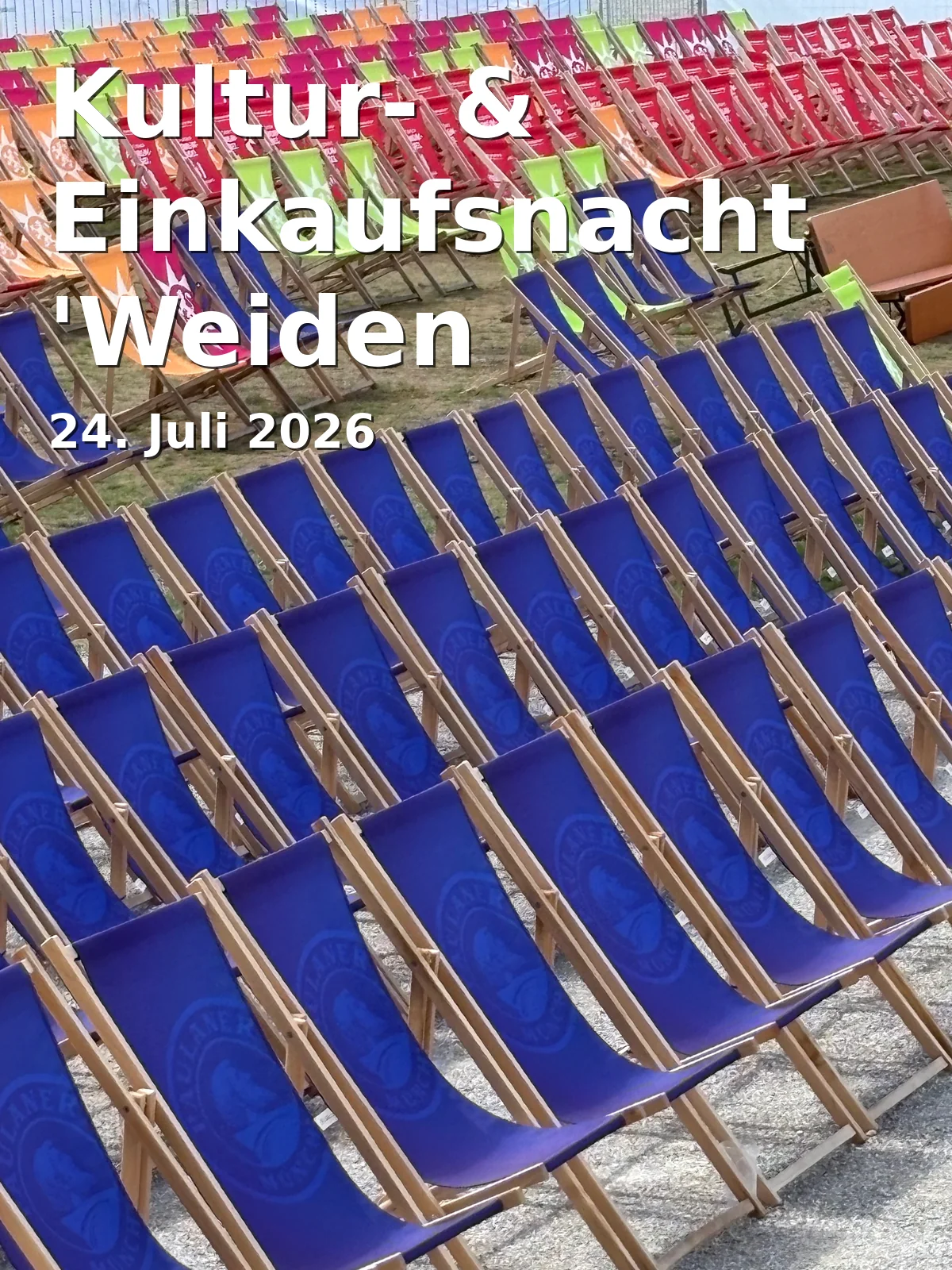
Culture & Shopping Night 'Weiden Dreams'
Immerse yourself in a night full of art and culture in the old town of Weiden.
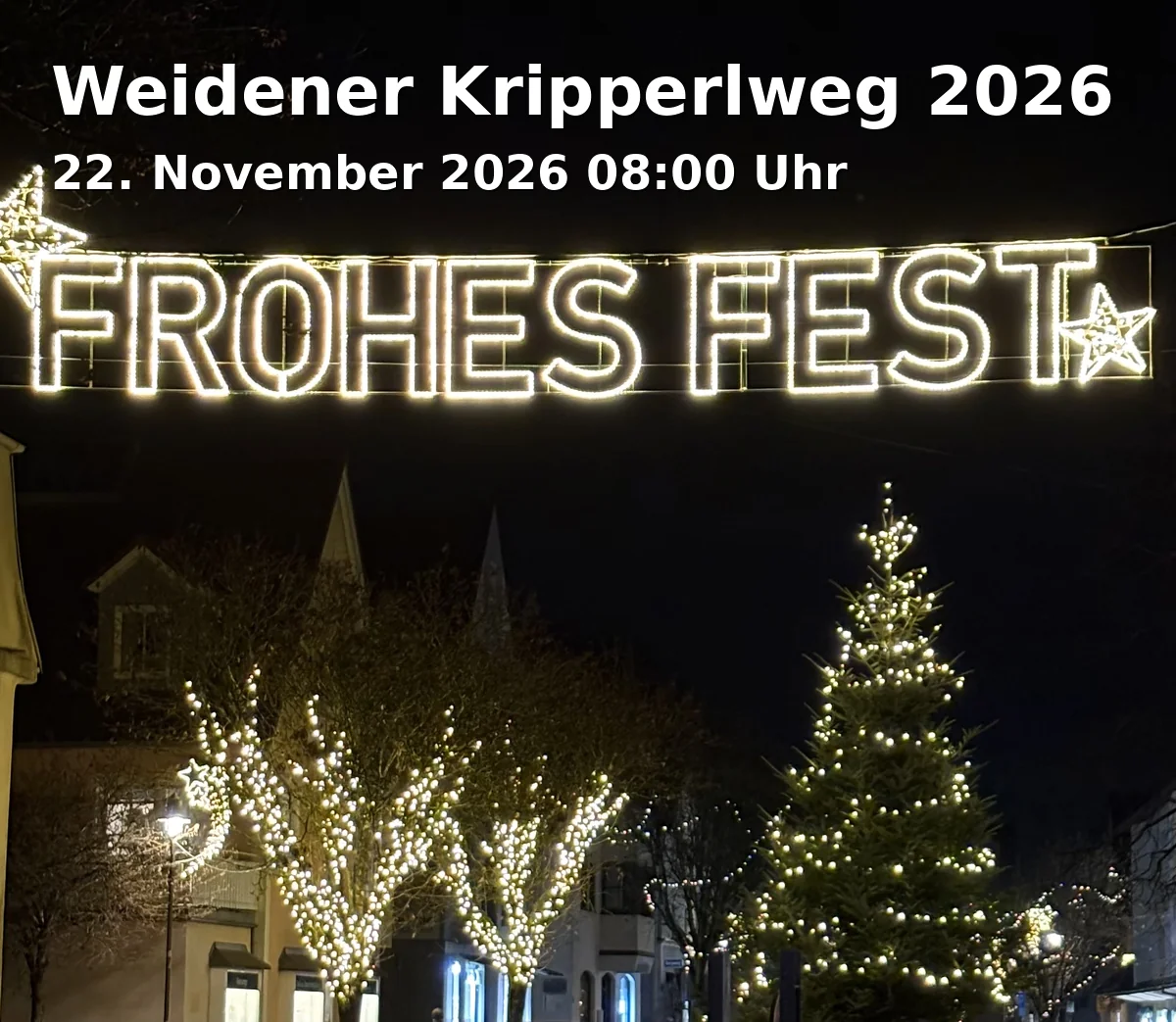
Weiden's Nativity Trail 2026
Pure Advent atmosphere in Weiden: The Nativity Trail combines window art, city center flair, and participatory moments. Free, festive, and full of discoveries. #Weiden #Advent #NativityTrail
Frequently Asked Questions
Reviews
No reviews found