
Weiden in der Oberpfalz
Schlörpl. 1A, 92637 Weiden in der Oberpfalz, Deutschland
Lower Gate | History & Access
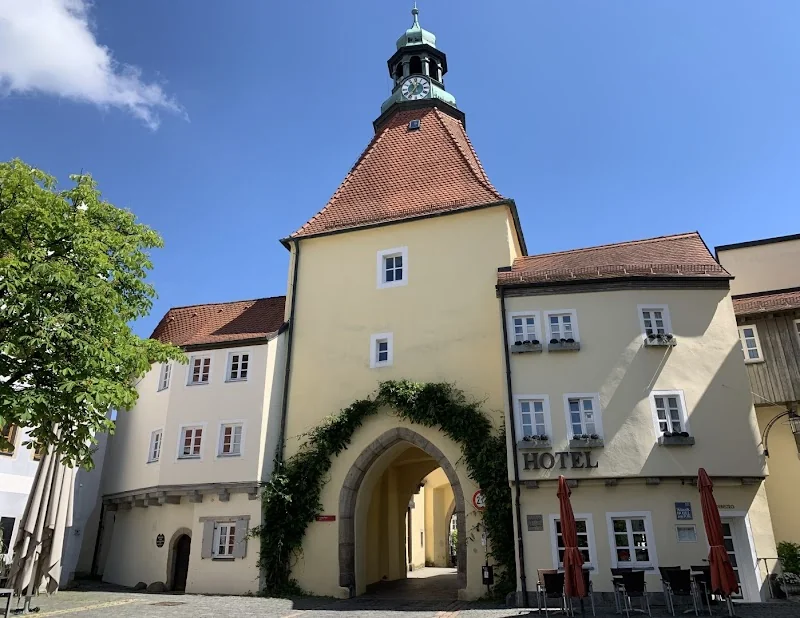
The Lower Gate in Weiden in the Upper Palatinate is much more than just a city passage. It is a historical landmark at the edge of the old town, a point of orientation for walks through the city center, and an authentic starting point for anyone wishing to explore Weiden on foot. The location at Schlörplatz 1a combines historical substance with urban everyday life: Here, the old town, pedestrian zone, parking options, and short distances to culture, gastronomy, and sights come together. Officially, the Lower Gate is listed as a historical site and is located at the end of the old town, where the path into the developed streets and squares of the city center becomes particularly vivid. Those visiting Weiden for the first time will find a place here where history, cityscape, and present come together in close proximity. ([oberpfaelzerwald.de](https://www.oberpfaelzerwald.de/unteres-tor))
For this reason, the Lower Gate is highly relevant for search intentions related to history, access, parking, and the old town. Many visitors are not looking for a classic event arena but for a concrete city experience: Where exactly is the gate, how do you get there, what is nearby, and how can the visit be combined with a walk through the old town? The answers are particularly close together here. The Lower Gate marks the transition between historical city fortifications and a vibrant center, between city history and practical orientation. Anyone interested in Weiden will get a very good first impression at the Lower Gate of why the city is perceived as a developed old town with its squares, alleys, and buildings. ([oberpfaelzerwald.de](https://www.oberpfaelzerwald.de/unteres-tor))
History of the Lower Gate in Weiden
The history of the Lower Gate is closely linked to the development of the city fortifications. According to the tourism region Upper Palatinate Forest, the gate took its current form after the bombardment of 1635; together with the foregate, it formed a defining access to the city for centuries. Particularly interesting is that the current pedestrian passage was only created in 1955, after the gate had been damaged by American tanks. This illustrates how historical buildings in Weiden have been repeatedly adapted to new times without losing their symbolic character. It stands not only for defensibility and urban structure but also for the city's ability to continue living with its monuments and integrate them into modern urban space. ([oberpfaelzerwald.de](https://www.oberpfaelzerwald.de/unteres-tor))
Thus, when one looks at the Lower Gate, one does not simply see an old city gate but a structure with visible layers of time. This is precisely what makes it so appealing to visitors: It is a place where historical burden, reconstruction, and current use come together. Walking through the gate today is an everyday footpath, but at the same time, it is a short step into the city's past. For the city's history, the gate is an important anchor point because it makes the old fortification logic, the location of the old town, and the later redesign of the center visible. In conjunction with Schlörplatz, a historical ensemble is created that shapes the urban space while remaining easily accessible. Therefore, anyone wanting to understand Weiden should not only look at the marketplace or individual museums but also perceive the Lower Gate as part of the historical urban fabric. ([oberpfaelzerwald.de](https://www.oberpfaelzerwald.de/unteres-tor))
Schlörplatz, Old Town, and Location at the Edge of the City Center
The Lower Gate opens onto Schlörplatz, and it is here that its location in the cityscape becomes particularly clear. The tourist information describes Schlörplatz as the square at the Lower Gate at the end of the old town. Historically, this area was once the lower suburb, also known as the Tanner's Suburb. In the Middle Ages, there was, according to the tourism site, a leper house, a church, and a cemetery on a trapezoidal site. This makes it clear that the area around the gate was not just a passage but had functional and social significance for many centuries. Even today, this location continues to resonate: The gate marks a transition between the closed old town and an area that opens up the city center and connects it with the outer urban space. ([weiden-tourismus.info](https://www.weiden-tourismus.info/en/sights/buildings-and-historical-monuments/schloerplatz?utm_source=openai))
Schlörplatz itself is named after the last Bavarian Minister of Trade, Gustav von Schlör, who reached the railway connection to Weiden in 1863, triggering the city's economic upswing. On the square stands a monument placed between the jubilee oak planted in 1824 and the peace oak planted in 1871. According to the tourism site, the design is by the Munich architect Carl Hocheder, and the marble bust was created by the sculptor Theodor Haf. These details show that the environment of the Lower Gate is important not only historically but also in terms of urban planning and cultural memory. Standing here, one not only has a beautiful view of the gate but also a good starting point for a walk through the old town, as the entire ensemble of square, gate, and adjacent alleys are closely interconnected. ([weiden-tourismus.info](https://www.weiden-tourismus.info/en/sights/buildings-and-historical-monuments/schloerplatz?utm_source=openai))
Access and Parking at the Lower Gate
For many visitors, the practical question of access is crucial, and here too, the Lower Gate offers good conditions. The city of Weiden lists around 2,000 parking spaces in the city center in its parking overview, in addition to parking spaces on public streets. Thus, the old town is generally well accessible, even though the immediate area around the gate itself is part of a pedestrian zone. The tourist information recommends the parking garage on Friedrich-Ebert-Straße as the closest parking garage for Schlörplatz. From there, it is only a short distance to the Lower Gate and into the old town. This is particularly pleasant for visitors who want to experience Weiden as a day trip or who arrive with little time and want to park as close to the sights as possible. ([weiden.de](https://www.weiden.de/stadt/willkommen/parken))
The topic of mobile parking is also relevant in Weiden. The city describes several options for mobile parking on its official site, which facilitate payment and extension of parking time. Additionally, there are notes for vehicles with electric license plates, which may park for free for up to three hours in certain public parking spaces managed by the city, provided the statewide exception rule applies and a parking disc is displayed. For a visit to the Lower Gate, this means: Those who familiarize themselves briefly with the city center parking logic in advance save time and start their old town walk in a more relaxed manner. Since the historical city center is organized as a pedestrian zone, the combination of a short parking walk and subsequent walking tour is worthwhile. This mix makes the Lower Gate a practical starting and orientation point. ([weiden.de](https://www.weiden.de/stadt/willkommen/parken))
Pedestrian Zone, Accessibility, and Paths Through the Old Town
The Lower Gate is located at the edge of an old town designed as a pedestrian zone. The tourist information mentions, among others, Upper and Lower Market, Schulgasse, Türlgasse, Wörthstraße, and Max-Reger-Straße as part of this walkable urban space. For visitors, this is a great advantage because the most important points in the city center can be conveniently connected on foot. The Lower Gate serves as a visible hub: Those who come through the gate immediately enter an area where strolling, looking, and discovering are at the forefront. This creates a very clear city impression, especially for first-time visitors, as the paths are shaped not by dense through traffic but by squares, alleys, and closed rows of houses. ([weiden-tourismus.info](https://www.weiden-tourismus.info/en/sights/buildings-and-historical-monuments/mauermann-fountain?utm_source=openai))
Additionally, the city of Weiden has implemented barrier-free surfaces in the area of the Upper and Lower Gate according to its planning documents. Where previously poorly accessible cobblestones were problematic, improvements have been made as part of the concept for a barrier-free city center. This is important for visitors who are traveling with strollers, wheelchairs, walkers, or simply with the desire for more comfortable walking. Of course, the Lower Gate remains a historical urban space with its own character, but the enhancement of the paths shows that Weiden takes the balancing act between monument protection and usability seriously. Especially at such a central location, this is a plus point because historical atmosphere and everyday accessibility do not have to be played against each other. Therefore, anyone wishing to visit the gate and its surroundings can usually plan the walk well with short and manageable paths. ([weiden.de](https://www.weiden.de/fileadmin/user_upload/D_Wirtschaft-Planen-Bauen/D07_Stadtplanung/05_abgeschlossen_kr/Barierrefreie-Innenstadt/2022_03_24_konzept_weiden_fuer_alle.pdf?utm_source=openai))
Sights Around the Lower Gate
Several destinations around the Lower Gate make a visit to the old town particularly worthwhile. The most immediate point of connection is Schlörplatz itself, which already has its own character due to the monument and its historical embedding. From there, the walk can be structured along the old town. A particularly relevant destination is the Weiden City Museum, which is now located in the cultural center Hans Bauer at Unterer Markt 23. The building was used in the 16th century as the Old School, and today the Max-Reger Collection, the Gallery in the Old School, and the City Archive are also housed in the same building. For culture-interested visitors, this is a strong reference point because one can not only see architecture in the immediate vicinity of the Lower Gate but also delve into urban historical content. ([weiden.de](https://www.weiden.de/kultur/kultur/museen/stadtmuseum))
The further old town also offers plenty of material for a walk. The tourist information refers to city tours, free audio guides, and the city's event calendar. Therefore, anyone starting at the Lower Gate can easily combine the visit with a walk through the historic alleys and squares. The advantage lies in the proximity of the destinations to each other: Old Town Hall, Lower Market, City Museum, and Schlörplatz are located in a walkable environment that can be easily accessed even without detailed local knowledge. For photographers, the gate itself is a natural eye-catcher as it frames the transition between urban space and old town. For guests interested in cultural history, it is again an example of how Weiden integrates its historical buildings into today's everyday life. Thus, a single gate becomes a complete city walk with many branches, short paths, and multiple layers of history. ([weiden.de](https://www.weiden-tourismus.info/veranstaltungen))
City Tours, Events, and Practical Visitor Tips
Those who want to see the Lower Gate not just as a photo stop but as part of a larger city experience should include the offerings of the tourist information. The official tourism site of the city of Weiden refers to city and museum tours, online booking of experiences, and free audio guides. This is particularly helpful if one wants to better understand the old town in content because the alleys and squares around the Lower Gate unfold their charm even more strongly when one knows the historical contexts. Those interested in Weiden's history thus gain very easy access without having to research for long themselves. At the same time, the visit remains flexible: The Lower Gate can be visited as a short detour just as well as a starting point for a longer walk through the center. ([weiden.de](https://www.weiden-tourismus.info/veranstaltungen))
The event culture in Weiden also makes the location attractive. The official tourism site regularly shows dates such as public city tours, cultural summer offerings, and events in the city center. This is interesting for visitors because a walk through the old town around the Lower Gate can easily be combined with another program point. For practical planning, it is also advisable to take a look at the general city center logic: first park, then stroll on foot, as the old town is organized as a pedestrian zone. Those who want to approach the visit a bit more relaxed can use the nearby tourist information in the Old Town Hall as a central point of contact and plan the walk from there. Thus, the Lower Gate becomes not only a historical motif but also a functional starting point for a successful stay in Weiden. ([weiden.de](https://www.weiden-tourismus.info/veranstaltungen))
Sources:
- Upper Palatinate Forest – Lower Gate ([oberpfaelzerwald.de](https://www.oberpfaelzerwald.de/unteres-tor))
- City Weiden – Parking in the City ([weiden.de](https://www.weiden.de/stadt/willkommen/parken))
- Tourism City Weiden – Schlörplatz ([weiden-tourismus.info](https://www.weiden-tourismus.info/sehenswuerdigkeiten/bauten-denkmaeler/gustav-von-schloer-platz?utm_source=openai))
- Tourism City Weiden – Schlörplatz, Historical Background and Parking ([weiden-tourismus.info](https://www.weiden-tourismus.info/en/sights/buildings-and-historical-monuments/schloerplatz?utm_source=openai))
- City Weiden – City Museum ([weiden.de](https://www.weiden.de/kultur/kultur/museen/stadtmuseum))
- Tourism City Weiden – Events and Tourist Information ([weiden-tourismus.info](https://www.weiden-tourismus.info/veranstaltungen))
- City Weiden – Barrier-Free City Center, Area Upper and Lower Gate ([weiden.de](https://www.weiden.de/fileadmin/user_upload/D_Wirtschaft-Planen-Bauen/D07_Stadtplanung/05_abgeschlossen_kr/Barierrefreie-Innenstadt/2022_03_24_konzept_weiden_fuer_alle.pdf?utm_source=openai))
- Tourism City Weiden – Old Town and Pedestrian Zone ([weiden-tourismus.info](https://www.weiden-tourismus.info/en/sights/buildings-and-historical-monuments/mauermann-fountain?utm_source=openai))
Show moreShow less
Lower Gate | History & Access
The Lower Gate in Weiden in the Upper Palatinate is much more than just a city passage. It is a historical landmark at the edge of the old town, a point of orientation for walks through the city center, and an authentic starting point for anyone wishing to explore Weiden on foot. The location at Schlörplatz 1a combines historical substance with urban everyday life: Here, the old town, pedestrian zone, parking options, and short distances to culture, gastronomy, and sights come together. Officially, the Lower Gate is listed as a historical site and is located at the end of the old town, where the path into the developed streets and squares of the city center becomes particularly vivid. Those visiting Weiden for the first time will find a place here where history, cityscape, and present come together in close proximity. ([oberpfaelzerwald.de](https://www.oberpfaelzerwald.de/unteres-tor))
For this reason, the Lower Gate is highly relevant for search intentions related to history, access, parking, and the old town. Many visitors are not looking for a classic event arena but for a concrete city experience: Where exactly is the gate, how do you get there, what is nearby, and how can the visit be combined with a walk through the old town? The answers are particularly close together here. The Lower Gate marks the transition between historical city fortifications and a vibrant center, between city history and practical orientation. Anyone interested in Weiden will get a very good first impression at the Lower Gate of why the city is perceived as a developed old town with its squares, alleys, and buildings. ([oberpfaelzerwald.de](https://www.oberpfaelzerwald.de/unteres-tor))
History of the Lower Gate in Weiden
The history of the Lower Gate is closely linked to the development of the city fortifications. According to the tourism region Upper Palatinate Forest, the gate took its current form after the bombardment of 1635; together with the foregate, it formed a defining access to the city for centuries. Particularly interesting is that the current pedestrian passage was only created in 1955, after the gate had been damaged by American tanks. This illustrates how historical buildings in Weiden have been repeatedly adapted to new times without losing their symbolic character. It stands not only for defensibility and urban structure but also for the city's ability to continue living with its monuments and integrate them into modern urban space. ([oberpfaelzerwald.de](https://www.oberpfaelzerwald.de/unteres-tor))
Thus, when one looks at the Lower Gate, one does not simply see an old city gate but a structure with visible layers of time. This is precisely what makes it so appealing to visitors: It is a place where historical burden, reconstruction, and current use come together. Walking through the gate today is an everyday footpath, but at the same time, it is a short step into the city's past. For the city's history, the gate is an important anchor point because it makes the old fortification logic, the location of the old town, and the later redesign of the center visible. In conjunction with Schlörplatz, a historical ensemble is created that shapes the urban space while remaining easily accessible. Therefore, anyone wanting to understand Weiden should not only look at the marketplace or individual museums but also perceive the Lower Gate as part of the historical urban fabric. ([oberpfaelzerwald.de](https://www.oberpfaelzerwald.de/unteres-tor))
Schlörplatz, Old Town, and Location at the Edge of the City Center
The Lower Gate opens onto Schlörplatz, and it is here that its location in the cityscape becomes particularly clear. The tourist information describes Schlörplatz as the square at the Lower Gate at the end of the old town. Historically, this area was once the lower suburb, also known as the Tanner's Suburb. In the Middle Ages, there was, according to the tourism site, a leper house, a church, and a cemetery on a trapezoidal site. This makes it clear that the area around the gate was not just a passage but had functional and social significance for many centuries. Even today, this location continues to resonate: The gate marks a transition between the closed old town and an area that opens up the city center and connects it with the outer urban space. ([weiden-tourismus.info](https://www.weiden-tourismus.info/en/sights/buildings-and-historical-monuments/schloerplatz?utm_source=openai))
Schlörplatz itself is named after the last Bavarian Minister of Trade, Gustav von Schlör, who reached the railway connection to Weiden in 1863, triggering the city's economic upswing. On the square stands a monument placed between the jubilee oak planted in 1824 and the peace oak planted in 1871. According to the tourism site, the design is by the Munich architect Carl Hocheder, and the marble bust was created by the sculptor Theodor Haf. These details show that the environment of the Lower Gate is important not only historically but also in terms of urban planning and cultural memory. Standing here, one not only has a beautiful view of the gate but also a good starting point for a walk through the old town, as the entire ensemble of square, gate, and adjacent alleys are closely interconnected. ([weiden-tourismus.info](https://www.weiden-tourismus.info/en/sights/buildings-and-historical-monuments/schloerplatz?utm_source=openai))
Access and Parking at the Lower Gate
For many visitors, the practical question of access is crucial, and here too, the Lower Gate offers good conditions. The city of Weiden lists around 2,000 parking spaces in the city center in its parking overview, in addition to parking spaces on public streets. Thus, the old town is generally well accessible, even though the immediate area around the gate itself is part of a pedestrian zone. The tourist information recommends the parking garage on Friedrich-Ebert-Straße as the closest parking garage for Schlörplatz. From there, it is only a short distance to the Lower Gate and into the old town. This is particularly pleasant for visitors who want to experience Weiden as a day trip or who arrive with little time and want to park as close to the sights as possible. ([weiden.de](https://www.weiden.de/stadt/willkommen/parken))
The topic of mobile parking is also relevant in Weiden. The city describes several options for mobile parking on its official site, which facilitate payment and extension of parking time. Additionally, there are notes for vehicles with electric license plates, which may park for free for up to three hours in certain public parking spaces managed by the city, provided the statewide exception rule applies and a parking disc is displayed. For a visit to the Lower Gate, this means: Those who familiarize themselves briefly with the city center parking logic in advance save time and start their old town walk in a more relaxed manner. Since the historical city center is organized as a pedestrian zone, the combination of a short parking walk and subsequent walking tour is worthwhile. This mix makes the Lower Gate a practical starting and orientation point. ([weiden.de](https://www.weiden.de/stadt/willkommen/parken))
Pedestrian Zone, Accessibility, and Paths Through the Old Town
The Lower Gate is located at the edge of an old town designed as a pedestrian zone. The tourist information mentions, among others, Upper and Lower Market, Schulgasse, Türlgasse, Wörthstraße, and Max-Reger-Straße as part of this walkable urban space. For visitors, this is a great advantage because the most important points in the city center can be conveniently connected on foot. The Lower Gate serves as a visible hub: Those who come through the gate immediately enter an area where strolling, looking, and discovering are at the forefront. This creates a very clear city impression, especially for first-time visitors, as the paths are shaped not by dense through traffic but by squares, alleys, and closed rows of houses. ([weiden-tourismus.info](https://www.weiden-tourismus.info/en/sights/buildings-and-historical-monuments/mauermann-fountain?utm_source=openai))
Additionally, the city of Weiden has implemented barrier-free surfaces in the area of the Upper and Lower Gate according to its planning documents. Where previously poorly accessible cobblestones were problematic, improvements have been made as part of the concept for a barrier-free city center. This is important for visitors who are traveling with strollers, wheelchairs, walkers, or simply with the desire for more comfortable walking. Of course, the Lower Gate remains a historical urban space with its own character, but the enhancement of the paths shows that Weiden takes the balancing act between monument protection and usability seriously. Especially at such a central location, this is a plus point because historical atmosphere and everyday accessibility do not have to be played against each other. Therefore, anyone wishing to visit the gate and its surroundings can usually plan the walk well with short and manageable paths. ([weiden.de](https://www.weiden.de/fileadmin/user_upload/D_Wirtschaft-Planen-Bauen/D07_Stadtplanung/05_abgeschlossen_kr/Barierrefreie-Innenstadt/2022_03_24_konzept_weiden_fuer_alle.pdf?utm_source=openai))
Sights Around the Lower Gate
Several destinations around the Lower Gate make a visit to the old town particularly worthwhile. The most immediate point of connection is Schlörplatz itself, which already has its own character due to the monument and its historical embedding. From there, the walk can be structured along the old town. A particularly relevant destination is the Weiden City Museum, which is now located in the cultural center Hans Bauer at Unterer Markt 23. The building was used in the 16th century as the Old School, and today the Max-Reger Collection, the Gallery in the Old School, and the City Archive are also housed in the same building. For culture-interested visitors, this is a strong reference point because one can not only see architecture in the immediate vicinity of the Lower Gate but also delve into urban historical content. ([weiden.de](https://www.weiden.de/kultur/kultur/museen/stadtmuseum))
The further old town also offers plenty of material for a walk. The tourist information refers to city tours, free audio guides, and the city's event calendar. Therefore, anyone starting at the Lower Gate can easily combine the visit with a walk through the historic alleys and squares. The advantage lies in the proximity of the destinations to each other: Old Town Hall, Lower Market, City Museum, and Schlörplatz are located in a walkable environment that can be easily accessed even without detailed local knowledge. For photographers, the gate itself is a natural eye-catcher as it frames the transition between urban space and old town. For guests interested in cultural history, it is again an example of how Weiden integrates its historical buildings into today's everyday life. Thus, a single gate becomes a complete city walk with many branches, short paths, and multiple layers of history. ([weiden.de](https://www.weiden-tourismus.info/veranstaltungen))
City Tours, Events, and Practical Visitor Tips
Those who want to see the Lower Gate not just as a photo stop but as part of a larger city experience should include the offerings of the tourist information. The official tourism site of the city of Weiden refers to city and museum tours, online booking of experiences, and free audio guides. This is particularly helpful if one wants to better understand the old town in content because the alleys and squares around the Lower Gate unfold their charm even more strongly when one knows the historical contexts. Those interested in Weiden's history thus gain very easy access without having to research for long themselves. At the same time, the visit remains flexible: The Lower Gate can be visited as a short detour just as well as a starting point for a longer walk through the center. ([weiden.de](https://www.weiden-tourismus.info/veranstaltungen))
The event culture in Weiden also makes the location attractive. The official tourism site regularly shows dates such as public city tours, cultural summer offerings, and events in the city center. This is interesting for visitors because a walk through the old town around the Lower Gate can easily be combined with another program point. For practical planning, it is also advisable to take a look at the general city center logic: first park, then stroll on foot, as the old town is organized as a pedestrian zone. Those who want to approach the visit a bit more relaxed can use the nearby tourist information in the Old Town Hall as a central point of contact and plan the walk from there. Thus, the Lower Gate becomes not only a historical motif but also a functional starting point for a successful stay in Weiden. ([weiden.de](https://www.weiden-tourismus.info/veranstaltungen))
Sources:
- Upper Palatinate Forest – Lower Gate ([oberpfaelzerwald.de](https://www.oberpfaelzerwald.de/unteres-tor))
- City Weiden – Parking in the City ([weiden.de](https://www.weiden.de/stadt/willkommen/parken))
- Tourism City Weiden – Schlörplatz ([weiden-tourismus.info](https://www.weiden-tourismus.info/sehenswuerdigkeiten/bauten-denkmaeler/gustav-von-schloer-platz?utm_source=openai))
- Tourism City Weiden – Schlörplatz, Historical Background and Parking ([weiden-tourismus.info](https://www.weiden-tourismus.info/en/sights/buildings-and-historical-monuments/schloerplatz?utm_source=openai))
- City Weiden – City Museum ([weiden.de](https://www.weiden.de/kultur/kultur/museen/stadtmuseum))
- Tourism City Weiden – Events and Tourist Information ([weiden-tourismus.info](https://www.weiden-tourismus.info/veranstaltungen))
- City Weiden – Barrier-Free City Center, Area Upper and Lower Gate ([weiden.de](https://www.weiden.de/fileadmin/user_upload/D_Wirtschaft-Planen-Bauen/D07_Stadtplanung/05_abgeschlossen_kr/Barierrefreie-Innenstadt/2022_03_24_konzept_weiden_fuer_alle.pdf?utm_source=openai))
- Tourism City Weiden – Old Town and Pedestrian Zone ([weiden-tourismus.info](https://www.weiden-tourismus.info/en/sights/buildings-and-historical-monuments/mauermann-fountain?utm_source=openai))
Lower Gate | History & Access
The Lower Gate in Weiden in the Upper Palatinate is much more than just a city passage. It is a historical landmark at the edge of the old town, a point of orientation for walks through the city center, and an authentic starting point for anyone wishing to explore Weiden on foot. The location at Schlörplatz 1a combines historical substance with urban everyday life: Here, the old town, pedestrian zone, parking options, and short distances to culture, gastronomy, and sights come together. Officially, the Lower Gate is listed as a historical site and is located at the end of the old town, where the path into the developed streets and squares of the city center becomes particularly vivid. Those visiting Weiden for the first time will find a place here where history, cityscape, and present come together in close proximity. ([oberpfaelzerwald.de](https://www.oberpfaelzerwald.de/unteres-tor))
For this reason, the Lower Gate is highly relevant for search intentions related to history, access, parking, and the old town. Many visitors are not looking for a classic event arena but for a concrete city experience: Where exactly is the gate, how do you get there, what is nearby, and how can the visit be combined with a walk through the old town? The answers are particularly close together here. The Lower Gate marks the transition between historical city fortifications and a vibrant center, between city history and practical orientation. Anyone interested in Weiden will get a very good first impression at the Lower Gate of why the city is perceived as a developed old town with its squares, alleys, and buildings. ([oberpfaelzerwald.de](https://www.oberpfaelzerwald.de/unteres-tor))
History of the Lower Gate in Weiden
The history of the Lower Gate is closely linked to the development of the city fortifications. According to the tourism region Upper Palatinate Forest, the gate took its current form after the bombardment of 1635; together with the foregate, it formed a defining access to the city for centuries. Particularly interesting is that the current pedestrian passage was only created in 1955, after the gate had been damaged by American tanks. This illustrates how historical buildings in Weiden have been repeatedly adapted to new times without losing their symbolic character. It stands not only for defensibility and urban structure but also for the city's ability to continue living with its monuments and integrate them into modern urban space. ([oberpfaelzerwald.de](https://www.oberpfaelzerwald.de/unteres-tor))
Thus, when one looks at the Lower Gate, one does not simply see an old city gate but a structure with visible layers of time. This is precisely what makes it so appealing to visitors: It is a place where historical burden, reconstruction, and current use come together. Walking through the gate today is an everyday footpath, but at the same time, it is a short step into the city's past. For the city's history, the gate is an important anchor point because it makes the old fortification logic, the location of the old town, and the later redesign of the center visible. In conjunction with Schlörplatz, a historical ensemble is created that shapes the urban space while remaining easily accessible. Therefore, anyone wanting to understand Weiden should not only look at the marketplace or individual museums but also perceive the Lower Gate as part of the historical urban fabric. ([oberpfaelzerwald.de](https://www.oberpfaelzerwald.de/unteres-tor))
Schlörplatz, Old Town, and Location at the Edge of the City Center
The Lower Gate opens onto Schlörplatz, and it is here that its location in the cityscape becomes particularly clear. The tourist information describes Schlörplatz as the square at the Lower Gate at the end of the old town. Historically, this area was once the lower suburb, also known as the Tanner's Suburb. In the Middle Ages, there was, according to the tourism site, a leper house, a church, and a cemetery on a trapezoidal site. This makes it clear that the area around the gate was not just a passage but had functional and social significance for many centuries. Even today, this location continues to resonate: The gate marks a transition between the closed old town and an area that opens up the city center and connects it with the outer urban space. ([weiden-tourismus.info](https://www.weiden-tourismus.info/en/sights/buildings-and-historical-monuments/schloerplatz?utm_source=openai))
Schlörplatz itself is named after the last Bavarian Minister of Trade, Gustav von Schlör, who reached the railway connection to Weiden in 1863, triggering the city's economic upswing. On the square stands a monument placed between the jubilee oak planted in 1824 and the peace oak planted in 1871. According to the tourism site, the design is by the Munich architect Carl Hocheder, and the marble bust was created by the sculptor Theodor Haf. These details show that the environment of the Lower Gate is important not only historically but also in terms of urban planning and cultural memory. Standing here, one not only has a beautiful view of the gate but also a good starting point for a walk through the old town, as the entire ensemble of square, gate, and adjacent alleys are closely interconnected. ([weiden-tourismus.info](https://www.weiden-tourismus.info/en/sights/buildings-and-historical-monuments/schloerplatz?utm_source=openai))
Access and Parking at the Lower Gate
For many visitors, the practical question of access is crucial, and here too, the Lower Gate offers good conditions. The city of Weiden lists around 2,000 parking spaces in the city center in its parking overview, in addition to parking spaces on public streets. Thus, the old town is generally well accessible, even though the immediate area around the gate itself is part of a pedestrian zone. The tourist information recommends the parking garage on Friedrich-Ebert-Straße as the closest parking garage for Schlörplatz. From there, it is only a short distance to the Lower Gate and into the old town. This is particularly pleasant for visitors who want to experience Weiden as a day trip or who arrive with little time and want to park as close to the sights as possible. ([weiden.de](https://www.weiden.de/stadt/willkommen/parken))
The topic of mobile parking is also relevant in Weiden. The city describes several options for mobile parking on its official site, which facilitate payment and extension of parking time. Additionally, there are notes for vehicles with electric license plates, which may park for free for up to three hours in certain public parking spaces managed by the city, provided the statewide exception rule applies and a parking disc is displayed. For a visit to the Lower Gate, this means: Those who familiarize themselves briefly with the city center parking logic in advance save time and start their old town walk in a more relaxed manner. Since the historical city center is organized as a pedestrian zone, the combination of a short parking walk and subsequent walking tour is worthwhile. This mix makes the Lower Gate a practical starting and orientation point. ([weiden.de](https://www.weiden.de/stadt/willkommen/parken))
Pedestrian Zone, Accessibility, and Paths Through the Old Town
The Lower Gate is located at the edge of an old town designed as a pedestrian zone. The tourist information mentions, among others, Upper and Lower Market, Schulgasse, Türlgasse, Wörthstraße, and Max-Reger-Straße as part of this walkable urban space. For visitors, this is a great advantage because the most important points in the city center can be conveniently connected on foot. The Lower Gate serves as a visible hub: Those who come through the gate immediately enter an area where strolling, looking, and discovering are at the forefront. This creates a very clear city impression, especially for first-time visitors, as the paths are shaped not by dense through traffic but by squares, alleys, and closed rows of houses. ([weiden-tourismus.info](https://www.weiden-tourismus.info/en/sights/buildings-and-historical-monuments/mauermann-fountain?utm_source=openai))
Additionally, the city of Weiden has implemented barrier-free surfaces in the area of the Upper and Lower Gate according to its planning documents. Where previously poorly accessible cobblestones were problematic, improvements have been made as part of the concept for a barrier-free city center. This is important for visitors who are traveling with strollers, wheelchairs, walkers, or simply with the desire for more comfortable walking. Of course, the Lower Gate remains a historical urban space with its own character, but the enhancement of the paths shows that Weiden takes the balancing act between monument protection and usability seriously. Especially at such a central location, this is a plus point because historical atmosphere and everyday accessibility do not have to be played against each other. Therefore, anyone wishing to visit the gate and its surroundings can usually plan the walk well with short and manageable paths. ([weiden.de](https://www.weiden.de/fileadmin/user_upload/D_Wirtschaft-Planen-Bauen/D07_Stadtplanung/05_abgeschlossen_kr/Barierrefreie-Innenstadt/2022_03_24_konzept_weiden_fuer_alle.pdf?utm_source=openai))
Sights Around the Lower Gate
Several destinations around the Lower Gate make a visit to the old town particularly worthwhile. The most immediate point of connection is Schlörplatz itself, which already has its own character due to the monument and its historical embedding. From there, the walk can be structured along the old town. A particularly relevant destination is the Weiden City Museum, which is now located in the cultural center Hans Bauer at Unterer Markt 23. The building was used in the 16th century as the Old School, and today the Max-Reger Collection, the Gallery in the Old School, and the City Archive are also housed in the same building. For culture-interested visitors, this is a strong reference point because one can not only see architecture in the immediate vicinity of the Lower Gate but also delve into urban historical content. ([weiden.de](https://www.weiden.de/kultur/kultur/museen/stadtmuseum))
The further old town also offers plenty of material for a walk. The tourist information refers to city tours, free audio guides, and the city's event calendar. Therefore, anyone starting at the Lower Gate can easily combine the visit with a walk through the historic alleys and squares. The advantage lies in the proximity of the destinations to each other: Old Town Hall, Lower Market, City Museum, and Schlörplatz are located in a walkable environment that can be easily accessed even without detailed local knowledge. For photographers, the gate itself is a natural eye-catcher as it frames the transition between urban space and old town. For guests interested in cultural history, it is again an example of how Weiden integrates its historical buildings into today's everyday life. Thus, a single gate becomes a complete city walk with many branches, short paths, and multiple layers of history. ([weiden.de](https://www.weiden-tourismus.info/veranstaltungen))
City Tours, Events, and Practical Visitor Tips
Those who want to see the Lower Gate not just as a photo stop but as part of a larger city experience should include the offerings of the tourist information. The official tourism site of the city of Weiden refers to city and museum tours, online booking of experiences, and free audio guides. This is particularly helpful if one wants to better understand the old town in content because the alleys and squares around the Lower Gate unfold their charm even more strongly when one knows the historical contexts. Those interested in Weiden's history thus gain very easy access without having to research for long themselves. At the same time, the visit remains flexible: The Lower Gate can be visited as a short detour just as well as a starting point for a longer walk through the center. ([weiden.de](https://www.weiden-tourismus.info/veranstaltungen))
The event culture in Weiden also makes the location attractive. The official tourism site regularly shows dates such as public city tours, cultural summer offerings, and events in the city center. This is interesting for visitors because a walk through the old town around the Lower Gate can easily be combined with another program point. For practical planning, it is also advisable to take a look at the general city center logic: first park, then stroll on foot, as the old town is organized as a pedestrian zone. Those who want to approach the visit a bit more relaxed can use the nearby tourist information in the Old Town Hall as a central point of contact and plan the walk from there. Thus, the Lower Gate becomes not only a historical motif but also a functional starting point for a successful stay in Weiden. ([weiden.de](https://www.weiden-tourismus.info/veranstaltungen))
Sources:
- Upper Palatinate Forest – Lower Gate ([oberpfaelzerwald.de](https://www.oberpfaelzerwald.de/unteres-tor))
- City Weiden – Parking in the City ([weiden.de](https://www.weiden.de/stadt/willkommen/parken))
- Tourism City Weiden – Schlörplatz ([weiden-tourismus.info](https://www.weiden-tourismus.info/sehenswuerdigkeiten/bauten-denkmaeler/gustav-von-schloer-platz?utm_source=openai))
- Tourism City Weiden – Schlörplatz, Historical Background and Parking ([weiden-tourismus.info](https://www.weiden-tourismus.info/en/sights/buildings-and-historical-monuments/schloerplatz?utm_source=openai))
- City Weiden – City Museum ([weiden.de](https://www.weiden.de/kultur/kultur/museen/stadtmuseum))
- Tourism City Weiden – Events and Tourist Information ([weiden-tourismus.info](https://www.weiden-tourismus.info/veranstaltungen))
- City Weiden – Barrier-Free City Center, Area Upper and Lower Gate ([weiden.de](https://www.weiden.de/fileadmin/user_upload/D_Wirtschaft-Planen-Bauen/D07_Stadtplanung/05_abgeschlossen_kr/Barierrefreie-Innenstadt/2022_03_24_konzept_weiden_fuer_alle.pdf?utm_source=openai))
- Tourism City Weiden – Old Town and Pedestrian Zone ([weiden-tourismus.info](https://www.weiden-tourismus.info/en/sights/buildings-and-historical-monuments/mauermann-fountain?utm_source=openai))
Frequently Asked Questions
Reviews
No reviews found