
Barbara Pachl-Eberhart
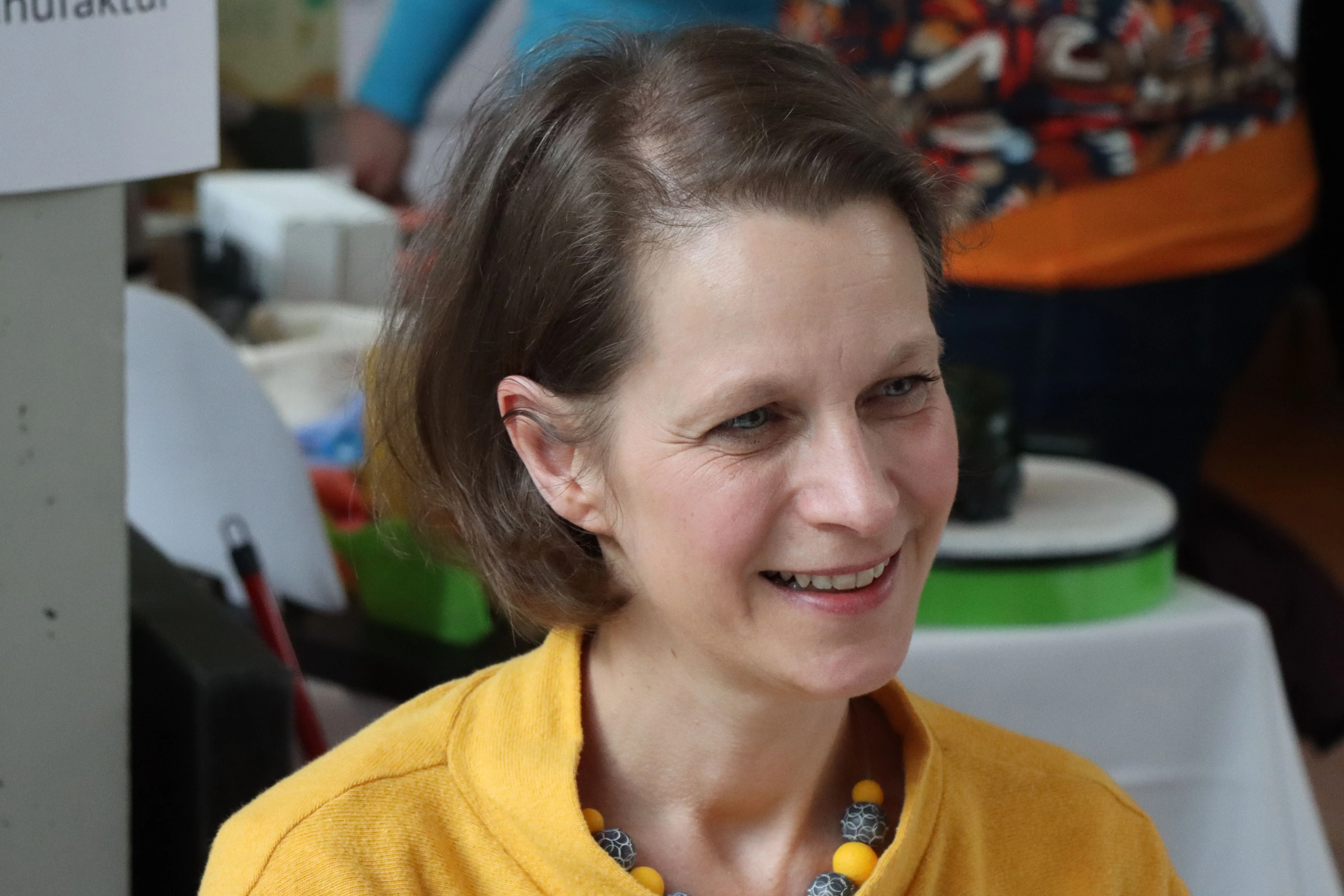
Image from Wikipedia
Image from Wikipedia
Barbara Pachl-Eberhart – Writing as an Art of Living, Grief Work, and Poetic Self-Empowerment
An author who shaped a language of courage from loss
Barbara Pachl-Eberhart, born on March 31, 1974, in Vienna, is one of the most prominent Austrian voices when it comes to autobiographical writing, grief coping, and writing pedagogy. Her work blends personal experience with literary clarity, making her visible far beyond the confines of traditional authorial careers. The formative biography, which grew from studies in music, clown work, counseling, and writing, lends her presence an extraordinary authenticity. ([de.wikipedia.org](https://de.wikipedia.org/wiki/Barbara_Pachl-Eberhart?utm_source=openai))
Biographical Roots: From Vienna to Language
After completing her Matura in 1992, Pachl-Eberhart studied flute at the University of Music and Performing Arts Vienna but dropped out in 1997. The Wikipedia entry cites that she lacked "laughing faces" during performances as her reason for quitting; this phrase already points to her later focus on resonance, relationship, and emotional expression. Even before her career as a writer, she gained experiences in the artistic and social field, including work as a clown and play teacher. ([de.wikipedia.org](https://de.wikipedia.org/wiki/Barbara_Pachl-Eberhart?utm_source=openai))
This early connection between art, body, voice, and empathy provides an important background for her later work as an author and writing trainer. On her current website, she also describes writing as a source of power and daily practice that provides structure, meaning, and self-assurance. What starts as a biographical station becomes a professional stance: writing not just as a form of expression but as a tool for life. ([mein-lieblingsleben.at](https://mein-lieblingsleben.at/))
The Turning Point of 2008: A Life That Needed to Be Rewritten
In March 2008, a car accident radically changed her life. Her husband Helmut and their two children Thimo and Valentina died while she was not in the car. Various reliable media outlets consistently report that she initially carried this loss within herself and only later transformed it into literature. ([bild.de](https://www.bild.de/unterhaltung/stars-und-leute/kinofilm-vier-minus-drei-wie-weiterleben-wenn-deine-ganze-familie-stirbt-69d7b0035b1aefe78032564c?utm_source=openai))
From this existential experience emerged her book Vier minus drei, which was published in 2010 and received significant attention. The portrayal of her journey does not show a smooth self-presentation but rather a precise, painful, and simultaneously life-affirming self-questioning. This is where the literary power of her debut lies: it describes grief not as an endpoint but as a process in which language can open new spaces. ([literaturtipps.de](https://www.literaturtipps.de/autor/kurzbeschreibung/pachl_eberhart.html?utm_source=openai))
From Personal Fate to Public Author Role
With Vier minus drei, Barbara Pachl-Eberhart became a sought-after conversation partner for media, readings, and events. Reports highlight that her story has touched many readers, and through public appearances, she became a voice for the grieving, the seekers, and new beginnings. Her authorial role did not emerge within a closed literary system, but in exchange with an audience that found recognition and comfort in her text. ([literaturtipps.de](https://www.literaturtipps.de/autor/kurzbeschreibung/pachl_eberhart.html?utm_source=openai))
Interviews and portraits also make it clear that she did not settle for a single form. She wrote more books, worked on texts about memory, writing, and the power of language, and developed a broader pedagogical profile from this. The connection between personal testimony and methodological writing practice makes her career unusually consistent and simultaneously multifaceted. ([elysium.digital](https://elysium.digital/neues/wie-sehr-man-gefuehlen-ausweichen-kann/?utm_source=openai))
Writing Pedagogy as Artistic Practice
Today, Barbara Pachl-Eberhart describes herself as a book author, columnist, and writing trainer. On her official website, she presents courses, writing prompts, and facilitated formats that range from journaling and autobiographical writing to letters and creative text forms. This work shows a clear professional line: writing as a technique, as reflection, and as a methodically teachable competence. ([mein-lieblingsleben.at](https://mein-lieblingsleben.at/))
This is particularly evident in offerings like “Your Life in Words – Journal Writing Training” or “Your Life as a Book.” Such formats connect personal development with text production and target people who want to linguistically organize their own story. Her website repeatedly emphasizes awareness, creativity, and depth—three elements that sharpen her position in the field of writing pedagogy. ([mein-lieblingsleben.at](https://mein-lieblingsleben.at/))
Current Projects, New Presence, and Media Attention 2024–2026
In the years 2024 to 2026, Pachl-Eberhart remains publicly present. Her website refers to current live dates, online courses, and ongoing writing offers; she also announces contributions to biographical work, narrative therapy, and writing blockages. This shows an author who cannot be reduced to just her most well-known book but continuously develops her work. ([mein-lieblingsleben.at](https://mein-lieblingsleben.at/))
She became particularly visible in 2026 through the film adaptation of her story. Several current media reports on the feature film Vier minus drei by Adrian Goiginger, which brings her life story to the screen and makes it accessible to a new public. This presence proves that her work continues to resonate culturally even years after its initial publication. ([bild.de](https://www.bild.de/unterhaltung/stars-und-leute/kinofilm-vier-minus-drei-wie-weiterleben-wenn-deine-ganze-familie-stirbt-69d7b0035b1aefe78032564c?utm_source=openai))
Work and Reception: Books, Impact, and Cultural Resonance
At the center of her oeuvre is Vier minus drei, but the reception extends beyond that. Publishers, media, and cultural pages describe the author as someone who has developed a language of construction from biographical injury. Her writing style is considered direct, empathetic, and reflective; it is the connection of personal experience and practical interpretation that makes her texts accessible to a broad audience. ([literaturtipps.de](https://www.literaturtipps.de/autor/kurzbeschreibung/pachl_eberhart.html?utm_source=openai))
Later publications and writing offers expand this profile. On her website, she lists books and columns, and media refer to additional titles such as Warum gerade du? as well as texts that deal with memory, loss, and creative self-location. This results in a body of work that is not limited to a bestseller but establishes a sustainable author brand in the field of biographical writing. ([wienerin.at](https://wienerin.at/people/vier-minus-drei/?utm_source=openai))
Style, Attitude, and Thematic Signature
Barbara Pachl-Eberhart's literary handwriting combines intimacy with clear structure. She writes closely aligned with her own experience, avoiding pathos and instead opting for a tone that remains personal, precise, and accessible. It is this balance that makes her texts credible for readers: she does not only report on pain but on forms of survival. ([elysium.digital](https://elysium.digital/neues/wie-sehr-man-gefuehlen-ausweichen-kann/?utm_source=openai))
In her pedagogical work, the same style emerges. Writing appears to her as a method for self-encounter, as a space for reflection, and as a means to organize relationships with oneself and others. This gives her authorial role authority, as text and practice support each other. ([mein-lieblingsleben.at](https://mein-lieblingsleben.at/))
Cultural Significance: Why Barbara Pachl-Eberhart Reaches So Many People
Pachl-Eberhart embodies a rare connection of personal testimony, literary form, and public effectiveness. Her story touches because it does not provide an abstract motivational narrative but makes visible concrete experiences of loss, memory, and rebuilding. This is where her cultural significance lies: she provides language for states in which many become speechless. ([bewusster-leben.de](https://www.bewusster-leben.de/hinaus-ins-leben/?utm_source=openai))
Moreover, her role as a teacher is notable. Those who view her website see not just an author, but a mediator of writing competence, biographical reflection, and creative self-empowerment. Barbara Pachl-Eberhart is thus among those voices that convincingly connect literature, life assistance, and cultural work. ([mein-lieblingsleben.at](https://mein-lieblingsleben.at/))
Conclusion: An Author Who Shapes Meaning from Wounds
Barbara Pachl-Eberhart impresses with a biography in which a deep incision has become a lasting, creative force. Her work demonstrates how writing can organize memory, make grief tangible, and open new living spaces. Readers of her texts or participants in her writing offerings encounter an author who transforms vulnerability into creative power. ([bild.de](https://www.bild.de/unterhaltung/stars-und-leute/kinofilm-vier-minus-drei-wie-weiterleben-wenn-deine-ganze-familie-stirbt-69d7b0035b1aefe78032564c?utm_source=openai))
This combination of humanity, linguistic clarity, and pedagogical presence makes her compelling. Her story remains relevant because it speaks of loss, resilience, and the courage to start anew. Those who appreciate literary authenticity and profound artistry of life should not only read Barbara Pachl-Eberhart but also experience her in her public formats and film projections. ([krone.at](https://www.krone.at/4122433?utm_source=openai))
Official Channels of Barbara Pachl-Eberhart:
- Instagram: https://www.instagram.com/barbara_pachleberhart/
- Facebook: https://www.facebook.com/PachlEberhart
- YouTube: https://www.youtube.com/@LieblingsLebensgefuehl
- Spotify: no official profile found
- TikTok: no official profile found
Sources:
- LieblingsLebensgefühlsManufaktur | Barbara Pachl-Eberhart - official website
- Wikipedia - Barbara Pachl-Eberhart
- Bewusster Leben - Hinaus ins Leben
- Wienerin - Vier minus drei: How an Accident Wiped Out a Family
- Klipp Magazin - How to Move On When Your Family Dies?
- KirchenZeitung - Starting Strongly Anew: Barbara Pachl-Eberhart in Interview
- Kleine Zeitung - Successful Author Pachl-Eberhart: How to Find Ways Out of Crisis
- story.one - Barbara Pachl-Eberhart
- Wikipedia: Image and text source