
Robert Seethaler
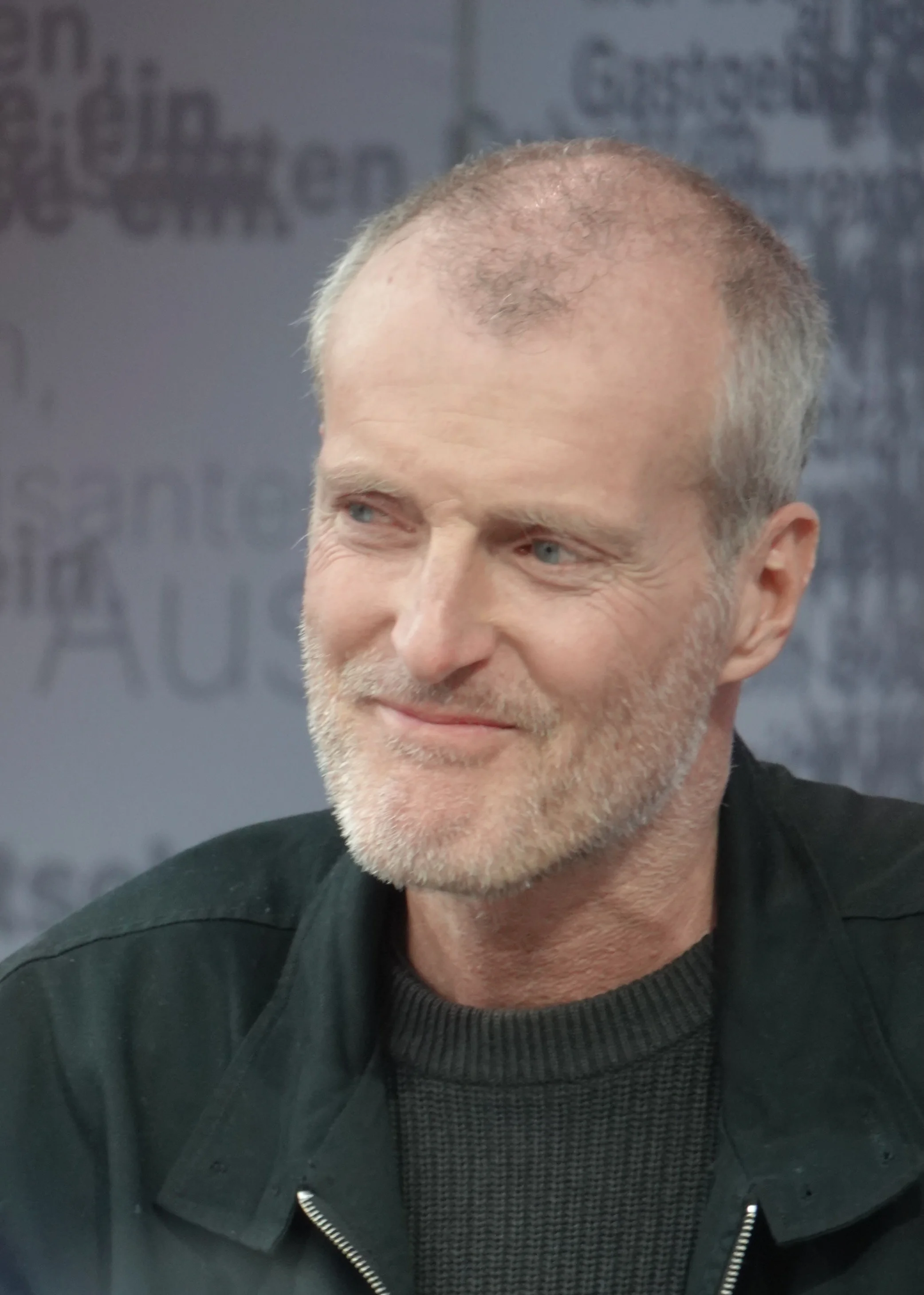
Image from Wikipedia
Image from Wikipedia
Robert Seethaler: The Austrian Storyteller between Laconism, Melancholy, and Literary Precision
An author, actor, and screenwriter with a distinctive signature
Robert Seethaler, born on August 7, 1966 in Vienna, is one of the most prominent voices in contemporary German-language literature. The Austrian-German writer, screenwriter, and actor combines succinct, clear language with great emotional depth and a keen awareness of social reality. His novels and screenplays have made him well-known far beyond the literary scene, making him an author with high recognizability. ([de.wikipedia.org](https://de.wikipedia.org/wiki/Robert_Seethaler?utm_source=openai))
Biography: Viennese Origins, Early Detours, and the Path to Storytelling
Seethaler grew up in Vienna and initially did not follow a straight literary career path. According to available sources, he worked as a salesperson and messenger at the Kurier before attending drama school at the Vienna Volkstheater and participating in various productions for stage, film, and television. This combination of everyday experience, observational skills, and acting practice continues to shape the quality of his character development today. ([de.wikipedia.org](https://de.wikipedia.org/wiki/Robert_Seethaler?utm_source=openai))
His interest in dramatic form became evident early on. In 2004, he attended the Munich script workshop; his screenplay debut Heartbreakin’, developed there, won the Tankred-Dorst Prize. This marked the beginning of a literary and artistic career born not from academic theory, but from practice, observation, and precise storytelling. ([de.wikipedia.org](https://de.wikipedia.org/wiki/Robert_Seethaler?utm_source=openai))
The Breakthrough: From Debut Prize to Bestselling Author
The first major literary success came in 2007 with the debut prize from the Buddenbrookhaus for Die Biene und der Kurt. This was followed by Die weiteren Aussichten and Jetzt wird’s ernst, works that already showcased Seethaler's hallmark style: laconic, empathetic, and focused on the essential. However, his true breakthrough came with Der Trafikant, which was published in 2012 and turned into a bestseller. ([keinundaber.ch](https://www.keinundaber.ch/media/Rechte-Rights/Foreign-Rights/KA_Rightsguide_Spring2023.pdf?utm_source=openai))
The response to Der Trafikant extended far beyond a single successful publication. The book was translated into other languages, adapted for the stage, and filmed in 2018; publisher documents indicate over a million copies sold. This established Seethaler as an author whose texts not only are read but also translated into other cultural forms. ([keinundaber.ch](https://www.keinundaber.ch/media/Rechte-Rights/Foreign-Rights/KA_Rightsguide_Spring2023.pdf?utm_source=openai))
Literary Development: From the Province to the Grand Historical Novel
Seethaler's novels often revolve around characters on the margins of the social stage: ordinary people, quiet observers, individuals with little power but much inner dignity. In Ein ganzes Leben, he condenses an entire existence into a slim, compelling narrative; the text was awarded the Grimmelshausen Prize in 2015 and was nominated for the Man Booker International Prize in 2016. This international recognition highlighted how universally his reduced prose resonates. ([en.wikipedia.org](https://en.wikipedia.org/wiki/Robert_Seethaler?utm_source=openai))
With Das Feld and Der letzte Satz, Seethaler expanded his thematic scope further. While Das Feld creates a multivocal mosaic of memories, Der letzte Satz places Gustav Mahler at the center, depicting the composer as an exhausted, vulnerable person on his final journey. Critics particularly praised the artful condensation, straightforward language, and incisive approach to the inner movement of a character. ([rowohlt-theaterverlag.de](https://www.rowohlt-theaterverlag.de/theaterstueck/der-letzte-satz-1012?utm_source=openai))
Current Projects and Recent Publications
One of his most recent novels is Das Café ohne Namen, released in 2023 and due to be published in English translation as The Café with No Name in 2025. The book takes readers to Vienna in the 1960s and tells stories of departure, new beginnings, and the lives of ordinary people seeking a place of encounter. This continues Seethaler's interest in everyday dignity and social nuances. ([de.wikipedia.org](https://de.wikipedia.org/wiki/Das_Caf%C3%A9_ohne_Namen?utm_source=openai))
Publishing and press sources also reveal that his titles remain internationally relevant, circulating in new editions, translations, and theater adaptations. For an author of his stature, this is more than mere product maintenance: it underscores the lasting relevance of a narrative style that reaches broad audiences with quiet intensity. ([europaeditions.com](https://www.europaeditions.com/book/9798889660651/the-cafe-with-no-name?utm_source=openai))
Discography in a Broader Sense: Overview of Works, Spread, and Cultural Reach
As Robert Seethaler is not a musician, there is no discography in a strict sense. However, for an artistic examination of his work, his bibliography is central: Die Biene und der Kurt, Die weiteren Aussichten, Jetzt wird’s ernst, Der Trafikant, Ein ganzes Leben, Das Feld, Der letzte Satz, and Das Café ohne Namen mark the significant milestones. These novels form a cohesive yet stylistically dynamic body of work, published in various publishers and languages. ([keinundaber.ch](https://www.keinundaber.ch/media/Rechte-Rights/Foreign-Rights/KA_Rightsguide_Spring2023.pdf?utm_source=openai))
Particularly, Der Trafikant and Ein ganzes Leben have achieved substantial reach. Publisher documents document international license sales and high sales figures; at the same time, stage adaptations, film versions, and reviews show how deeply Seethaler's stories resonate across different media. His literature thus works similarly to a precisely composed motif: concise in expression but enduring in impact. ([keinundaber.ch](https://www.keinundaber.ch/media/Rechte-Rights/Foreign-Rights/Foreign_Rights_Catalogue_2022_LBF.pdf?utm_source=openai))
Style, Language, and Artistic Signature
Seethaler's style is characterized by reduction, clarity of observation, and a pronounced sense of rhythm. Several sources describe his tone as laconic, straightforward, and yet emotionally precise. This mix creates a special tension: his sentences appear light but frequently carry existential weight. ([keinundaber.ch](https://www.keinundaber.ch/de/autoren-regal/robert-seethaler/?utm_source=openai))
In terms of content, he takes a serious interest in the unspectacular. His characters often stand at biographical thresholds, societal upheavals, or quiet losses, yet Seethaler does not dramatize these moments pathos-driven but with controlled warmth. This makes his texts accessible to a broad audience while also being relevant for literary criticism. ([literaturhaus-wien.at](https://www.literaturhaus-wien.at/review/der-letzte-satz/?utm_source=openai))
Cultural Influence and Reception
Seethaler's books have established themselves as a firm fixture in the contemporary German-language literary canon. Awards such as the Buddenbrookhaus Debut Prize, the Grimmelshausen Prize, the Anton-Wildgans Prize, and the Rheingau Literature Prize document a career supported by both critics and the public alike. His novels are read, discussed, dramatized, and filmed, speaking to an extraordinary cultural connectivity. ([keinundaber.ch](https://www.keinundaber.ch/media/Rechte-Rights/Foreign-Rights/KA_Rightsguide_Spring2023.pdf?utm_source=openai))
Reception also repeatedly emphasizes that Seethaler achieves great impact with simple means. Reviews and publisher statements highlight the density of his prose, the accuracy of his characters, and the ability to bring historical and social spaces to life in a few strokes. Exactly therein lies his authority: he writes not loudly but precisely, and that is why he stays in memory. ([rowohlt-theaterverlag.de](https://www.rowohlt-theaterverlag.de/theaterstueck/der-letzte-satz-1012?utm_source=openai))
Conclusion: Why Robert Seethaler Remains Exciting
Robert Seethaler is an author who shapes greatness from the quiet. His career unites acting, screenwriting, and prose; his novels merge historical sensitivity with human closeness, and his language consistently maintains a distance from any pathos. Those who appreciate literary compression, cultural depth, and characters with genuine inner presence will find in his work an extraordinary storyteller. ([de.wikipedia.org](https://de.wikipedia.org/wiki/Robert_Seethaler?utm_source=openai))
Seethaler remains exciting because he tells great themes without gestural exaggeration: memory, loss, work, love, dignity, and the fragile beauty of the everyday. His texts read like fine compositions with clear dramaturgy and emotional reverberation. Anyone who experiences him live at a reading or stage presentation encounters an artist whose quiet intensity immediately transforms the space. ([praesens.com](https://www.praesens.com/praesens-pro-presse/katalog/ein-ganzes-leben/regional/de/press-kit/?utm_source=openai))
Official Channels of Robert Seethaler:
- Instagram: no official profile found
- Facebook: no official profile found
- YouTube: no official profile found
- Spotify: no official profile found
- TikTok: no official profile found
Sources:
- Wikipedia - Robert Seethaler
- Kein & Aber - Robert Seethaler
- Kein & Aber - Rights Catalogue / Robert Seethaler
- Agentur Kelterborn - Robert Seethaler
- Rowohlt Theater Verlag - Der letzte Satz
- Goethe-Institut - Farewell to Life / Raisin Picker
- FAZ - Robert Seethaler's new novel "Der letzte Satz"
- ORF / Ö1 - Contributions on Robert Seethaler
Upcoming Events
Vernissage (World Premiere) by Robert Seethaler
Vernissage (World Premiere) by Robert Seethaler
Vernissage (World Premiere) by Robert Seethaler
Vernissage (World Premiere) by Robert Seethaler
Vernissage by Robert Seethaler
Vernissage (World Premiere) by Robert Seethaler
Vernissage (Premiere) by Robert Seethaler
Vernissage (World Premiere) by Robert Seethaler
Vernissage (Premiere) by Robert Seethaler – for the last time