
Ronen Steinke
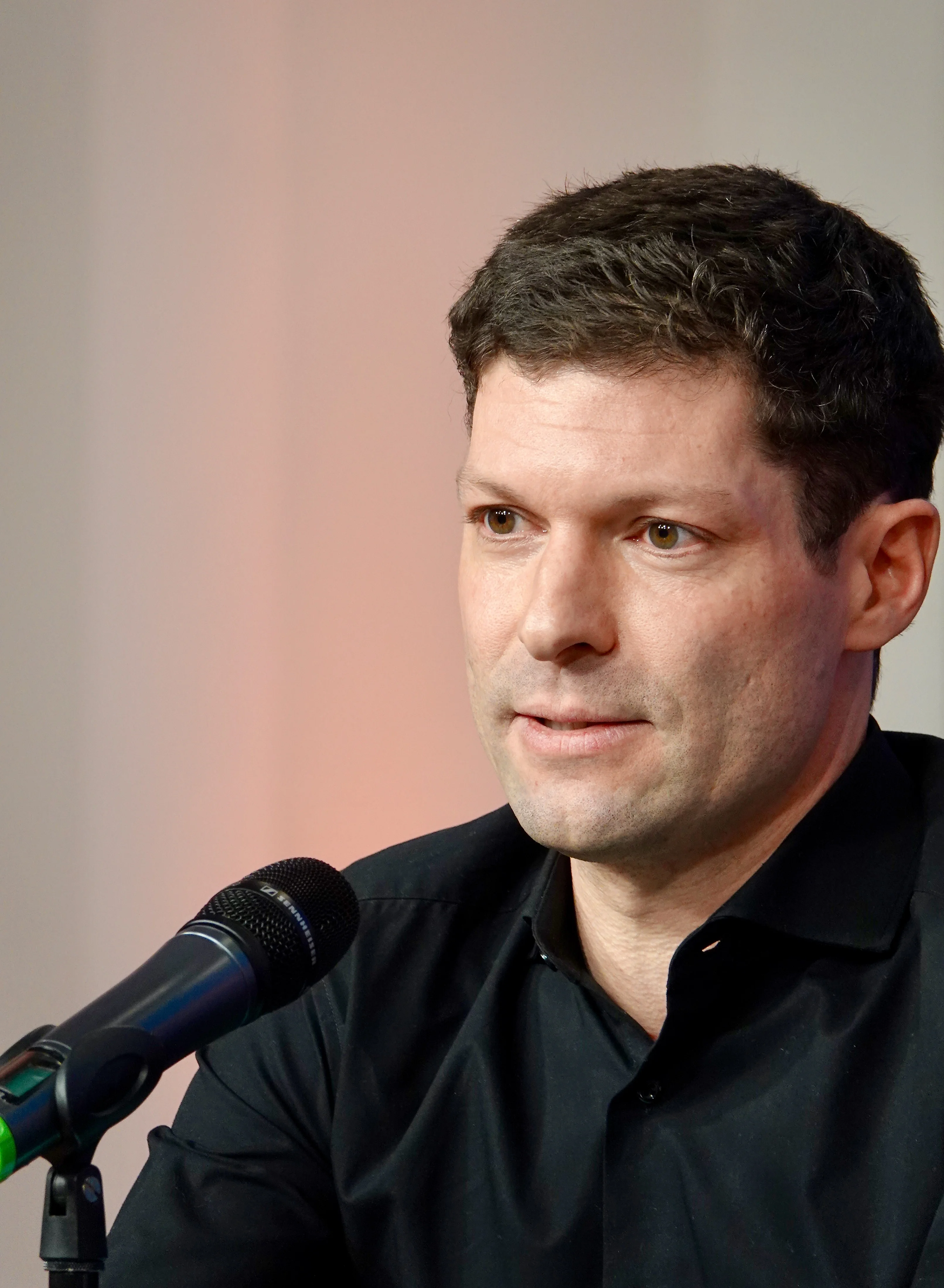
Image from Wikipedia
Image from Wikipedia
Ronen Steinke: The Precise Chronicler of Law, Politics, and Memory Culture
A journalist, author, and lawyer who shapes public debates with analytical sharpness
Ronen Steinke, born in 1983 in Erlangen, is one of the most prominent political journalists and non-fiction authors of his generation. He became known through a career that combines legal expertise, historical research, and journalistic clarity. His work operates at the intersections of law, politics, antisemitism, right-wing extremism, and memory culture, earning him the reputation of a keen observer and precisely arguing author. ([de.wikipedia.org](https://de.wikipedia.org/wiki/Ronen_Steinke?utm_source=openai))
Biography: Education, Legal Background, and Journalistic Path
Steinke studied law at Bucerius Law School in Hamburg and in Tokyo. He later earned his doctorate in the field of law and politics, specifically examining the relationship between the two fields concerning international criminal justice. This legal background continues to form the foundation of his journalistic work, which is rarely superficial and almost always based on careful context, source work, and institutional understanding. ([ronensteinke.de](https://www.ronensteinke.de/about/?utm_source=openai))
Before his role as senior editor in the politics department of the Süddeutsche Zeitung, he gained practical experience in various legal and institutional contexts. This includes stints in law firms, at a juvenile detention center, and at the International Criminal Tribunal for the former Yugoslavia. As a lecturer at Goethe University Frankfurt am Main, he remains closely connected to academic debate. ([campus.de](https://www.campus.de/autor_innen/a-z/S/ronen-steinke?utm_source=openai))
Career: From Legal Expertise to Political Commentary
Steinke's journalistic style is characterized by a rare dual competence: he masters the language of law and the dramaturgy of narrative non-fiction. This connection proves most effective in fields such as criminal justice, antisemitism, and democratic culture of debate. His texts and appearances reveal an author who makes complex interrelations understandable without oversimplifying them. ([ronensteinke.de](https://www.ronensteinke.de/?utm_source=openai))
His public recognition is not due to spectacular gestures but rather to substantive consistency. For years, Steinke has been working on analytically measuring political and societal conflicts in Germany. An NDR contribution describes him as a journalist and bestselling author who intensively addresses right-wing extremism, antisemitism, and the judiciary. This precisely is where his authority lies: in the combination of research, sound judgment, and clear language. ([ndr.de](https://www.ndr.de/fernsehen/sendungen/das_rote_sofa/das-rote-sofa,sendung-69232.html?utm_source=openai))
Non-Fiction Author with Historical Insight and Political Relevance
As an author, Steinke gained special attention with his biographical-historical books. His work about Fritz Bauer brought him to a broader audience; the biography of the Hessian Attorney General was published in 2013 and adapted into a film in 2015. Later followed the story of Egyptian doctor Mohamed Helmy, who saved Jews during the Nazi era and was honored as a "Righteous Among the Nations." These books showcase Steinke's ability to weave individual life stories with the broader lines of German and international history. ([campus.de](https://www.campus.de/autor_innen/a-z/S/ronen-steinke?utm_source=openai))
His more recent works remain closely tied to the central conflicts of the present. Among the sources presented is his book Terror gegen Juden, which addresses antisemitic violence and the state's failure. The media response underscores that Steinke does not only inform but also stimulates debate. His books are regarded as relevant contributions to contemporary analysis in the literary-political discourse. ([lpb.rlp.de](https://www.lpb.rlp.de/fileadmin/files/Bibliothek/Juedisches_Leben12_2020.pdf?utm_source=openai))
Style: Precision, Stance, and Narrative Appeal
Steinke's style unites legal precision with journalistic conciseness. He writes not ornamentally but argumentatively, and it is precisely from this that his impact derives. His texts focus on clear terms, comprehensible causal relations, and a high historical sensitivity. This combination gives his work a particular authority as it neither appears sensationalist nor academically detached. ([ronensteinke.de](https://www.ronensteinke.de/?utm_source=openai))
In the German non-fiction landscape, he represents a form of political writing that does not pit empathy against analysis. His engagement with Jewish history, the consequences of National Socialism, and the present state of antisemitism runs like a red thread through his journalistic development. This is where the cultural significance of his work lies: Steinke translates memory into contemporary awareness. ([de.wikipedia.org](https://de.wikipedia.org/wiki/Ronen_Steinke?utm_source=openai))
Discography? Why Ronen Steinke is Not a Musical Artist
As Ronen Steinke is not a musician but a journalist, non-fiction author, and lawyer, there is no discography in the true sense, nor any musical releases, singles, or albums. A web search for music releases may yield a few similarly named results on streaming platforms, but these cannot be definitively and reliably linked to the Ronen Steinke addressed here. Therefore, a clear distinction between his actual work and ambiguous search results is essential for a credible artist page. ([ronensteinke.de](https://www.ronensteinke.de/?utm_source=openai))
This finding notably clarifies the nature of his public profile: Steinke is not an entertainer but an intellectual author with political relevance. His "publications" are books, essays, and journalistic contributions, not songs or albums. Those looking for his discography are in fact searching for his journalistic oeuvre. ([campus.de](https://www.campus.de/autor_innen/a-z/S/ronen-steinke?utm_source=openai))
Critical Reception: Recognition, Debates, and Academic Connectivity
The reception of Steinke's works is distinctly positive, especially where history, morality, and the present intersect. His book about Mohamed Helmy was ranked third on the non-fiction bestseller list by critics, including ZDF, Deutschlandfunk, and Die Zeit, and was nominated for the German Non-Fiction Prize. This indicates significant resonance in the German feuilleton and academic public sphere. ([de.wikipedia.org](https://de.wikipedia.org/wiki/Ronen_Steinke?utm_source=openai))
Institutional sources such as NDR, publishing webpages, and university contexts also highlight the seriousness of his work. There, Steinke is presented not merely as a commentator but as an author with substantial expertise. This mix of journalistic reach and intellectual grounding makes him an important voice in German-speaking non-fiction and political journalism. ([ronensteinke.de](https://www.ronensteinke.de/?utm_source=openai))
Cultural Influence: An Author Who Transforms Memory into Contemporary Analysis
Ronen Steinke is compelling because he crafts a cultural perspective from legal knowledge. His texts demonstrate that memory politics, criminal justice, and democracy are not peripheral issues but at the heart of a reflective public discourse. Readers of his books or followers of his interviews experience an author who connects historical thinking with current urgency. ([ronensteinke.de](https://www.ronensteinke.de/?utm_source=openai))
His impact does not stem from loudness but from precision. This is precisely what makes him interesting to readers who want to understand political contexts without compromising journalistic rigor. In a media landscape full of oversimplification, Steinke stands for contextualization, depth, and argumentative reliability. ([ronensteinke.de](https://www.ronensteinke.de/?utm_source=openai))
Conclusion: Why Ronen Steinke is Convincing
Ronen Steinke combines legal expertise, historical sensitivity, and journalistic clarity to create a distinctive profile. His books and contributions make him an important voice in debates about law, politics, and societal responsibility. What is particularly fascinating about him is the consistency with which he takes difficult topics seriously and translates them into understandable, engaging forms. Those who follow his work encounter an author with conviction, substance, and remarkable journalistic presence. ([ronensteinke.de](https://www.ronensteinke.de/?utm_source=openai))
While a live experience in the classical sense is not part of his work like it is for a musician, his lectures, readings, and public discussions provide immediate proximity to a thinker who dissevers the present with analytical sharpness. This is precisely why it is worthwhile to read, listen to, and engage with Ronen Steinke carefully in debates. ([friedrichshafen.de](https://www.friedrichshafen.de/fileadmin/BENUTZERDATEN/friedrichshafen.de/Statische_Seiten/Seiten/Kultur_Freizeit_Einkaufen/Kulturb%C3%BCro/Downloads/Aktuelles/SLS_November_2025_web.pdf?utm_source=openai))
Official Channels of Ronen Steinke:
- Instagram: No official profile found
- Facebook: No official profile found
- YouTube: No official profile found
- Spotify: No official profile found
- TikTok: No official profile found